Breakfast preppers
You want to prepare several individual portions for the days ahead and keep them chilled. Sealable jars and a batch size that suits how much you eat are the priorities.


If you want to chill several breakfasts without transferring the yoghurt to another container, sealable individual jars are handy. If you prefer to make different quantities or strain your yoghurt, a large container with the right accessories may suit your routine better. What matters is the batch size that makes sense for you, the space in your fridge and the recipes you want to try. Neither the maximum capacity nor the wattage alone guarantees a better result. Before buying, also check the relevant CE marking and German-language safety information for the specific appliance.
You want to prepare several individual portions for the days ahead and keep them chilled. Sealable jars and a batch size that suits how much you eat are the priorities.
You want to serve yourself as much as you like or occasionally strain your yoghurt, and are happy with a larger container rather than jars that are pre-portioned.
You want to try recipes beyond plain yoghurt that the appliance specifically supports, so you compare the programmes and accessories available with the model you’re considering.
| What matters | What to check before buying | Who is it most relevant to? |
|---|---|---|
| Individual portions that suit you | The size and number of jars you actually want to fill, the batch instructions and the space in your fridge. | If I want to prepare individual breakfasts for several days, sealable jars are handy. Around 36% of consumers put individual portions first. |
| Batch size, hygiene and chilling | Choose a batch size that suits how much you eat; keep finished yoghurt chilled and follow the cleaning instructions. | If I prepare breakfasts for later, I only want to make an amount I can chill and use appropriately. Around 29% of consumers prioritise planning how much to make. |
| Ingredients and the type of yoghurt you want | Check which programmes are intended for the recipes you want to make, and whether any accessories you need, such as a straining sieve, are included. | If I want to try varieties specifically supported by the appliance or make strained yoghurt as well as classic yoghurt, the right features matter. Around 21% of consumers put recipe flexibility first. |
| Ease of use and ongoing costs | Check the timer and shut-off feature on the model; to compare electricity costs, look at the measured energy used per batch rather than the wattage alone. | If I want to keep everyday use simple and understand the running costs, I look at the timer, cleaning and meaningful energy-use information. Around 14% of consumers prioritise ease of use and ongoing costs. |
The stated total capacity alone doesn’t tell you whether a smaller batch will suit your routine.
Compare the containers and instructions with how much you actually use. For the JG 40, Rommelsbacher recommends putting any unused jars in place and filling them with water.
Watts measure power, not the amount of energy used over a complete batch.
Only compare energy-use figures that use the same unit and cover the same preparation process. Check any conflicting figures for the specific model version before drawing comparisons.
Programmes and accessories are designed for specific methods; they don’t guarantee that every recipe will work.
Check the instructions for the specific model to see whether they cover the ingredients you want to use and the accessories you need.
According to Severin, the JG 3518 comes with seven sealable 150 ml portion jars.
The JG 40 has portion jars and a timer. According to the manufacturer, the JG 80 combines smaller portion jars, large containers and additional programmes.
According to the manufacturer, the JM 4 FERMENT is designed for different recipes, with several programmes and adjustable time and temperature settings.
The manufacturer describes the Yogurella 0621/10 as coming with containers and a filter basket for straining.
The appliances below offer different options for individual portions, flexible serving or extra preparation features. Before buying, check the details for the specific model version, including the relevant CE marking and German-language safety information. The EU’s Your Europe portal explains that CE marking is only required for products covered by the relevant harmonised EU rules. Germany’s Federal Network Agency also refers to the associated documentation and safety instructions in German.
 No image available
The individually described jars may suit you if you want to prepare breakfasts in pre-portioned servings.
Features listed include a 1.6-l SUS304 inner pot, nine 100 ml borosilicate glass jars, and temperature and timer controls.
The product title also lists natto and rice wine as other recipes.
 No image available
The nine individually described jars are an option if you want to portion your yoghurt into separate servings.
The title lists a 1.6-l SUS304 inner container, adjustable temperature and time, and an OLED display.
Natto and rice wine are also listed in the title as other recipes.
 No image available
The jars let you divide a batch between several containers; a sieve is listed for making strained yoghurt.
The title lists digital temperature control and a timer of up to 48 h.
 No image available
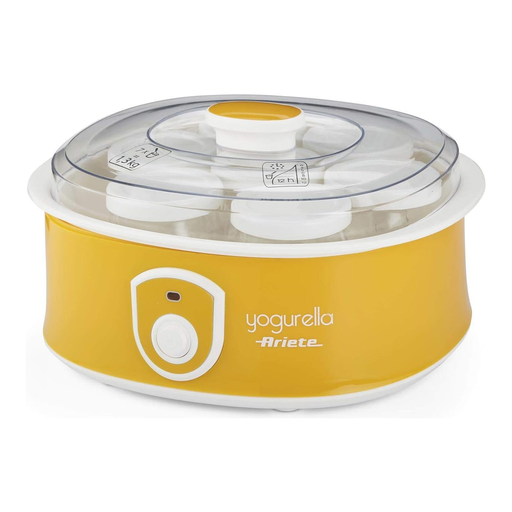
The individual jars described may be useful if you want to prepare portions in advance.
The product details list seven jars with lids and a total capacity of 1.3 l.
This item is marked Refurbished A; check the exact model version and its product documentation.
 No image available
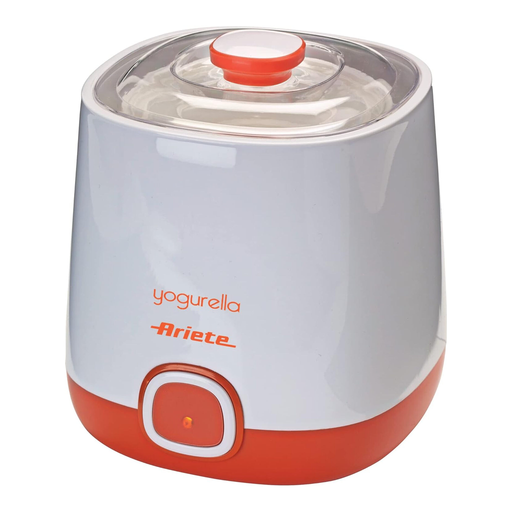
A large container is a better fit if you want to serve yourself and portion out your own breakfasts.
The product details list a 1-l container and a filter insert for making strained yoghurt.
Unlike individual portion jars, this container-based option means you’ll need to portion the yoghurt yourself.
Mix milk and a suitable starter culture according to the instructions for your appliance and the recipe you’re making. Allow time for fermentation, then put the finished yoghurt in the fridge; a yoghurt maker doesn’t chill it automatically.
Rommelsbacher says the process should theoretically work with fewer jars, but the manufacturer recommends putting the remaining jars in place and filling them with water to improve temperature distribution. This advice applies to this specific model; it isn’t a general minimum-fill rule.
Keep finished yoghurt chilled and make sure containers and utensils are hygienically clean. Don’t eat yoghurt with visible mould. Best-before dates for unopened shop-bought products aren’t a fixed guide to how long homemade yoghurt will keep.
The rated power in watts alone doesn’t tell you reliably how much energy one batch will use. You need the actual energy consumed over the full operating time. Only compare figures that cover the same preparation process.
Check whether the rules that apply to the specific appliance require CE marking, and whether the necessary safety information is available in German. The EU’s Your Europe portal explains the scope of CE marking; Germany’s Federal Network Agency refers to the marking and associated documentation. CE marking is a manufacturer’s declaration, not an independent quality mark.