Freezer-stock planners
If you make yoghurt overnight and plan to freeze it for later, first decide whether you want a frozen dessert or natural yoghurt to thaw and eat. The Verbraucherzentrale says yoghurt can become lumpy and grainy after thawing.


Choose a yoghurt maker based on the batch size you need and a timer that suits your overnight run. Then decide whether you’d prefer one large container or individual jars. If you want to thaw natural yoghurt and keep it creamy, freezing can be a sticking point: the Verbraucherzentrale (German Consumer Advice Centre) notes that yoghurt can become lumpy and grainy when thawed. Making a frozen dessert by stirring the mixture regularly is a different goal from simply freezing a finished batch.
If you make yoghurt overnight and plan to freeze it for later, first decide whether you want a frozen dessert or natural yoghurt to thaw and eat. The Verbraucherzentrale says yoghurt can become lumpy and grainy after thawing.
If you want to make as much as possible in one go, compare the total capacity and container format together. Manufacturers’ model specifications vary both in capacity and in how the yoghurt is divided between containers.
If you want to start the machine in the evening and have individual portions ready in the morning, look at the timer and jar size. An automatic shut-off does not remove the need to chill the yoghurt afterwards.
First decide whether you’re making a frozen dessert or natural yoghurt to thaw and eat later. Then compare batch size, container shape and timer settings for an overnight run.
The proportions below relate to consumers considering a yoghurt maker for an overnight batch to stock in the freezer; each figure represents their main purchasing concern.
| Concern | What to check when buying | Who is this especially important for? |
|---|---|---|
| Freezer use | Decide in advance whether you want a frozen dessert or natural yoghurt to thaw and eat; check separately that the container you’ll use later is suitable for freezing. | If I want natural yoghurt to thaw and stay creamy after freezing, the possible change in texture is a key consideration. Consumers for whom this is the main concern are estimated to make up around 33%. |
| Batch size | Check the total capacity, number of containers and their size against the batch you plan to make. | For consumers who want to make as much as possible in one go, batch capacity matters more than a particular container shape. Those prioritising quantity are estimated to make up around 27%. |
| Overnight run | Check for a timer and automatic shut-off, and plan when you’ll put the finished yoghurt in the fridge. | If you start the machine in the evening, you’ll want to time the end of the programme to suit you and remember to chill the yoghurt afterwards. Consumers whose main concern is an overnight run are estimated to make up around 27%. |
| Portioning | Compare the number of jars, portion size and availability of replacement containers. Don’t assume a container is suitable for freezing or dishwasher use just from its material. | If I want individual portions ready to serve, how I handle the containers before and after fermentation matters to me. Consumers who prioritise portioning are estimated to make up around 13%. |
A large capacity doesn’t tell you whether the yoghurt will have the texture you want after thawing. The Verbraucherzentrale warns that it may become lumpy and grainy.
First decide whether you want to eat the yoghurt frozen as a dessert or thaw it later. Use a container that’s suitable for freezing; according to the Verbraucherzentrale, a snowflake symbol indicates that it can be used in the freezer.
You may need separate, freezer-safe containers for your freezer stash.
Automatic shut-off ends the machine’s programme, but it doesn’t chill the yoghurt. For homemade yoghurt, the Verbraucherzentrale recommends putting it in the fridge afterwards.
When you start the machine in the evening, plan when you’ll put the finished yoghurt in the fridge.
One large container and lots of small jars involve different steps before and after fermentation. The manufacturer’s details on container numbers and capacity show whether a model is designed for one larger batch or individual portions.
As well as total capacity, compare the container format and availability of replacement parts using the full model name.
Depending on the portion size you want, you may need to buy additional compatible containers.
The JM 2 is listed with a total capacity of 2.4 l across twelve jars. Steba lists the JM 3 with a capacity of 1.4 l and an adjustable temperature.
According to the manufacturer, the JG 80 combines a 1.2-l container with smaller pots and preset temperature programmes. The JG 40 is designed for portion jars.
According to the manufacturer, the JG 3521 is designed for seven individual portions and offers a choice of preparation programmes.
According to Ariete, the Yogurella 0621/10 uses two 1-l containers and a filter for Greek-style yoghurt.
These yoghurt makers at Joybuy offer different options for larger batches, timed programmes and making individual portions in advance.
 No image available
For anyone looking to make a larger batch in glass containers.
The product name lists two XXL glass containers, with capacities of 2000 ml and 1400 ml.
 No image available
An option if you want to compare making yoghurt in an inner pot with using individual jars.
The product name lists a 1.6-l SUS304 inner pot, nine borosilicate glass jars, temperature control and a timer.
 No image available
For anyone who wants to portion yoghurt into individual jars as it’s being made.
The product name lists eight jars with a total capacity of 1440 ml, digital temperature control, a 48-hour timer and automatic shut-off.
 No image available
An option for making a single batch, with a strainer for extra versatility.
The product name lists a 1.5-l capacity, 20 W, a strainer and a lid.
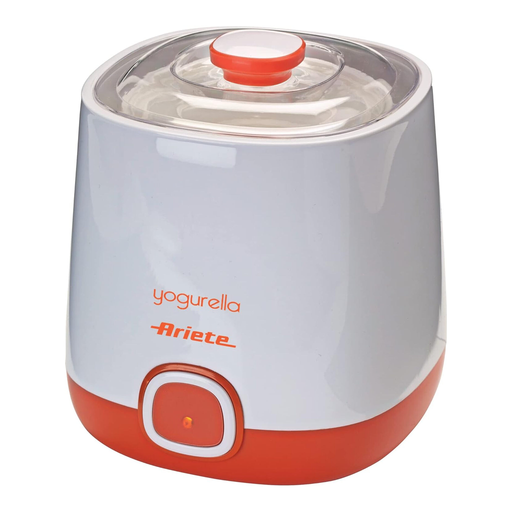 No image available
An option for making a single batch in one container.
The product name lists a 1-l capacity and 20 W.
Don’t assume natural yoghurt will keep its original texture after thawing. The Verbraucherzentrale says it can become lumpy and grainy. For a frozen dessert, the recipe from the German Federal Centre for Nutrition recommends stirring the mixture repeatedly as it freezes.
Check the label on the specific container before using it for freezing. According to the Verbraucherzentrale, a snowflake symbol indicates that a container is suitable for the freezer. Yoghurt jars aren’t automatically suitable just because they’re used to hold yoghurt.
No. Automatic shut-off ends the programme, but it doesn’t chill the yoghurt. For homemade yoghurt, the Verbraucherzentrale recommends putting it in the fridge afterwards. Remember to do this after an overnight run.
Use clean hands and equipment. The German Federal Institute for Risk Assessment advises against consuming raw milk without heating it first, and gives homemade yoghurt as an example of a food that isn’t heated again later. Also follow the preparation guidance for the milk you’re using and the specific recipe.
Use containers specifically designed for freezing and check the label on each one. The Verbraucherzentrale says a snowflake symbol indicates that a container is suitable for the freezer. Check whether the yoghurt jars supplied are suitable for this purpose.