If you want to store yoghurt in small, ready-to-eat portions, compare the number and size of the jars supplied with how much you use. However, small jars don’t guarantee that a machine will work reliably with just one filled jar, so check whether the specific model can be used with fewer than a full set of jars. A larger container may suit you better if you prefer to portion the yoghurt yourself. Extra programmes matter most if you’re actually going to use them.
Which type of machine is right for you?
For those who want individual portions
If you want to make and store yoghurt directly in small, lidded pots, compare the size and number of containers supplied. Also check whether the specific machine is designed to run with fewer than a full set of pots.
For buyers who value ease of use
If you mainly make plain yoghurt, check that the controls, cleaning and jars supplied suit your everyday routine. Extra programmes are only worth considering if you plan to use them.
For those who want to make different things
If you plan to make more than just plain yoghurt, check which programmes are listed for the model and what accessories you’ll need. More features also mean more parts to store and clean.
What should you look for when buying?
First, compare the container size with the number of portions you want. Then check whether the machine can be used with the number of jars you actually plan to fill.
| Buying criterion |
What to check |
Who it matters most to |
| Portion size and leftovers |
Compare the jar size and number with how much you use; check the minimum fill level and whether the specific model can be used with fewer than a full set of jars. |
If I want to make only as much as I’ll use, individual portions of the right size are essential. Around 42% of consumers put portion size and leftovers first. |
| Ease of use |
Compare the controls, cleaning requirements and the features you’ll actually need. |
If I mainly make plain yoghurt, I don’t want to have to choose settings I’ll hardly ever use. Around 25% of consumers value simplicity most. |
| Other preparations |
Consider only programmes specifically listed and their corresponding accessories; check the model’s instructions for the preparation you have in mind. |
If I want to try other recommended preparations as well as plain yoghurt, the relevant programmes and accessories matter. Around 17% of consumers place the greatest importance on variety. |
| Space and cleaning |
Compare the machine’s dimensions, container shape, lids and care instructions. |
If space is limited in my kitchen or fridge, I look at the machine’s footprint and how many containers I’ll need to clean and store. Around 16% of consumers put space and cleaning first. |
Common misconceptions when buying
-
Small jars don’t automatically mean you can make a single portion
The stated size of the jars doesn’t tell you whether the machine will work reliably with just one filled jar.
Check the instructions or ask the manufacturer how many containers may be filled for that exact model.
-
Maximum capacity isn’t the same as the required fill amount
A large capacity doesn’t tell you how much yoghurt you need to make at a time.
Decide how many portions you want, then compare the machine’s container and preparation instructions.
-
Spare jars aren’t automatically compatible with every machine
Suitable containers are specified for certain models. For the Rommelsbacher JG 40, the manufacturer says to use the designated original containers to achieve the required preparation temperatures.
Before buying replacements, check the accessory name and confirm that it’s compatible with your exact model.
Notable brands and model ranges
Rommelsbacher
The JG 80 and JG 40 ranges differ in their jars and features.
- According to the manufacturer, the JG 80 comes with four 125 ml ceramic pots and two large 1,2 l glass containers; the JG 40 is supplied with eight 150 ml jars.
- The jar specifications for neither model confirm that it can be used with just one filled container. For the JG 40, the manufacturer says the designated original containers are needed to achieve the required preparation temperatures.
Severin
According to the manufacturer, the JG 3518 comes with seven portion jars for separate storage.
- Each jar holds 150 ml, according to the manufacturer; compatible replacement jars are listed for this model.
- The jar size doesn’t indicate the minimum amount for a batch. Check how many jars you can fill for the specific yoghurt maker.
Clatronic
The JM 3344 is a straightforward model supplied with seven portion jars.
- According to the manufacturer, each jar holds 160 ml; additional jars are listed as accessories.
- The size and number of jars don’t tell you whether you can make a single portion per batch. Check the model information before buying.
Ariete
According to the manufacturer, the Yogurella 0621/10 is a container-style machine with a filter basket.
- The manufacturer’s data sheet lists two 1 l containers and machine dimensions of 17 × 17 × 19 cm.
- Small portion jars aren’t included, according to the data sheet. You’ll need extra containers to portion and store individual servings.
Steba
According to the manufacturer, the JM 2 is designed for larger batches and comes with twelve jars.
- Each jar holds 200 ml; a timer and automatic shut-off are listed as features.
- The stated total capacity of 2,4 l doesn’t tell you whether the machine can run with just one jar or needs to be filled completely.
Joybuy products for small portions of yoghurt
The machines below include models with individual jars and others with larger containers. Choose based on whether you’d rather store yoghurt directly in containers or portion it yourself.
 No image available
FOHERE yoghurt maker with two XXL glass containers
An option if you want to store yoghurt in larger containers or try other preparations listed alongside yoghurt.
Includes two glass containers, with capacities of 2,000 ml and 1,400 ml. The description lists eight programmes, an LED display, temperature control and a strainer for Greek yoghurt.
View at Joybuy
 No image available
Fosmet yoghurt maker with nine borosilicate glass jars
The small containers are an option if you want to make several separate portions. Ask the manufacturer how many jars should be filled for a batch.
According to the description, it comes with nine 100 ml jars. The product title also lists a 1,6-l SUS304 inner pot, temperature control, a timer and an OLED display.
View at Joybuy
 No image available
FOHERE yoghurt maker with eight jars
The individual jars are handy if you want to store yoghurt separately. Check how many filled jars are needed for a batch with this specific machine.
The title lists eight jars with a total capacity of 1.440 ml. The description includes digital temperature control, a 48-hour timer and automatic shut-off.
View at Joybuy
 No image available
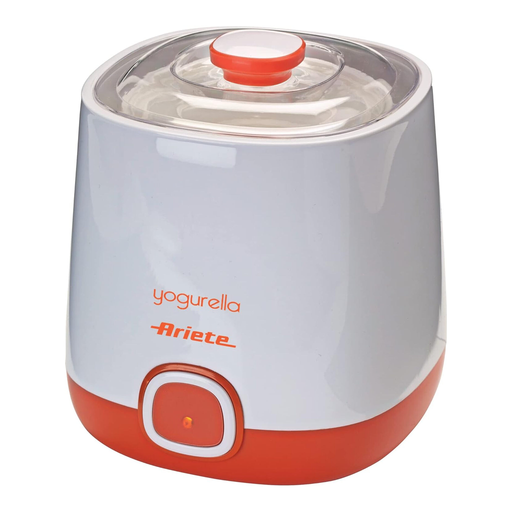
Ariete Yogurella 621, 1 l
This model is an option if you’d rather make yoghurt in a larger container and portion it yourself afterwards.
The product title lists a 1 l capacity and 20 W. The description includes containers with lids for storing yoghurt in the fridge, as well as machine dimensions of 16 × 16 × 18 cm.
View at Joybuy
 No image available
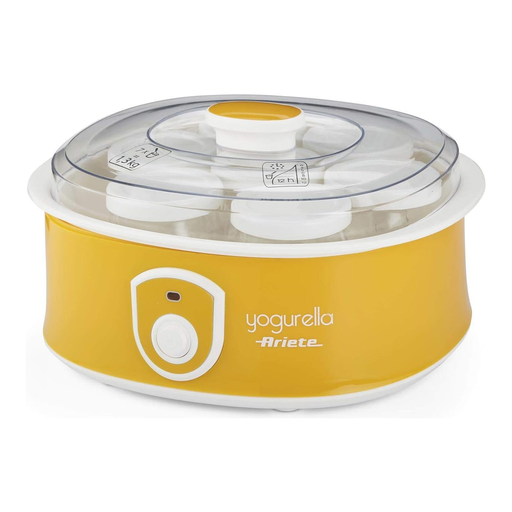
Ariete yoghurt maker, 1,3 l (Grade A refurbished)
The seven jars are an option if you want to store several portions separately. Check how many jars should be filled for each batch before buying.
The description lists a 1,3 l capacity and seven jars with lids. The product title gives the power as 20 W and the energy rating as A+; the machine is listed as Grade A refurbished.
View at Joybuy
Frequently asked questions
How can I find out whether I can fill just one or two jars?
Check the instructions or ask the manufacturer how many containers may be filled for that exact model. Figures such as 125, 150 or 160 ml describe the capacity of an individual jar; they don’t automatically tell you the smallest total amount you can make reliably.
What should I bear in mind when cleaning and storing the yoghurt?
Keep your hands and utensils clean, and follow the machine’s cleaning and preparation instructions. The Verbraucherzentrale highlights the risk of germs on hands, worktops and kitchen appliances; its guide to homemade yoghurt recommends storing the jars in the fridge afterwards.
Are a guarantee and statutory consumer rights the same thing?
No. Statutory consumer rights cover faults and are the seller’s responsibility; a guarantee is an additional voluntary service subject to its own terms and conditions. When buying replacement jars, also check whether the manufacturer specifically lists them for your model.
What should I check for electrical safety when buying an appliance in Germany?
For appliances that must carry the CE marking, the Bundesnetzagentur lists the CE mark and the required accompanying documents, including German-language instructions and safety information, as important points to check. The CE mark is a declaration by the manufacturer, not proof of independent testing. Check the mark and documentation for the specific appliance being offered.


