If you want small portions that can be sealed straight away, check the number and capacity of the jars alongside the footprint of the whole appliance: having more individual jars doesn’t automatically mean the appliance is smaller. If worktop space is your priority, a single-container model may suit you, as long as you’re happy to transfer the yoghurt later and make room for it in the fridge.
Which designs are right for you?
For small kitchens
If worktop space is limited, measure the area available first and consider whether you’ll want to transfer the yoghurt from a larger container later. The manufacturers’ specifications for the Ariete Yogurella 0621/10 and Severin JG 3518 show why footprint and portion size need to be considered separately.
For preparing individual portions
If you want to fill several small, sealable jars directly in the appliance, the number and capacity of the jars are key. Rommelsbacher lists four 125 ml jars for the JG 80; Steba lists twelve 0.2 l jars for the JM 2.
For flexible home cooks
If you’d like to make small batches as well as use other containers or preparation methods, check whether you really need the extra accessories and have somewhere to store them. Rommelsbacher lists larger containers and four programmes alongside the portion jars for the JG 80.
What to look for when you want small portions and need to save space
Electric yoghurt maker with portion jars
A good fit if: You want to make small portions directly in individual, sealable jars. Rommelsbacher lists four 125 ml jars for the JG 80; Severin lists seven 150 ml jars for the JG 3518.
Consider: As well as the number of jars, check the appliance’s dimensions and whether you have room in the fridge for the filled jars.
Electric yoghurt maker with a single container
A good fit if: A compact footprint matters more to you than having ready-portioned jars. For the Ariete Yogurella 0621/10, the manufacturer lists a footprint of 17 × 17 cm and two 1 l containers.
Consider: You’ll still need to transfer the yoghurt into individual portions later. Remember to allow space in the fridge, too.
Non-electric yoghurt maker with a large jar
A good fit if: You don’t want to use a plug socket where the appliance will sit and are happy to make a larger batch and divide it up afterwards. EasiYo describes using a 1 kg jar.
Consider: The method described uses a sachet and boiling water, and doesn’t produce ready-made small portions.
| What to consider |
What to check before buying |
Who it matters most to |
| Footprint |
Compare the width and depth of the complete appliance, including its lid, with the space available. Allow room for the cable and controls, too. |
If your worktop space is limited, you’ll want to know whether the appliance will actually fit where you plan to put it. Around 34% of consumers put footprint first. |
| Ready-made small portions |
Check the number and capacity of the jars supplied, and whether they have lids. Don’t mistake the total capacity for the size of each individual portion. |
If you want to fill and seal each portion individually, the number of small jars per batch matters. Around 33% of consumers prioritise ready-made small portions. |
| Cleaning and chilling |
Check the cleaning instructions and whether replacement containers are available for the specific model. Plan separately for worktop and fridge space. |
If you’ll be cleaning the containers regularly and chilling several portions, the number of individual containers is important, too. Around 20% of consumers prioritise cleaning and chilled storage. |
| Container and recipe flexibility |
Check which containers and programmes are actually included with the model you’ve chosen, and whether you’ll use them. |
If you plan to make larger batches or try other recipes as well as small portions, you’ll want to be able to use the right accessories. Around 13% of consumers prioritise flexibility in containers and recipes. |
Common buying misconceptions
-
Small jars mean a small appliance
The size of the jars doesn’t tell you how much worktop space the appliance needs. The manufacturer lists a footprint of 24 × 24 cm for the Severin JG 3518 and 31 × 25 cm for the Steba JM 2.
Measure the space where you plan to put it and compare it with the appliance’s full dimensions, rather than judging its size by the capacity of the jars.
Depending on the model, you’ll need room both for the appliance on the worktop and for the filled jars in the fridge.
-
Counting large extra containers as portion jars
For the Rommelsbacher JG 80, the manufacturer lists four 125 ml jars and two separate 1.2 l containers. The Ariete Yogurella 0621/10 comes with two 1 l containers; these aren’t listed as additional small portion jars.
If you want ready-made individual portions, count only the small jars actually supplied and check their capacity.
With a larger single container, you’ll need to portion the yoghurt yourself later. Extra accessories also need somewhere to be stored.
-
Assuming non-electric means no ingredients or effort
The method described by EasiYo uses a sachet and water, followed by a 1 kg jar for chilling. It doesn’t make small portions that are already individually portioned.
Compare the batch size and ingredients needed with what you’re looking for, and consider whether you’re happy to portion the yoghurt yourself afterwards.
The method described involves extra decanting and handling boiling water.
Key brands at a glance
Severin
The JG 3518 is an option if you want several jars that are portioned as they’re made.
- The manufacturer says it comes with seven 150 ml jars and has a footprint of 24 × 24 cm.
- Compare the footprint with the space you have available: the number of jars alone doesn’t tell you how large the appliance is.
Rommelsbacher
The JG 80 Jona pairs small portion jars with larger containers for making different-sized batches.
- The manufacturer says it includes four 125 ml ceramic jars, two 1.2 l containers and four programmes.
- The extra containers need storage space, and the manufacturer’s description isn’t a substitute for an independent performance test.
Steba
The JM 2 could suit you if you need lots of individually removable jars and have enough space.
- The manufacturer lists twelve 0.2 l jars and a footprint of 31 × 25 cm. Replacement jars are available separately.
- Allow room for both the appliance and the filled jars.
Ariete
The Yogurella 0621/10 is a single-container alternative for a limited amount of worktop space.
- The manufacturer lists a footprint of 17 × 17 cm, along with two 1 l containers and a strainer insert.
- Small portion jars aren’t listed as part of the package; you’ll need to divide the yoghurt into portions after making it.
EasiYo
The non-electric yoghurt maker is an alternative if you don’t want to use a plug socket where it will sit.
- The manufacturer describes using a 1 kg jar.
- The method described uses a sachet and boiling water. You’ll need to portion the yoghurt yourself afterwards.
Joybuy products for small portions and limited space
This selection includes electric yoghurt makers with several jars, as well as models with a larger container that you can portion yourself afterwards.
 No image available
Fosmet yoghurt maker, 1.6 l, 9 borosilicate glass jars
If you want to prepare several portions directly in the appliance, the listing specifies nine jars.
The 1.6 l inner pot is listed as being made from SUS304 stainless steel. The product title also mentions temperature control, a timer and an OLED display.
View at Joybuy
 No image available
FOHERE yoghurt maker with 8 jars, 1,440 ml
If you prefer to use several jars for each batch, the product title specifies eight jars.
The total capacity is listed as 1,440 ml. The listing also mentions digital temperature control and a timer of up to 48 hours.
View at Joybuy
 No image available
Yoghurt maker, 1.5 l, 20 W, with strainer
If you want to make a batch in one container and portion it yourself later, this model is listed with a 1.5 l capacity.
The product title also mentions 20 W, a strainer and lid, as well as dimensions of 19.5 × 17.5 × 21.4 cm.
View at Joybuy
 No image available
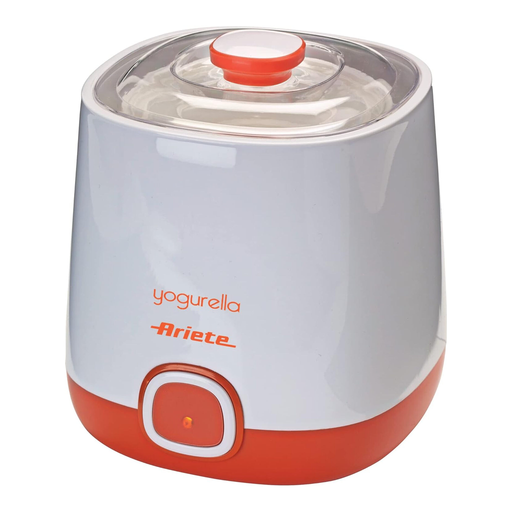
Ariete Yogurella 621, 1 l, 20 W
If a larger container suits you better than ready-filled small portions, this model is listed with a 1 l capacity.
The product title also mentions 20 W and one container. If you want individual portions, remember to allow time for decanting them later.
View at Joybuy
 No image available
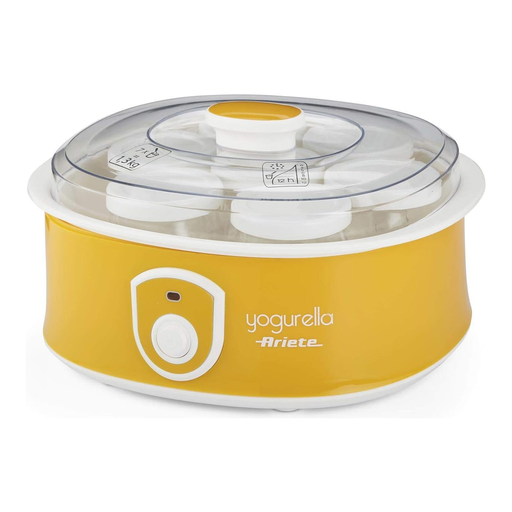
Ariete yoghurt maker, 1.3 l, 20 W (Refurbished A)
If you want to make several portions from one batch, check which jars are included with this refurbished model before you buy.
The product title lists a capacity of 1.3 l and 20 W, and gives the condition as Refurbished A.
View at Joybuy
Frequently asked questions
How can I stop the jars from being left out of the fridge for too long after preparation?
Make sure you have space in the fridge for the filled, sealed containers. The Verbraucherzentrale recommends storing dairy products such as yoghurt on the middle shelf at 5 to 7 °C. Best-before dates on shop-bought products don’t guarantee how long homemade yoghurt will keep.
Can I use raw milk without boiling it to make yoghurt at home?
Don’t use raw milk without boiling it first. The German Federal Institute for Risk Assessment warns that raw milk can contain pathogens, with increased risks for children, pregnant women, older people and those who are ill. Always follow the yoghurt maker’s instructions, too.
What should I do if an electric yoghurt maker develops a fault or needs to be disposed of?
If the appliance is faulty, your statutory rights are initially against the seller; a voluntary guarantee is separate. The German Environment Agency advises that old electrical appliances must not go in household rubbish. Take them to an appropriate collection point or recycling centre instead.


