What should you look for?
If space is limited, first compare the appliance’s footprint with the space you have available. Then consider whether being able to fill individual jars directly is worth making room for during preparation, cleaning and chilling.
Several portion pots
A good fit if: You want to make and chill the amount you need directly in individual jars.
The trade-off: Jars and lids need space for cleaning and storage.
Single container
A good fit if: You’d rather portion the yoghurt yourself and the appliance’s dimensions suit your worktop better.
The trade-off: You’ll need to portion the yoghurt after it’s made.
| What you’re looking for |
What to check before buying |
Who it matters most to |
| Individual portions, ready to chill |
Compare the capacity of each jar, the number of jars and the availability of compatible replacements. |
If I want to chill yoghurt in individual portions straight away, I need suitable jar sizes and enough jars for one batch. Shoppers whose main priority is jars that can be portioned directly account for around 34%. |
| Clear worktop space |
Check the assembled appliance’s width and depth, as well as the space needed to remove the lid. |
When worktop space is tight, I want to compare the appliance’s footprint with the space I actually have, even if I’ll need to transfer the yoghurt afterwards. Shoppers who care most about the space an appliance takes up account for around 33%. |
| Different preparations |
Match the available programmes and any accessories they require to the recipes you plan to make. |
If I want to make more than natural yoghurt, I check which programmes are available and whether I have room to store any extra accessories. Shoppers whose main priority is recipe variety account for around 20%. |
| Ease of use and cleaning |
Check the timer, automatic shut-off and cleaning instructions for the jars and appliance base. |
I want to keep the regular effort involved in using and cleaning the appliance manageable, even if that means considering a larger set of jars. Shoppers mainly looking for easy operation and care account for around 13%. |
Yoghurt makers at Joybuy
This selection includes yoghurt makers with portion jars as well as single-container models, where you portion the yoghurt yourself once it’s made.
 No image available
Fosmet yoghurt maker, 1.6 l, SUS304, 9 borosilicate glass jars
Comes with several jars for separate portions.
Inner container: 1.6 l, SUS304; temperature control, timer and OLED display.
Joybuy
 No image available
FOHERE yoghurt maker with 8 jars, 1,440 ml, 48-hour timer
The eight jars are ideal if you want to make several separate portions.
Total capacity: 1,440 ml; digital temperature settings, timer up to 48 hours and automatic shut-off.
Joybuy
 No image available
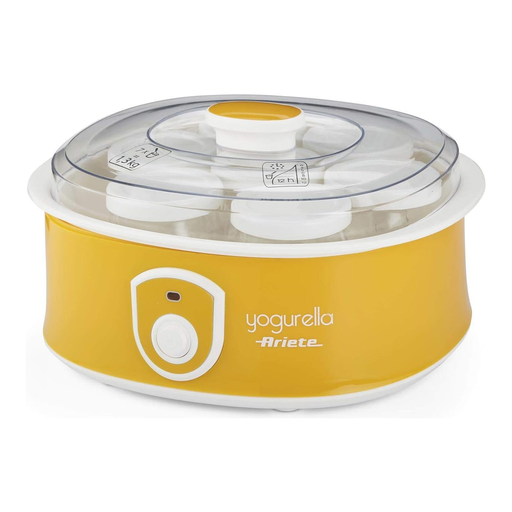
Ariete yoghurt maker, 1.3 l, 20 W (Refurbished A)
Seven jars with lids are supplied for making separate portions.
Capacity: 1.3 l; power: 20 W. Listed as “Refurbished A”.
Joybuy
 No image available
Yoghurt maker, 1.5 l, 20 W, with strainer insert
If you want to choose your own portion size, you can transfer the yoghurt from the container once it’s made.
Container: 1.5 l; power: 20 W; dimensions: 19.5 × 17.5 × 21.4 cm.
Joybuy
 No image available
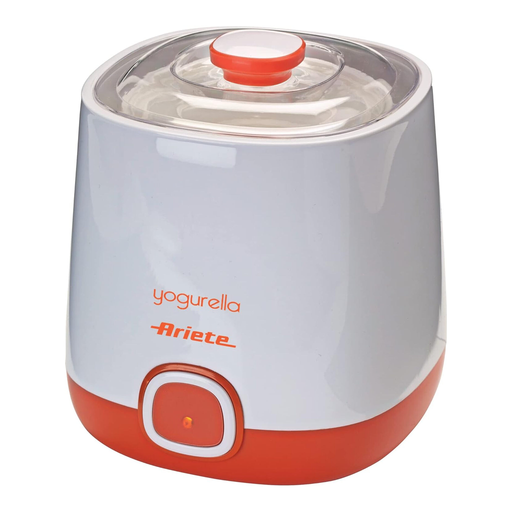
Ariete Yogurella 621, 1 l, 20 W
The single container is ideal if you’d rather portion the yoghurt yourself once it’s made.
Capacity: 1 l; power: 20 W; dimensions: 16 × 16 × 18 cm.
Joybuy
Frequently asked questions
Do I have to fill all the pots supplied at once?
Not necessarily; follow the instructions for your specific appliance. Rommelsbacher lists four 125 ml pots and larger containers for the JG 80. Check the instruction manual to see whether you can use only some of them at a time.
How should I clean and store homemade yoghurt?
Clean the jars and lids after use, and don’t immerse the electrical base of the Severin JG 3518 in liquid. Store finished yoghurt in the fridge. The Verbraucherzentrale recommends keeping dairy products such as yoghurt on the middle fridge shelf at 5 to 7 °C. This isn’t a guarantee of how long homemade yoghurt will keep.
Can I use raw milk to make homemade yoghurt?
Not without heating it first: the German Federal Institute for Risk Assessment warns of the risk of infection from unboiled raw milk, including in homemade yoghurt. Take particular care if serving it to children, pregnant women, older people or anyone who is ill.
What are my rights if the appliance is faulty?
When you buy from a trader in the EU, you’re generally entitled to a minimum two-year legal guarantee from the seller, starting from the date you receive the goods. This statutory guarantee is separate from any voluntary manufacturer’s warranty.
What should I know about electrical safety and disposal?
For an appliance sold in Germany, check the markings, the manufacturer’s information and the German-language instruction manual. The CE marking is the manufacturer’s declaration of conformity, not an independent quality mark. Don’t put a discarded electrical appliance in household waste; take it to an appropriate collection point instead.


