Smoothie makers with a small appetite
If you make smoothies just for yourself, you’ll want to take out manageable amounts of yoghurt rather than use up a large batch all at once.


If you’re making yoghurt for smoothies just for yourself, start by comparing the size of the individual jars or containers with the amount you actually use. Portion-sized jars make it easy to take out what you need; larger containers or a non-electric system may suit you if you make several smoothies from one batch and can plan for portioning it or providing heat. The consistency also depends on the ingredients and preparation, not just the appliance.
If you make smoothies just for yourself, you’ll want to take out manageable amounts of yoghurt rather than use up a large batch all at once.
If you want to use homemade yoghurt that works well with the other ingredients in your smoothie, consider the recipe, ingredients and any programmes available. The Verbraucherzentrale notes that movement during the fermentation period described can result in runny yoghurt.
If you want to keep kitchen tasks to a minimum, weigh up portion-sized jars, larger containers, a non-electric system and trying it without an additional appliance.
For a one-person household, the amount you actually need to make is a good place to start. Then consider consistency, ease of use and the space you have available.
| Buying criterion | What to look for | Who should pay particular attention? |
|---|---|---|
| Portion size and leftovers | Compare the capacity of each container, the number of jars and how much you use. | If I want to take out yoghurt little by little for my smoothies, suitable individual portions matter more than a large total quantity. Around 37% of consumers prioritise portion size. |
| Yoghurt consistency | Check the documented programmes and recipes; a programme name alone doesn’t guarantee a particular result in your smoothie. | If you want the yoghurt to work well with the other ingredients, consider the recipe and preparation method too. Around 27% of consumers focus above all on getting the right consistency. |
| Preparation and cleaning | Compare the number of parts to clean, cleaning instructions, timer and actual preparation steps. | If I want to make yoghurt regularly as part of my routine, the number of steps and parts involved matters. Around 18% of consumers place particular importance on ease of use. |
| Purchase and storage space | Consider the appliance’s dimensions, accessories and the storage space you have; you can also try making yoghurt without a maker to start with. | If you have limited kitchen space or want to try making yoghurt regularly before committing, consider how much extra storage room you’ll need. Around 18% of consumers prioritise space and the initial purchase. |
A large capacity doesn’t necessarily mean the batch will be practical for one person. You can use several jars separately, but they take up space and need washing.
First estimate how much yoghurt you use per smoothie and over several days. Then compare container sizes and what’s included.
The My.Yo non-electric system described uses heat from hot water; it also makes a one-litre batch, not a single portion for a smoothie.
Compare the entire preparation process and plan how you’ll portion out the larger batch afterwards.
F.A.Z. Kaufkompass highlighted the Rommelsbacher JG 80 in a test of 21 appliances. That doesn’t automatically tell you whether its container sizes suit the smoothie portions you make for one person.
Check the container sizes and features against the amount you usually make, rather than assuming a test result means it’s the right choice for every household.
The Severin JG 3518 comes with seven 150 ml portion jars.
The models differ in their containers and features: the JG 40 is described as coming with eight 150 ml jars, while the JG 80 combines small pots with larger containers.
The Steba JM 2 is described as having twelve 0.2-litre jars and a timer with automatic shut-off.
My.Yo offers a non-electric yoghurt maker with a capacity of one litre.
Depending on the model, these electric yoghurt makers come with portion jars or larger containers to suit the amount you want to make.
 No image available
The combination of individual jars and a separate inner pot gives you different container options for one batch.
The product name lists a 1.6-litre SUS304 inner pot, nine borosilicate glass jars, temperature control, a timer and an OLED display.
 No image available
Individual jars are a useful option if you want to store yoghurt separately for several smoothies.
The product name lists eight jars with a total capacity of 1,440 ml, a digital temperature function and a 48-hour timer.
 No image available
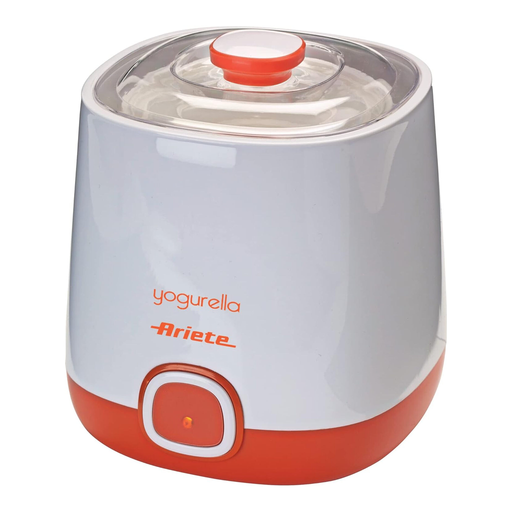
If you’re planning to make a larger quantity rather than using only small portion jars, the stated capacity is a useful point of comparison.
The product name lists a capacity of 1 l and a power rating of 20 W.
 No image available
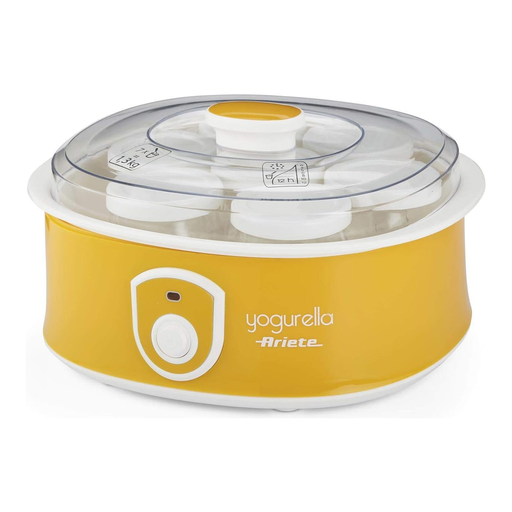
This version is marked as refurbished. Before buying, check that its condition meets your expectations.
The product name lists a capacity of 1.3 l and a power rating of 20 W.
 No image available
The two large containers are an option if you want to make several smoothies from a larger batch and portion out the yoghurt yourself afterwards.
The product name lists glass containers with capacities of 2,000 ml and 1,400 ml.
Yes. The Verbraucherzentrale describes making yoghurt in sealed screw-top jars and then storing it in the fridge. If you use an appliance, follow its instructions.
Use clean hands and containers, and keep the finished yoghurt chilled. The Bundeszentrum für Ernährung stresses the importance of good kitchen hygiene; the Verbraucherzentrale recommends storing yoghurt in the fridge after fermentation. This doesn’t establish a single shelf life that applies to every homemade batch.
The My.Yo method described uses heat from hot water. Factor this in when comparing the preparation involved and the heat source.
Your statutory rights are generally against the seller. According to the Verbraucherzentrale, the retailer is responsible for faults covered by the statutory guarantee for two years from the date of purchase or delivery. This is separate from any voluntary manufacturer’s guarantee.
Check the product labelling, manufacturer’s information and German safety information for the specific offer. The Bundesnetzagentur lists correct CE marking among the points to check. Containers that come into contact with food are subject to the relevant EU rules on food contact materials. CE marking is a declaration by the manufacturer, not an independently awarded quality mark.