What should you look for when buying?
Start by considering the container type and how much yoghurt you need. Then check whether a timer or specific programmes would genuinely make your routine easier, and how you’ll chill the finished yoghurt.
| Buying priority |
What to check before buying |
Who is this most relevant to? |
| Individual portions |
Check the number and capacity of the jars, and make sure they come with suitable lids that seal. |
If I make smoothies at different times, I want to take out one jar at a time and keep the other portions chilled with their lids on. Around 31 % of consumers prioritise individual portions. |
| One larger batch |
Check the capacity of the container set-up you’ll actually use; don’t add together the capacities of alternative containers. |
If I prepare yoghurt for several smoothies at once, I want to divide it into portions later to suit my needs. Around 25 % of consumers prioritise making one larger batch. |
| A programme that finishes when you expect |
Check whether the specific model has a timer or automatic shut-off, and how you’ll chill the yoghurt afterwards. |
If I want to fit the start or end of preparation around my daily routine, the right timer is important. Around 19 % of consumers prioritise being able to schedule when a programme finishes. |
| Different types of yoghurt |
Compare the programmes and instructions for the ingredient combination you want to use. |
If I want to try other milk alternatives or types of yoghurt, I want to know whether the instructions cover a suitable method. Around 13 % of consumers prioritise recipe variety. |
| Making yoghurt without electricity |
Check the type of appliance, the container and the instructions; you’ll still need to chill the yoghurt afterwards. |
If I specifically want to avoid an electrically heated yoghurt maker, a non-electric insulated container is more likely to suit my routine. Around 12 % of consumers prioritise this way of making yoghurt. |
Yoghurt makers at Joybuy
The products below include electric yoghurt makers with portion jars, as well as models with larger containers for making one bigger batch.
 No image available
Fosmet yoghurt maker, 1.6 l, 9 jars
The nine jars are useful if you want to portion out yoghurt in advance and take out individual servings for smoothies later.
Features listed include a 1.6-litre inner pot, nine 100 ml borosilicate glass jars, temperature control and an OLED display. According to the product description, the timer can be set from 1 to 99 hours.
View at Joybuy
 No image available
FOHERE yoghurt maker with 8 jars
Eight jars are a good choice if you want to prepare individual portions and take them out separately.
Specifications list eight jars with a total capacity of 1,440 ml, digital temperature control and a timer of up to 48 hours. The description says the jars are dishwasher-safe.
View at Joybuy
 No image available
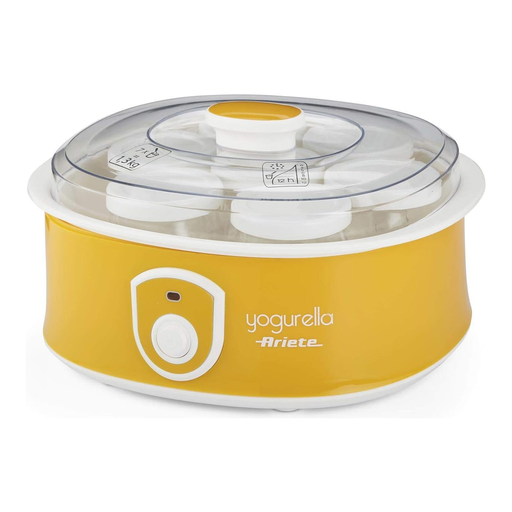
Ariete yoghurt maker, 1.3 l, 20 W, refurbished
The seven jars are suited to keeping individual portions separate in the fridge.
The product name and description list a 1.3 l capacity, 20 W, seven jars with lids and a three-hour fermentation time. The appliance is marked as refurbished.
View at Joybuy
 No image available
FOHERE yoghurt maker with two XXL glass containers
The larger containers are a good fit if you want to make one bigger batch; you’ll need to portion it out for individual smoothies later.
Specifications list two glass containers with capacities of 2,000 ml and 1,400 ml, as well as eight programmes and an adjustable running time.
View at Joybuy
 No image available
Yoghurt maker, 1.5 l, 20 W, with strainer and lid
The container is suited to making one larger batch, which you can then portion out for individual smoothies.
The product name lists a 1.5-litre container and 20 W, while the strainer is designed for draining off whey. Natural yoghurt and Greek-style yoghurt are listed as uses.
View at Joybuy
Frequently asked questions
Do I need to chill the portions after fermentation?
Yes, put finished yoghurt in the fridge. The Verbraucherzentrale recommends storing dairy products such as yoghurt on the middle shelf at 5 to 7 °C; automatic shut-off doesn’t chill the yoghurt. Advice on the shelf life of unopened shop-bought products doesn’t necessarily apply to homemade yoghurt.
Can I use raw milk in a yoghurt maker without boiling it first?
Don’t use unboiled raw milk to make yoghurt that won’t be heated again before eating. The German Federal Institute for Risk Assessment recommends boiling raw milk first; people at particular risk should avoid unboiled raw milk. Also follow the instructions for your appliance.
Who is responsible if the product is faulty, and how long does the legal guarantee last?
If a product is faulty, your statutory rights against the seller are separate from any voluntary manufacturer’s guarantee. EU consumer information states that goods bought in the EU are covered by a legal guarantee of at least two years from the date you receive them.
What labelling should I look for on an electric yoghurt maker?
Depending on the relevant EU product rules, CE marking may be required. It is the manufacturer’s declaration that the product meets the applicable requirements, not an independent quality mark. Check the details for the specific appliance; a non-electric insulated container isn’t classed as an electrical appliance simply because it’s used to make yoghurt.
How should I dispose of an electric yoghurt maker when I no longer need it?
Don’t put an electric yoghurt maker in your household rubbish. The German Environment Agency recommends taking electrical waste to a recycling centre or using a suitable retailer take-back scheme.


