
Lieferung heute & morgen

Qualitätsgarantie

Willkommens-Angebote freischalten: KOSTENLOSE Lieferung | Bis zu 80 % RABATT | Kostenlose 30-Tage-JoyPlus-Testphase
App herunterladen
By Joybuy Product Recommendation Officer, August 30, 2026
A fresh yogurt with crunchy granola is an ideal start to the day or a welcome snack. But transporting it can quickly lead to disappointment: the granola gets soggy, the yogurt leaks into your bag, or the container starts to smell unpleasant after just a short time. The search for the right yogurt-to-go cup often leads to a dead end of exaggerated advertising claims and low-quality products. Before you make a purchase, it's crucial to understand the common pitfalls that can render an otherwise handy accessory useless.
Many containers look practical at first glance but reveal their flaws only in daily use. Watch out for these three common problems to avoid a poor purchase.
To avoid these problems, you should base your choice on objective criteria. Three technical features are critical for the durability and functionality of your container.
The heart of any leak-proof container is the combination of its closure and seal. A simple screw-top lid can be sufficient if it has a high-quality, precisely fitted silicone seal. Systems with multiple snap-lock clips, like those found on some snack boxes with compartments, distribute the clamping pressure more evenly and often offer greater security. Make sure the seal is made of silicone, as this material is flexible, durable, and temperature-resistant. It should be easy to remove for thorough cleaning but also simple to put back securely.
The container's material determines its safety and versatility. High-quality Polypropylene (PP), declared as BPA-free (Bisphenol-A free), is the current standard for food containers. This material is robust, odor-neutral, and safe for food contact. Check the manufacturer's specifications for the following properties:
These features ensure that your granola-to-go cup can withstand the demands of daily life without losing its shape or function.
A good container for separating yogurt and granola must be practically sized. Consider the quantities you typically transport. A top compartment for granola or toppings should hold at least 200 ml to accommodate more than just a handful of cereal. For the yogurt or main meal, 300 ml to 500 ml is a good benchmark. There are two common designs:
Based on these criteria, we have identified a few products that are well-suited for different user profiles and their specific needs.
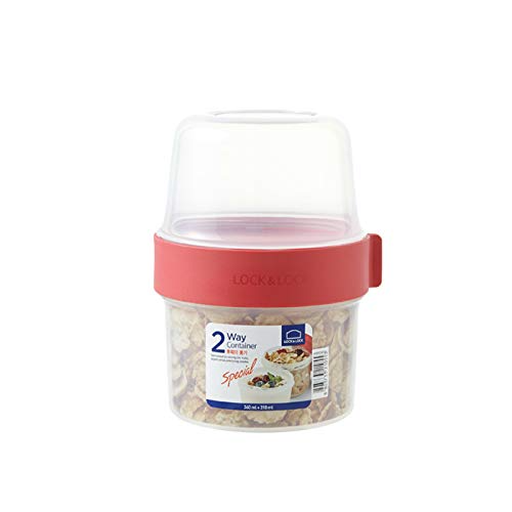
Why This Fits Their Persona: Ideal for the daily commute to work or university. The compact, round shape fits easily into backpacks and handbags. The portion sizes are perfect for a standard breakfast or an afternoon snack.
The reliable screw-top lid with an integrated seal prevents leaks, while the strict separation of compartments keeps granola crunchy until it's time to eat.
Two separate containers (360 ml + 310 ml) in one. Made from BPA-free plastic, microwave and dishwasher-safe.
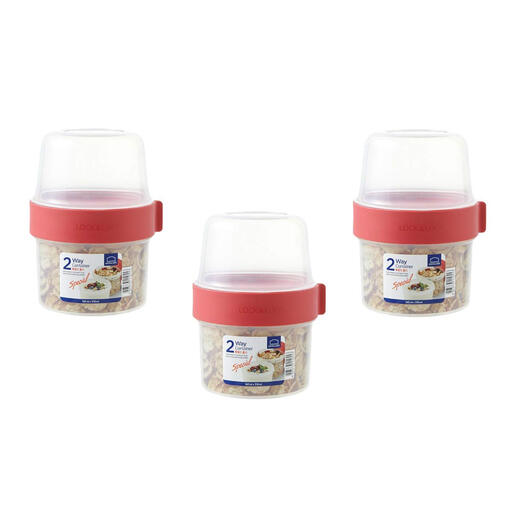
Why This Fits Their Persona: Perfect for anyone who plans their meals and snacks for several days in advance. The set of three identical containers simplifies the weekly routine and ensures a clean cup is always ready.
By purchasing a set made of proven, durable material, the risk of material fatigue is minimized. The consistent quality ensures reliable leak-proofing for each of the three containers.
Economical 3-piece set for efficient meal prep. Each container has the proven 360 ml and 310 ml division and is stackable.
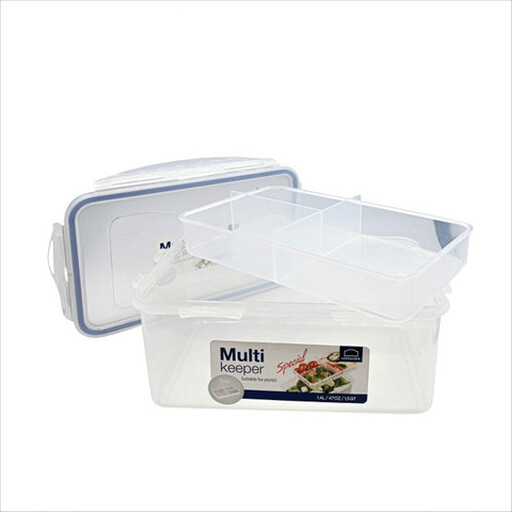
Why This Fits Their Persona: For users who want to transport more than just yogurt and granola. This rectangular breakfast box for the office is also suitable for small salads with dressing, veggie sticks with dip, or leftovers from the previous day.
The 4-sided snap-lock system with a silicone seal ensures an airtight and watertight closure that holds reliably, even with larger quantities and more movement in a bag.
Large capacity (1.4 L) with a permanently integrated divider for a clean side-by-side separation. High versatility for different meals.
We have compiled a comprehensive, up-to-date list of products that meet these strict selection criteria and comply with current regulations for food contact materials.
The most thorough cleaning method is in the dishwasher. For hand washing, it's best to clean all parts—cup, lid, and especially the silicone seal—separately with warm water and mild dish soap. To prevent odors during storage, ensure the containers are completely dry and ideally stored with the lid slightly open or loosely placed on top.
No, microwave suitability depends on the plastic used. Always check the manufacturer's specifications. Containers made from high-quality polypropylene (PP) are often microwave-safe, but the lid must typically be removed before heating to prevent pressure buildup.
BPA (Bisphenol A) is an industrial chemical used in the production of certain plastics. There is concern that BPA can migrate from containers into food. Products labeled "BPA-free" are made without this chemical and are considered a safer choice for food contact, especially when heating or for long-term storage.