
Lieferung heute & morgen

Qualitätsgarantie

Willkommens-Angebote freischalten: KOSTENLOSE Lieferung | Bis zu 80 % RABATT | Kostenlose 30-Tage-JoyPlus-Testphase
App herunterladen
A high-quality stockpot is an investment in your kitchen arsenal. However, when choosing one, especially for specific needs like a Zwilling 24 cm stockpot, hidden pitfalls can lead to buyer's remorse. It's a common frustration when a pot warps after a short time, heats unevenly on an induction hob, or its material tarnishes. This guide will help you identify the crucial features and make an informed decision.
Before deciding on a model, it's helpful to know the typical flaws that often only become apparent with use.
To avoid the problems mentioned above, you should focus on three core technical parameters. These define the performance and durability of a stockpot.
The designation 18/10 stainless steel pot is an industry standard for high-quality cookware. These numbers describe the alloy's composition:
A pot made from this material is robust, easy to clean, and does not react with food, ensuring pure, unadulterated taste.
For use on a modern hob, especially a pot for induction, the construction of the base is crucial. Models like the Zwilling TWIN Classic use a SIGMA Classic sandwich base. This consists of three layers:
A diameter of 24 cm with a capacity of around 6 litres is a highly versatile size. Such a pot is excellent as a 6-litre stew pot for braised dishes, as a soup pot with lid for stews and broths, or for preparing pasta and potatoes for a family. It offers sufficient space without taking up too much room on the hob. Furthermore, such cookware is dishwasher-safe, which simplifies everyday cleaning.
Here are some recommendations based on the quality criteria mentioned above, suitable for various household sizes and use cases.
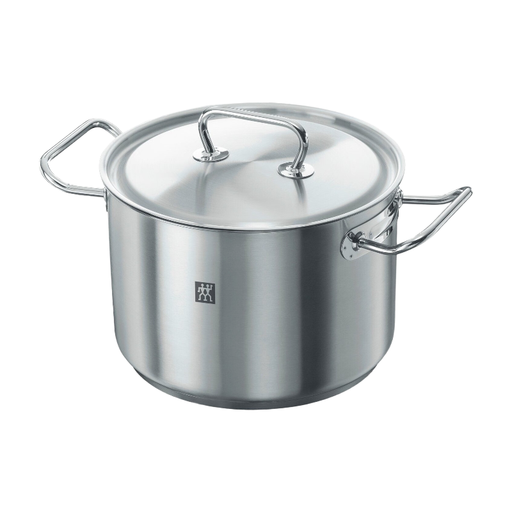
Why it's a great fit: Ideal for daily use in a family household. The 6-litre capacity is perfect for preparing main courses like stews, goulash, or large batches of pasta. The integrated measuring scale makes it easy to measure liquids directly in the pot.
The SIGMA Classic sandwich base ensures perfectly even heat distribution on induction hobs and prevents scorching. The 18/10 stainless steel material is robust, rustproof, and flavour-neutral.
Excellent heat retention and distribution for energy-efficient cooking. Universally compatible with all hob types.
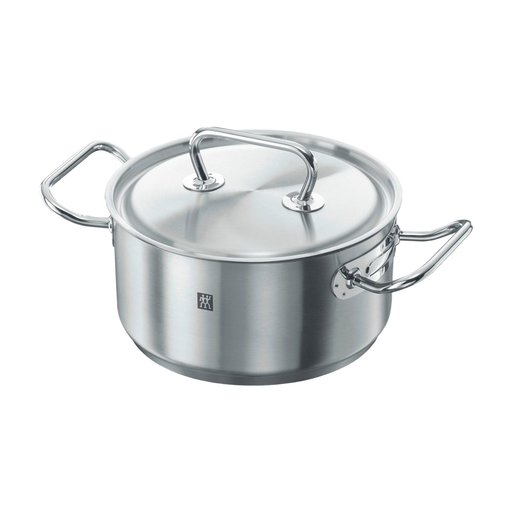
Why it's a great fit: For one to two-person households or for preparing side dishes like vegetables, rice, or sauces. Its compact size saves space on the hob and in the cupboard without compromising on quality.
Features the same high-quality sandwich base construction and durable 18/10 stainless steel material as the larger models in the series. Base stability is guaranteed even at this size.
Heats up efficiently and quickly due to its smaller volume. Ideal for quick meals and precise sauce-making.
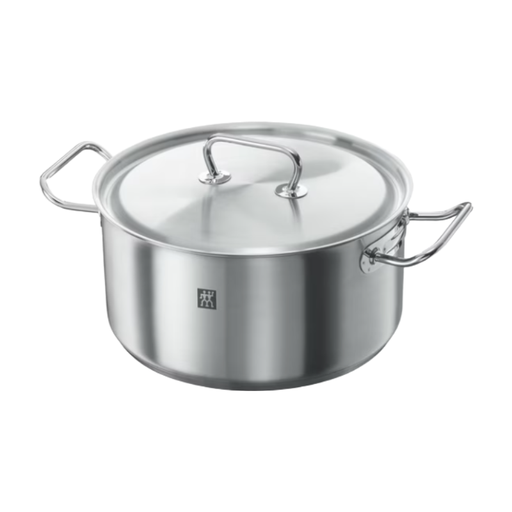
Why it's a great fit: Perfect for home cooks who love to entertain, prepare large family portions, or meal prep for the week. The generous 8.5-litre volume easily accommodates a whole roast or large quantities of soup.
Despite its size, the solid sandwich base ensures a stable, warp-free shape and even heating of all contents, which is a particular challenge for large pots.
Maximum capacity for ambitious cooking projects. The ergonomic stainless steel handles stay comfortably cool during cooking on the hob.
We have compiled a complete, up-to-date list of products that fully meet these strict selection criteria and German safety regulations.
Yes, cookware made from 18/10 stainless steel is fundamentally dishwasher-safe. The materials are resistant to the detergents and high temperatures used in dishwashers. However, to preserve the satin finish of the surface long-term and prevent water spots, manufacturers often recommend the gentler method of hand washing.
The easiest way is to look for the induction symbol (a stylised coil) on the bottom of the pot. Alternatively, you can hold a magnet to the base. If the magnet sticks firmly, the pot is suitable for an induction hob because it has the necessary ferromagnetic layer.
The terms are often used interchangeably. Traditionally, a stew pot (Fleischtopf) is roughly as tall as it is wide, making it ideal for searing and then braising cuts of meat. A general stockpot (Kochtopf) can also be taller than its diameter, which makes it particularly well-suited for soups, pasta, or boiling large amounts of liquid. The Zwilling 24 cm stockpot with a 6-litre capacity featured here is a classic stew pot that can be used universally as a stockpot.