
Lieferung heute & morgen

Qualitätsgarantie

Willkommens-Angebote freischalten: KOSTENLOSE Lieferung | Bis zu 80 % RABATT | Kostenlose 30-Tage-JoyPlus-Testphase
App herunterladen
A high-quality ZWILLING chef's knife is often a lifetime investment. However, the market is filled with models, series, and technical terms that can make choosing difficult. If you don't look closely, you can easily invest in a knife that fails to meet expectations for sharpness and durability. As your Joybuy Product Recommendation Officer, I'll help you identify the crucial features and avoid common purchasing pitfalls.
Before we dive into the details, let's address two common issues that often lead to disappointment. Many knives look high-quality at first glance but only reveal their weaknesses during daily use.
To make an informed decision, you should examine three technical aspects. These are the primary determinants of your chef's knife's performance and lifespan.
The core of any knife is its blade. ZWILLING uses a proprietary steel alloy for many of its series, known as "ZWILLING special formula steel." However, the hardening process is what truly makes the difference.
Look for the term ice-hardened blade. At ZWILLING, this process is called FRIODUR. It involves shock-cooling the blade to extremely low temperatures after heating. The result is a blade with a finer material structure that combines high hardness with flexibility. In practice, this means:
As mentioned, a forged knife is generally superior to a stamped one. At ZWILLING, this process is called SIGMAFORGE. Here, the knife is precision-forged from a single piece of steel. This is identifiable by the bolster, the thickened transition between the blade and the handle.
A forged chef's knife offers:
This traditional manufacturing method is a hallmark of kitchen knives from Solingen and a guarantee of the durability expected from a professional chef's knife.
A knife must fit comfortably in your hand. An ergonomic handle with a seamless transition to the blade prevents pressure points and allows for safe, fatigue-free work. The classic blade length for a versatile chef's knife is 20 cm. A chef's knife with a 20 cm blade is the all-rounder for most tasks—from slicing vegetables and portioning meat to mincing herbs.
Based on these quality criteria, we have selected a few models that suit different needs and preferences.
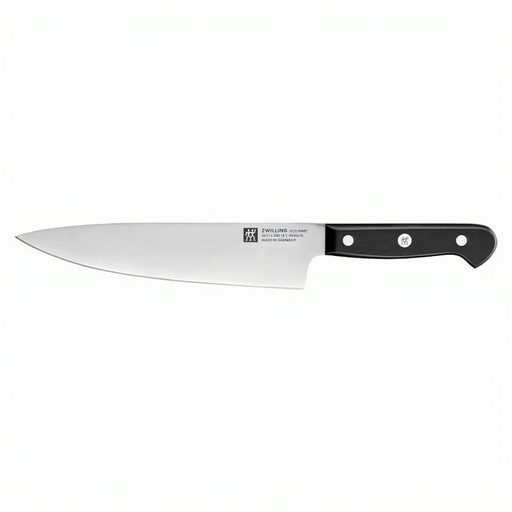
Why This Fits Their Persona: Ideal for home cooks looking to enter the world of high-quality knives. It offers proven ZWILLING quality and the versatile 20 cm blade for all daily kitchen tasks, without stretching the budget to a professional series.
Although the blade is stamped, the FRIODUR ice-hardening process makes it significantly more durable and better at retaining its edge than conventional knives in this price range. You avoid the trap of soft, non-specific "stainless steel."
Excellent value for a German-made knife. The ice-hardened blade ensures long-lasting sharpness for everyday use.
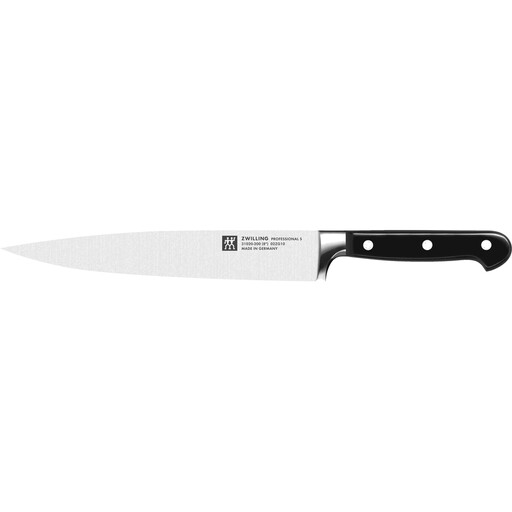
Why This Fits Their Persona: For those who make no compromises and want to invest in a tool for decades. This knife embodies classic Solingen craftsmanship and is designed for intensive, daily use.
This is a precision-forged knife, completely avoiding the stamped-blade trap. The full tang and solid bolster provide outstanding balance and stability that cheaper models lack.
Forged from a single piece of steel for maximum durability. The classic three-rivet handle with a full tang offers a professional feel and control.

Why This Fits Their Persona: The perfect complement to an existing chef's knife. This small, agile knife is designed for precise tasks like peeling fruits and vegetables, larding meat, or fine garnishing, where a large knife would be cumbersome.
Even this small knife uses the high-quality ZWILLING special formula steel and is ice-hardened. It resists the temptation to cut corners on material quality for smaller knives, which would lead to rapid dulling.
Lightweight, agile, and extremely sharp for maximum control during fine cutting tasks. The short blade allows for precise work directly in the hand.
We have compiled a complete, up-to-date list of products that fully meet these strict selection criteria and German safety standards.
The ZWILLING Pro series is aimed at discerning cooks and professionals. The knives are precision-forged from a single piece of steel (SIGMAFORGE), giving them excellent balance and durability. The ZWILLING Gourmet series is a more accessible option for everyday home use. Its blades are stamped from a sheet of steel but are also ice-hardened (FRIODUR), which gives them very good sharpness and edge retention. They are lighter than the forged knives of the Pro series.
The frequency depends heavily on usage, the cutting surface (wood or plastic is ideal), and care. For regular home use, sharpening the knife on a whetstone or having it professionally sharpened a few times a year is often sufficient. More important is the regular use of a honing steel to realign the fine edge of the blade and maintain sharpness between sharpening sessions.
Although some series like the ZWILLING Gourmet are declared dishwasher-safe, hand washing is fundamentally recommended for all high-quality chef's knives. Harsh detergents, high temperatures, and contact with other dishes can damage the fine edge and handle material over time. It is best to wash the knife with warm water immediately after use and dry it right away.