
Lieferung heute & morgen

Qualitätsgarantie

Willkommens-Angebote freischalten: KOSTENLOSE Lieferung | Bis zu 80 % RABATT | Kostenlose 30-Tage-JoyPlus-Testphase
App herunterladen
For many passionate home cooks, a Chinese chef's knife is a cornerstone tool in the kitchen. Its wide, rectangular blade makes it a versatile instrument that goes far beyond simply chopping vegetables. Those searching for a durable and precise model will often encounter the Zwilling Chinese Chef's Knife. This article serves as an objective guide to help you understand the features of this knife type and make an informed purchasing decision.
By: Joybuy Product Recommendation OfficerDate: July 28, 2026
Choosing the right knife depends on objective criteria related to its intended use and durability. Here are three key aspects to consider in your decision.
Its most distinctive feature is the wide blade. Contrary to popular belief, a classic Asian chef's knife of this type is not a cleaver for bones. The blade is typically ground thinner and is optimized for precise cuts.
The quality of the steel is crucial for sharpness, edge retention, and corrosion resistance. Manufacturers like Zwilling, with its production site in Solingen, rely on specific steel alloys and hardening processes.
A well-balanced knife sits securely in the hand and allows for fatigue-free work, even with large quantities of food. The handle should be firmly attached to the blade, often with rivets, and made of a durable synthetic material. The knife's weight should suit the user; lighter models like the Zwilling Gourmet are often more comfortable for extended work sessions.
Based on the criteria mentioned, we present a few models designed for different applications in the kitchen.
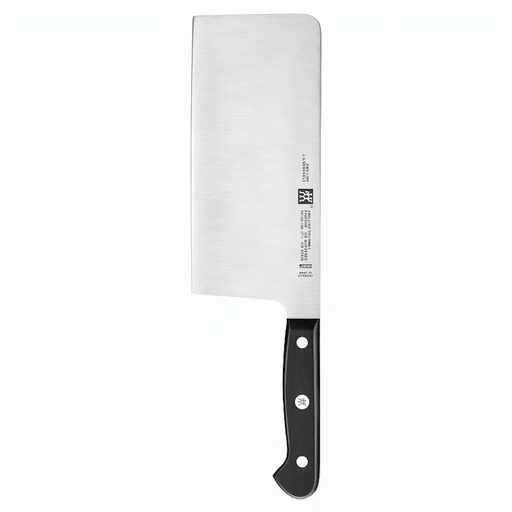
Why It Stands Out: This knife combines the traditional shape of a Chinese chef's knife with German manufacturing quality from Solingen. The 18 cm blade, made from special formula stainless steel, is versatile enough for vegetables, meat, and herbs. Its relatively low weight of 343 grams supports agile and controlled handling.
Pros:
Who It's For: This knife is aimed at home cooks looking for a high-quality, versatile primary knife for daily preparation of Asian and international dishes. It's an all-rounder for anyone who appreciates the precision of a chef's knife in the shape of a Chinese model.
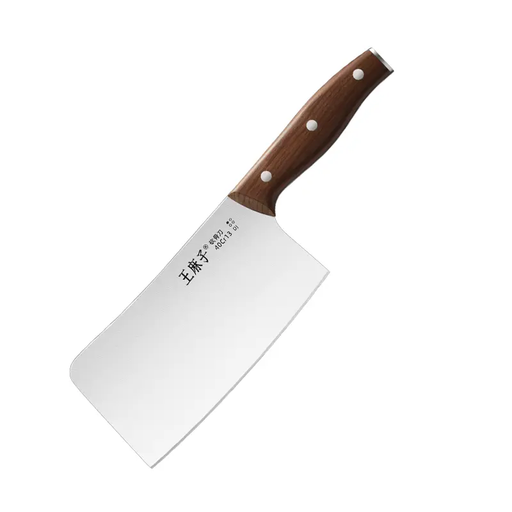
Why It Stands Out: Unlike the Zwilling Gourmet model, the Wangmazi kitchen knife is a true cleaver. Its robust, forged blade is specifically designed for heavy-duty tasks like breaking down bones and thick cuts of ribs.
Pros:
Who It's For: Users who regularly process bone-in meat and need a specialized, durable tool for the job. It is not an alternative but a complement to the Chinese chef's knife for heavy-duty work.

Why It Stands Out: While the large Chinese chef's knife handles the main tasks, delicate jobs like peeling fruit, cleaning vegetables, or creating garnishes require a smaller, more nimble tool. The Zwilling Gourmet Paring and Garnishing Knife, with its 10 cm blade, is a fitting complement.
Pros:
Who It's For: For all cooks who want to complete their knife collection. It is the right tool for precise prep work where a large chef's knife would be unwieldy.
The knives presented here cover specific applications. If you are looking for other blade shapes, handle materials, or knife sets, you will find more alternatives in our collection. A well-designed handle is just as important for handling as the blade itself.
Discover our full range of ergonomic knives
No, the Zwilling Gourmet Chinese Chef's Knife is designed as a cutting tool for vegetables, herbs, and boneless meat. Its blade is too thin for chopping bones and could be damaged in the process. For such tasks, specialized, heavier cleavers like the Wangmazi model shown above are required.
Although many knives are declared dishwasher-safe, washing by hand with lukewarm water and a mild detergent is recommended to preserve the material. For sharpening, you can use honing steels, whetstones, or specialized knife sharpeners. With high-quality blades, it is advisable to follow the manufacturer's recommendations to maintain the correct sharpening angle.
Solingen is known as the "City of Blades" and has a long tradition in cutlery manufacturing. The name is protected in the EU as a geographical indication. Chef's knives from Solingen are associated with high quality standards in terms of material, craftsmanship, and edge retention, all based on centuries of experience.