
Lieferung heute & morgen

Qualitätsgarantie

Willkommens-Angebote freischalten: KOSTENLOSE Lieferung | Bis zu 80 % RABATT | Kostenlose 30-Tage-JoyPlus-Testphase
App herunterladen
A premium, pre-filled knife block is the cornerstone of any well-equipped kitchen. However, the search for the right set can quickly become overwhelming. Anyone looking to invest in a high-quality knife set is often faced with a wall of marketing promises and technical specs. The result is frequently an expensive mistake: knives that dull quickly, feel uncomfortable in your hand, or a block that's more decorative than practical. As your Joybuy Product Recommendation Officer, I'll help you identify the crucial quality markers to make an informed decision.
Before we dive into the features of a good set, let's highlight the three most common problems that lead to disappointment.
To avoid the pitfalls mentioned above, you should focus on three objective criteria during your selection. These define the quality and longevity of a kitchen knife set with block.
The manufacturing process of the blade is the most critical quality feature. Forged knives, like those traditionally made in Solingen, Germany, offer higher steel density and a more stable molecular structure.
Look for manufacturing processes like Zwilling's SIGMAFORGE technology, where the blade is precision-forged from a single piece. An additional ice-hardening process (e.g., FRIODUR) further enhances the blade's corrosion resistance and flexibility.
A good chef's knife should feel like a natural extension of your hand. This is achieved through two factors:
A knife set with block is only as good as its components. A practical set should include the most important tools for everyday kitchen tasks. A 7-piece knife block is often an excellent starter set. It typically includes:
Based on the criteria above, we have identified a few products that are well-suited for different user profiles.

Why This Fits Their Persona: Ideal for home cooks seeking a complete, durable, and high-performance starter set that can handle any culinary challenge and represents an investment for years to come.
This set exclusively contains forged Solingen knives from the Zwilling Professional S series. The blades are crafted from a single piece of steel and ice-hardened, which bypasses the trap of inferior, stamped blades. The seamless handle ensures perfect ergonomics and hygiene.
The comprehensive 7-piece set covers all basic needs. The included honing steel ensures long-term sharpness, and the sturdy bamboo knife block provides safe and stylish storage.
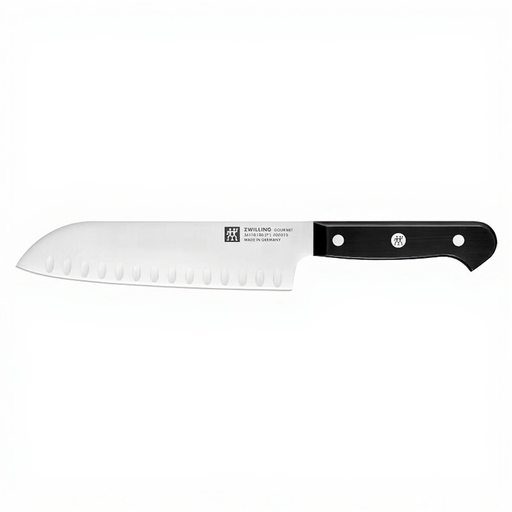
Why This Fits Their Persona: Perfect for cooks who already have a basic set and want to expand their arsenal with a specialized tool for Asian cuisine or for fine vegetable and fish preparation.
Although this is a stamped knife, it uses the FRIODUR ice-hardened blade made from special formula steel. This offers significantly better edge retention and quality than conventional stamped knives, making it a targeted, high-value addition.
The wide blade and Japanese shape are optimized for chopping and rocking cuts. The knife is lightweight, agile, and its hollow edge (if present) allows for slicing thin pieces without food sticking to the blade.
We have compiled a complete, up-to-date list of products that fully meet these strict selection criteria and German safety regulations.
The main difference lies in the manufacturing process. Forged knives are heated and shaped from a single piece of steel, resulting in higher density, stability, and edge retention. They are identifiable by the thick bolster between the blade and handle. Stamped knives are cut from a sheet of steel, are lighter and less expensive, but are generally less durable and require more frequent sharpening.
High-quality knives should never be put in the dishwasher. The aggressive detergents and high temperatures can damage the steel and the handle. Clean the knives by hand with warm water and mild soap, and dry them immediately. Regularly run the blades over a honing steel to realign the fine edge and maintain sharpness. The knife block itself should be kept dry and cleaned with a slightly damp cloth as needed.
Yes, a bamboo knife block is an excellent choice. Bamboo is a hard and resilient material that is gentle on knife blades. It is naturally less porous than other types of wood, meaning it absorbs less moisture and is more resistant to bacteria. Furthermore, it is a rapidly renewable resource, making it a sustainable option.