
Lieferung heute & morgen

Qualitätsgarantie

Willkommens-Angebote freischalten: KOSTENLOSE Lieferung | Bis zu 80 % RABATT | Kostenlose 30-Tage-JoyPlus-Testphase
App herunterladen
A ZWILLING knife can serve you well for many years in the kitchen – provided the blade, handle and care routine match how you intend to use it. There are, however, significant differences between a ZWILLING chef’s knife, a small vegetable knife and a ZWILLING steak knife set. If you focus only on the brand name or a shiny appearance, you could easily end up buying a knife that doesn’t suit the way you work.
A 20 cm chef’s knife is great for cutting larger ingredients, for rock-chopping and for meat or vegetables. In smaller hands or when space on the chopping board is limited, however, it can feel unwieldy. For peeling, trimming and garnishing, ZWILLING paring knives, vegetable knives or trimming knives with a blade length of 7 to 10 cm are usually easier to control.
Names like FRIODUR ice-hardened or SIGMAFORGE forged describe specific manufacturing features, but they don’t replace the need to assess the knife as a whole. What really matters includes blade length, blade shape, handle design, edge angle and care instructions.
An ice-hardened blade can indicate a defined heat treatment. With a SIGMAFORGE forged knife, the blade is made from a single piece of steel. However, this doesn’t automatically mean that every model is suitable for every cutting task.
Some ZWILLING kitchen knives are listed as dishwasher-safe according to the product information. Even so, hand washing is recommended for many models, because heat, detergents, water jets and contact with other cutlery can put extra strain on the edge or handle. For handmade or forged knives, you should always follow the manufacturer’s specific guidance.
A German kitchen knife with a broad, slightly curved blade often supports the rock-chopping technique. A narrow blade is better suited to portioning meat or precise trimming.
The models mentioned use special shaped steel, rust-resistant special steel and stainless steel. FRIODUR ice-hardened is described in the product details as a process that improves hardness, flexibility and corrosion resistance. This can help with everyday performance, but it doesn’t replace the need for a suitable chopping board or regular sharpening.
SIGMAFORGE forged indicates that selected ZWILLING knives have a blade made from a single piece of steel. A full tang can contribute to stability and balance. You should also check whether the blade is smooth or serrated, and whether the knife is intended for hard foods, meat or fine garnishing work.
An ergonomic plastic handle with a finger guard can support safety and control during longer cutting sessions. Three rivets, a seamless transition or a rivet-free handle are design features that can be compared objectively.
Care is also important:
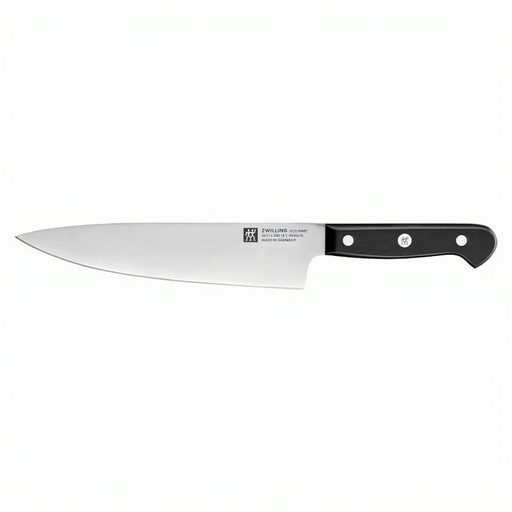
Why this product fits the profile: This 20 cm chef’s knife covers typical prep tasks like slicing, dicing, chopping and rock-chopping. The plastic handle with three rivets is straightforward and designed for regular household use.
The clear blade length and described area of use make selection easier. The FRIODUR ice-hardened blade and V-Edge grind are specifically named.
20 cm blade, FRIODUR technology and ergonomic plastic handle; listed as dishwasher-safe according to the product information, though hand washing is recommended to preserve it.
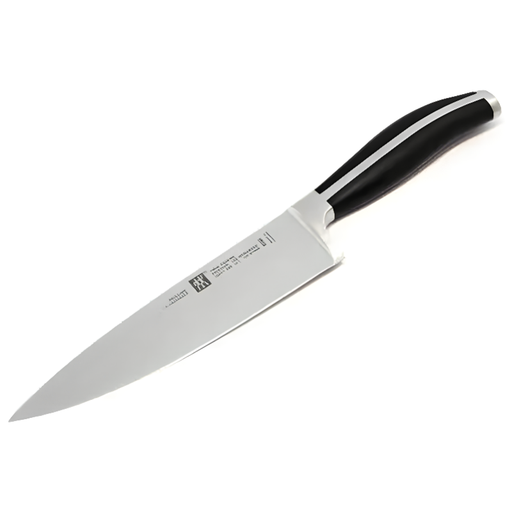
Why this product fits the profile: This forged chef’s knife is aimed at users who compare construction, hygiene and balance in detail. The blade is intended for rock-chopping, herbs, vegetables as well as meat and poultry.
The details name the manufacturing process, a V-Edge angle of 15° per side and a horizontal, rivet-free full tang. This allows you to assess marketing terms against concrete features.
SIGMAFORGE construction, FRIODUR ice-hardened special steel and a seamless plastic handle; listed as made in Germany according to the product information.
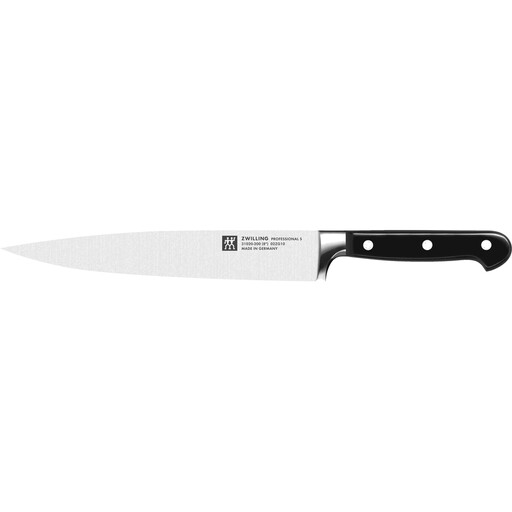
Why this product fits the profile: The broad 20 cm blade is described as suitable for raw meat, roasts, poultry and stewing steak. This makes the model ideal for households and kitchens where meat is prepared regularly.
The specific intended use prevents you from buying a general chef’s knife for all tasks. The care note “not dishwasher-safe” is clearly stated.
Forged 20 cm blade, FRIODUR ice-hardening, finger guard and triple-riveted plastic handle; listed as made in Germany according to the product information.
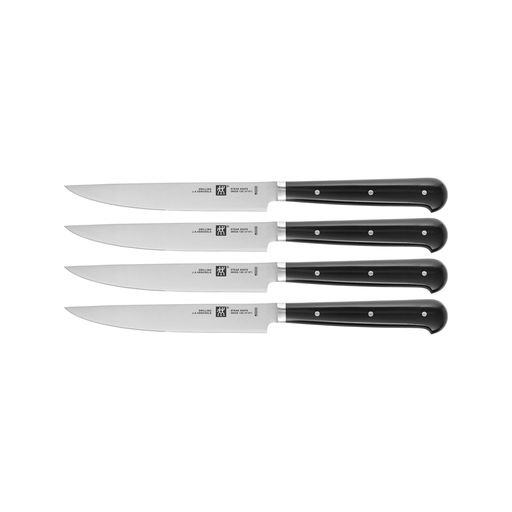
Why this product fits the profile: This set contains four serrated steak knives with 12 cm blades, designed for meat and poultry at the table. It suits households that want to set multiple place settings at once.
The quantity, blade type and length are clearly stated. This means the set won’t be mistaken for a universal chef’s knife or a single meat knife.
Four serrated stainless steel blades, ergonomically shaped handles and listed as dishwasher-safe according to the product information; hand washing is recommended to preserve them.
We’ve put together a complete, regularly updated list of products that fully meet these strict selection criteria and the safety regulations in force in the EU.
The lifespan depends on your chopping board, care, storage and how often you sharpen it. Glass, stone, bones and frozen foods can damage the edge. Hand washing, drying immediately and using a suitable knife block reduce typical wear and tear.
For large quantities and bigger ingredients, an 18 to 20 cm chef’s knife is practical. For peeling, trimming and garnishing, a ZWILLING paring knife or a 7 to 10 cm vegetable knife works well. Your choice should be guided by how it feels in your hand and the specific cutting task.
A ZWILLING knife set can be a good idea if you need several types of knife. If you’re only looking for an everyday knife to start with, you’ll often be better off with a single chef’s knife. For the table and the barbecue, however, a ZWILLING steak knife set with several serrated blades is a practical addition for a specific purpose.