
Lieferung heute & morgen

Qualitätsgarantie

Willkommens-Angebote freischalten: KOSTENLOSE Lieferung | Bis zu 80 % RABATT | Kostenlose 30-Tage-JoyPlus-Testphase
App herunterladen
A precise Zwilling paring knife is an indispensable tool in any quality-conscious kitchen. Yet, many buyers face a challenge when choosing: What are the differences between the models, and which one is right for my needs? Unclear product descriptions or a focus on non-essential features often lead to an unsuitable choice. This guide will help you identify the crucial quality markers and avoid common purchasing pitfalls.
Before deciding on a model, it's helpful to understand the typical weaknesses of less expensive alternatives. These often lead to frustration and render the tool useless after a short time.
A high-quality small kitchen knife from an established manufacturer like Zwilling from Solingen is designed to prevent these exact problems.
To make an informed decision, you should carefully examine three technical aspects. These are the primary determinants of the knife's performance, durability, and suitability for various applications.
The heart of any knife is its blade. For many of its series, Zwilling uses a special stainless steel, the so-called Zwilling special formula steel. This steel is characterized by an optimized ratio of chromium and carbon. However, the finishing process is what's crucial:
Paring and garnishing knives are available in various lengths, typically between 6 cm and 10 cm. The length and shape are decisive for the intended use:
The handle determines how well the knife fits in your hand. The Zwilling series differ significantly here, which is also reflected in the user experience.
Based on these criteria, we have selected models that suit different requirements and budgets.
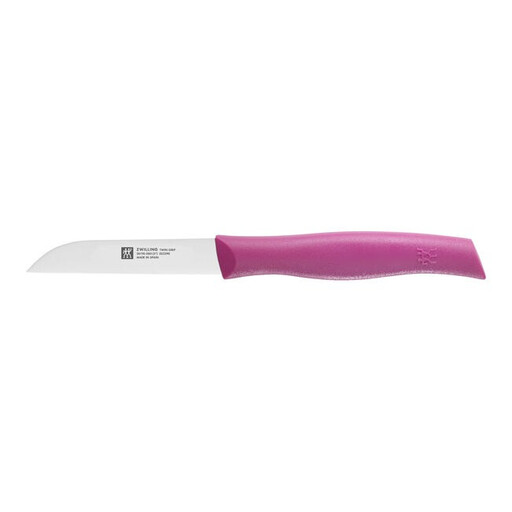
Why This Fits Their Persona: Ideal for daily, uncomplicated kitchen tasks. The non-slip synthetic handle provides a secure grip for peeling fruits and vegetables, even for novice cooks. The colour coding helps to quickly find the knife in a drawer.
The FRIODUR ice-hardened blade made of stainless special formula steel avoids the problem of rapid dulling. The ergonomic handle prevents fatigue and unsafe handling.
Excellent value for money; lightweight and agile for precise peeling and cutting; corrosion-resistant blade.
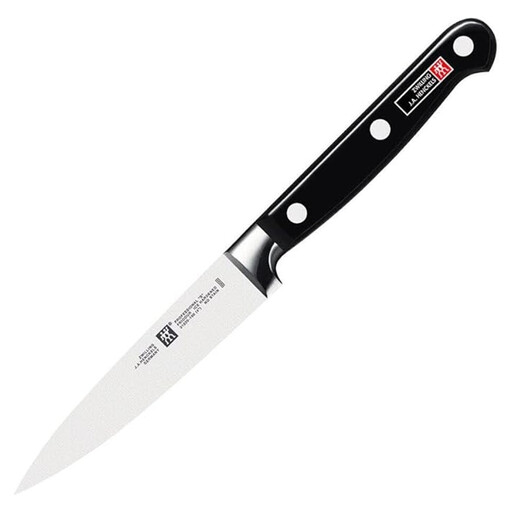
Why This Fits Their Persona: For cooks who value professional-grade tools, durability, and perfect balance. This knife is designed for intensive use and offers maximum control and precision for all fine-detail work.
The forged SIGMAFORGE construction from a single piece of steel with a full tang and bolster ensures excellent balance and stability. This directly counteracts the pitfall of an unbalanced design.
Outstanding balance and ergonomics thanks to the bolster; high edge retention and robustness; classic three-rivet design for lasting stability.
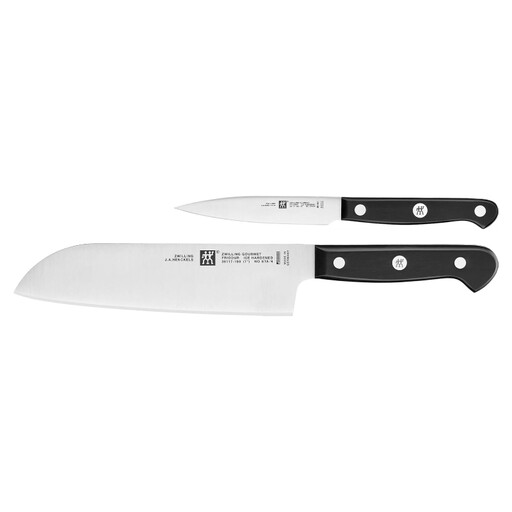
Why This Fits Their Persona: For users looking for a solid starter set. With the versatile Santoku knife and the precise vegetable knife, this set covers the most important cutting tasks in the kitchen and offers a great entry into the world of high-quality knives.
Instead of buying several inferior knives, this knife set with a vegetable knife provides two coordinated, durable tools. The ice-hardened blades of the Zwilling Gourmet series offer excellent edge retention and are robust.
Attractive price-to-performance ratio for a set; covers a wide range of tasks; lightweight and balanced construction for fatigue-free work.
We have compiled a complete, up-to-date list of products that fully meet these strict selection criteria and UK safety regulations.
Although many Zwilling knives are declared dishwasher-safe, hand washing is recommended to preserve sharpness and longevity. Use lukewarm water, a mild detergent, and a soft cloth. Dry the knife immediately to prevent surface rust. For storage, a knife block, a magnetic strip, or a blade guard is suitable to protect the cutting edge from damage.
The main difference lies in the manufacturing method and the associated design.
Yes, for many households, such a set is a very practical starter kit. It combines a small, agile vegetable knife for detail work with a larger all-purpose knife (like a Santoku or chef's knife). This covers the most common cutting tasks and ensures that both knives have consistent quality and handling. It is also often more cost-effective than buying the individual knives separately.