
Lieferung heute & morgen

Qualitätsgarantie

Willkommens-Angebote freischalten: KOSTENLOSE Lieferung | Bis zu 80 % RABATT | Kostenlose 30-Tage-JoyPlus-Testphase
App herunterladen
A ZWILLING paring knife is designed for small, precise tasks: peeling fruit and vegetables, cleaning potatoes, removing seeds, portioning ingredients or preparing garnishes. The choice may initially seem straightforward, but there are noticeable differences in everyday kitchen use between ZWILLING 6 cm paring knives, 8 cm, 9 cm and 10 cm models.
Anyone who focuses only on colour, brand name or the claim that a knife is “sharp” can easily overlook important details. Three common buying pitfalls are particularly relevant:
Blade length is a useful guide:
A longer blade is not automatically more precise. For delicate tasks, a shorter model may be easier to control. The key consideration is whether you generally prepare small ingredients or medium-sized foods.
Many ZWILLING models feature blades made from rust-resistant special steel or a special stainless-steel formula. Several ranges use a FRIODUR ice-hardened blade. In the product information, this process is associated with properties such as corrosion resistance and a stable cutting edge.
It is also worth looking at the construction:
Hardness ratings, such as 50–54 HRC or 55–58 HRC, can help when comparing models. They describe the hardness of the material, but do not by themselves indicate how long a knife will remain sharp under particular usage conditions. The cutting board, cutting technique and care routine also affect durability.
An ergonomic plastic handle can be comfortable during longer preparation tasks. A textured or non-slip surface helps ensure secure handling, especially when your hands are wet. With forged models, the transition between blade and handle is also important: a pronounced bolster or a near-seamless connection can provide additional protection against contact with the blade.
Cleaning instructions vary depending on the product. Some TWIN Grip and Four Star models are described as dishwasher-safe, while hand washing is recommended or expressly specified for others. You should therefore always check the information for the specific product before buying. For the gentlest possible care:
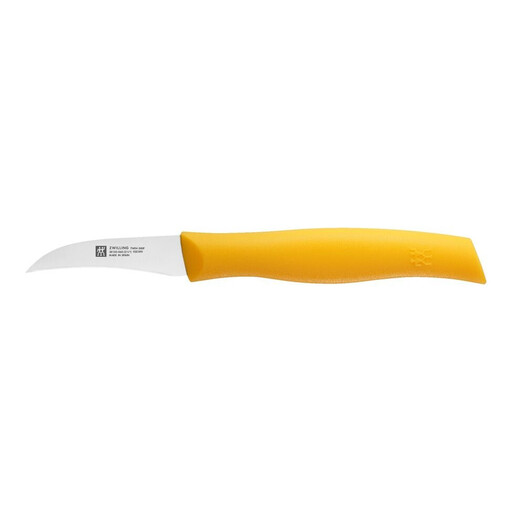
Why this product suits this profile: The compact blade and low weight are ideal for everyday tasks involving small ingredients, as well as for users looking for a lightweight vegetable knife for fruit and vegetables.
The 6 cm specification clearly indicates the intended use. The plastic handle has an ergonomic design; check the specific care instructions before ordering.
FRIODUR ice-hardened stainless-steel blade, ergonomic handle and compact dimensions for precise cutting tasks.
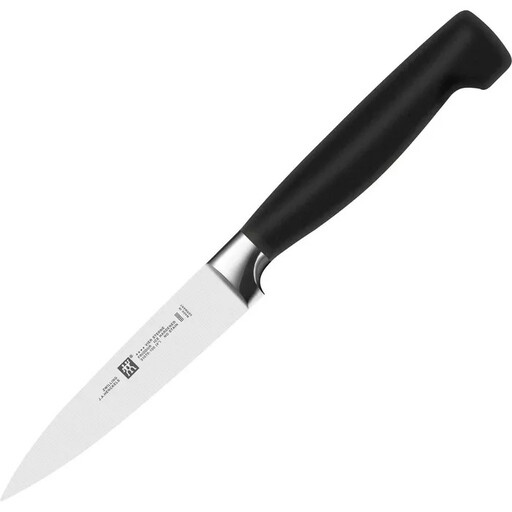
Why this product suits this profile: The 10 cm blade combines versatile use with a forged construction and a seamlessly designed synthetic handle.
The product details specify both SIGMAFORGE and FRIODUR. This makes it possible to assess the construction objectively rather than focusing only on general claims about sharpness.
10 cm blade, SIGMAFORGE forged construction, FRIODUR ice hardening and ergonomic, seamless handle.
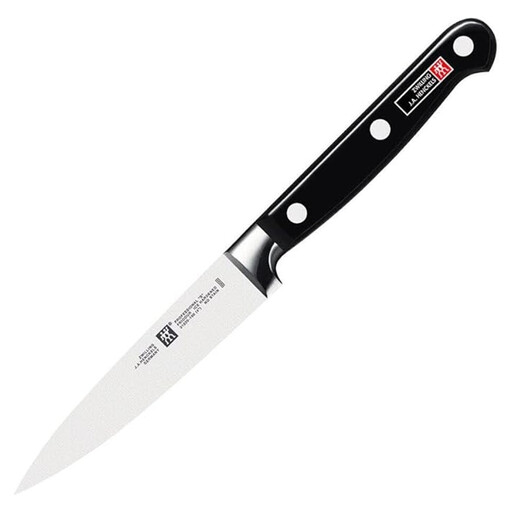
Why this product suits this profile: For frequent, detailed preparation tasks, the 10 cm blade provides useful reach. The product description specifies a forged construction, a bolster and a plastic handle with three rivets.
The recommended hand washing takes the delicate cutting edge into account and prevents the cleaning instructions from being confused with a blanket recommendation for dishwasher use.
FRIODUR ice-hardened blade, SIGMAFORGE construction, full bolster and three rivets on the handle.
The ZWILLING Now S is aimed at households that prefer a colourful, non-slip plastic handle and a modern design. The range is described as featuring FRIODUR ice-hardened stainless-steel blades in various sizes.
According to the product information, the ZWILLING vegetable knife from the Gourmet range, with its 10 cm blade, is made from a special high-carbon stainless-steel formula and has a black plastic handle. It is listed as dishwasher-safe; however, hand washing is still recommended to help protect the cutting edge.
For a colourful handle and everyday use, TWIN Grip models are available in blue, yellow, pink or green. Features may vary depending on the item number. You should therefore compare the blade length, hardness rating, handle material and cleaning instructions directly on the relevant product listing.
We have put together a complete, regularly updated list of products that fully meet these strict selection criteria and the safety regulations applicable in the EU.
6 cm is practical for small ingredients and particularly controlled movements. 8 to 9 cm is a versatile middle ground. A 10 cm blade offers greater reach and is also suitable for garnishing or preparing larger ingredients.
This depends on the range and item number. Some models are listed as dishwasher-safe, while hand washing is recommended or required for others. If you want to keep the cutting edge sharp for as long as possible, use warm water and mild washing-up liquid, then dry the knife immediately.
Use a suitable cutting board and avoid glass, stone and ceramic surfaces. The knife should not be left loose in a drawer with other cutlery. Depending on the blade specification, regular honing with a suitable honing steel or professional sharpening may be advisable.