
Lieferung heute & morgen

Qualitätsgarantie

Willkommens-Angebote freischalten: KOSTENLOSE Lieferung | Bis zu 80 % RABATT | Kostenlose 30-Tage-JoyPlus-Testphase
App herunterladen
As a Joybuy Product Recommendation Officer, I see discerning users every day searching for tools that not only make their work easier but also elevate its quality. A high-quality pair of tailor's shears is one such investment. However, the market is saturated with products that overpromise and underdeliver. Misleading material specifications and exaggerated marketing slogans often lead to frustration and unnecessary expense. This guide will help you identify the crucial features and make an informed decision.
Before we delve into quality features, it's important to understand the typical pitfalls that often lead to a poor purchase.
To avoid these mistakes, you should base your selection on objective criteria. Three technical parameters are non-negotiable.
The heart of any good pair of shears is the steel. For durable sewing scissors or cutting shears, stainless steel is the fundamental requirement. It prevents corrosion and ensures a hygienic surface. Renowned manufacturers like Zwilling often use a special steel alloy that is ice-hardened to achieve exceptional hardness and edge retention. Pay attention to the exact material designation. A precisely ground blade, often described as a precision-ground edge, is just as important. Only this guarantees a smooth cut without damaging the fabric.
Using professional fabric shears means holding them for hours on end. Ergonomics are therefore not a luxury, but a necessity.
An often-underestimated detail is the joint connecting the two halves of the shears. Inexpensive models are usually just riveted. You can identify high-quality shears by a genuine, adjustable screw. This allows you to set the blade tension precisely and easily disassemble the shears for professional maintenance or resharpening. This secures the tool's functionality for many years.
Based on the objective criteria mentioned, there are products that are particularly well-suited for specific user profiles.
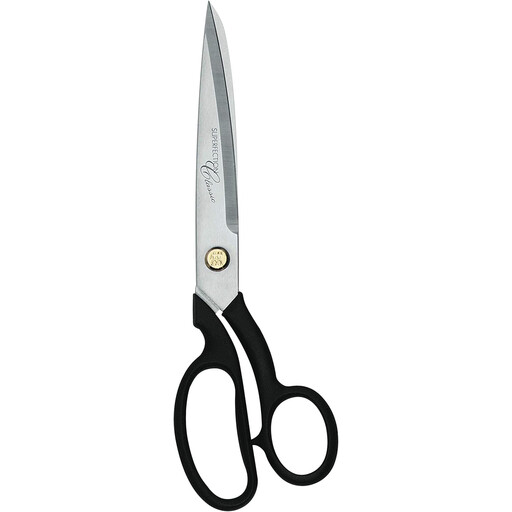
Why This Fits Their Persona: This model is aimed at individuals who need a reliable and durable tool for precise tailoring. It's ideal for fashion designers, professional tailors, and ambitious hobby sewers who regularly work with a variety of fabrics and value lasting sharpness and comfort.
The shears are made of high-quality, stainless special steel and are not all-purpose scissors. The precision-ground blades and ergonomically shaped, fibreglass-reinforced handles are specifically designed for exact, fatigue-free cutting of textiles.
Long-lasting sharpness from stamped parts made of stainless special steel. The adjustable screw allows for individual tensioning and maintenance. The robust construction is suitable for thick and multi-layered fabrics.
We have compiled a complete, up-to-date list of products that fully meet these strict selection criteria and safety standards.
Clean the blades after each use with a soft, dry cloth to remove fabric remnants and moisture. Use the shears exclusively for textiles; cutting paper or cardboard will quickly dull the blades. An occasional drop of scissor oil on the screw will keep the action smooth. For resharpening, the shears should be taken to a professional sharpening service.
Yes, a high-quality pair of cutting shears like the Zwilling Superfection is designed for exactly that. The sturdy, sharp blades and the excellent leverage from the long handles allow you to cut effortlessly and precisely through dense materials like denim, corduroy, wool, or multiple layers of cotton without the blades straying or the fabric fraying.
Although the terms are sometimes used interchangeably, they generally refer to different tools. Tailor's shears (also called cutting shears) are larger (typically 20 to 26 cm long) and are used for cutting fabric pieces from a pattern. Sewing scissors are smaller and more nimble. They are used for fine tasks directly at the sewing machine, such as snipping threads, trimming seam allowances, or making small incisions.