
Lieferung heute & morgen

Qualitätsgarantie

Willkommens-Angebote freischalten: KOSTENLOSE Lieferung | Bis zu 80 % RABATT | Kostenlose 30-Tage-JoyPlus-Testphase
App herunterladen
A good kitchen knife needs to be more than just sharp. What matters is whether the blade length, knife shape, handle and care requirements suit your everyday needs. If you focus only on terms such as “premium steel” or “professional”, you can easily end up buying a knife that is too heavy, too delicate or unsuitable for its intended purpose.
These three buying misconceptions are particularly common when choosing ZWILLING knives:
The classic ZWILLING chef’s knife with a blade of around 20 cm is suitable for many cutting tasks: dicing vegetables, chopping herbs, portioning meat or cutting larger ingredients. Its curved blade profile also allows for a rocking motion.
An 18 cm santoku knife is an alternative for users who prefer shorter, straighter cutting movements. The broad blade makes it easier to lift chopped ingredients. A hollow-edge grind can reduce contact between food and the blade, but it does not replace the need for suitable cutting technique.
A paring knife with a 7 to 10 cm blade is sufficient for smaller preparation tasks. It is suitable for peeling, trimming, removing cores and garnishing. A carving knife with a 20 cm blade, on the other hand, is designed for cutting raw meat, roasts or poultry. For bread and baked goods, a bread knife with a serrated edge is a sensible choice, as the teeth cut through the crust without heavily crushing the inside.
Many ZWILLING ranges use special stainless steel or a special stainless-steel alloy. Product information often refers to a FRIODUR-hardened or ice-hardened blade. This describes a manufacturing process that affects the blade’s material properties. However, this should not be taken to mean that a knife will remain permanently sharp without being sharpened.
Another relevant value is the cutting angle. On some models, the total angle is approximately 30°, or around 15° per side. A smaller angle can enable precise cuts, but requires a suitable cutting surface and careful maintenance. Glass, stone and ceramic are unsuitable for kitchen knives because they can damage the edge.
An ergonomic handle with a three-rivet design can provide a secure grip. According to the product description, the blade of forged knives in the ZWILLING Professional S range is made from a single piece of special steel. This can make the construction sturdy; however, weight, balance and how the handle feels in your hand remain important individual factors when choosing a knife.
The models differ considerably when it comes to cleaning:
The specific care instructions on the relevant product page take precedence over general information about the range.
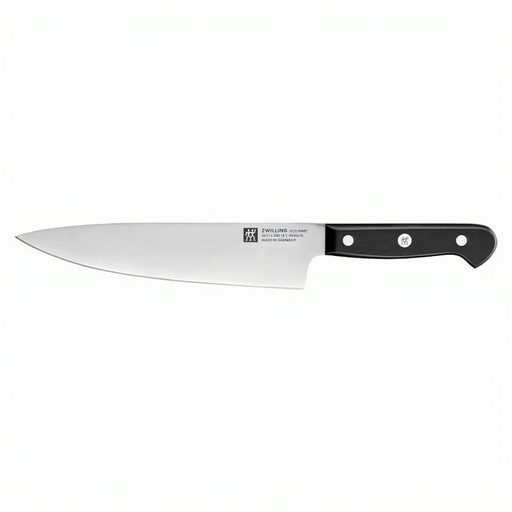
Why this product suits this profile: The 20 cm chef’s knife covers many everyday tasks with a single blade. The product information specifies FRIODUR ice-hardened special stainless steel, a cutting angle of around 30° and a three-rivet plastic handle.
Instead of buying a large block, you purchase just one versatile knife that is used frequently. This avoids unused specialist blades and the need for additional storage space.
20 cm blade, FRIODUR construction and dishwasher-safe according to the product information. Hand washing is still recommended to protect the blade.
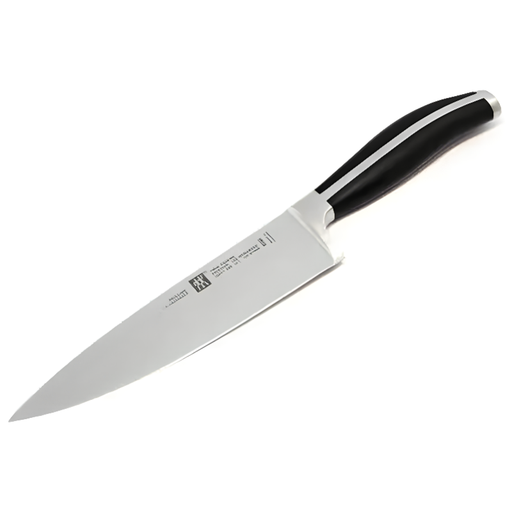
Why this product suits this profile: The combination of SIGMAFORGE construction, FRIODUR ice-hardened special steel and a horizontal full tang is aimed at users who value a continuous construction and hygienic transitions.
The technical details clearly describe the construction, steel and cutting angle. At the same time, hand washing is explicitly required, preventing incorrect assumptions about care.
20 cm blade, one-piece SIGMAFORGE construction and seamless plastic handle with finger guard.
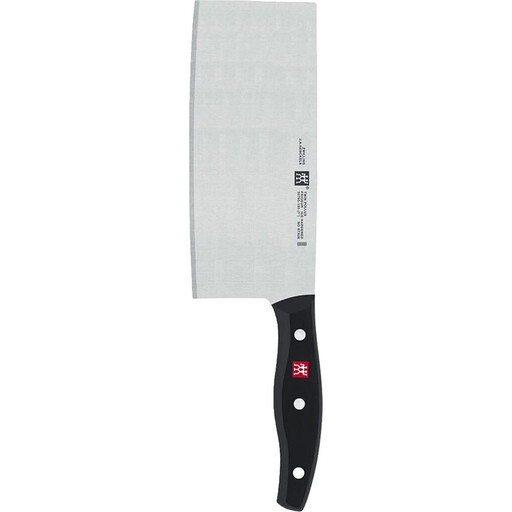
Why this product suits this profile: According to the product description, the broad Chinese chef’s knife is suitable for slicing, dicing and chopping vegetables and meat. The broad surface can also be used to lift chopped ingredients.
Its intended use is clearly defined: do not use it on bones, frozen food or hard objects. This prevents the broad profile from being mistaken for a cleaver.
18,5 cm broad blade, POM handle with three-rivet design and FRIODUR ice-hardened special steel. According to the product information, hand washing is required.
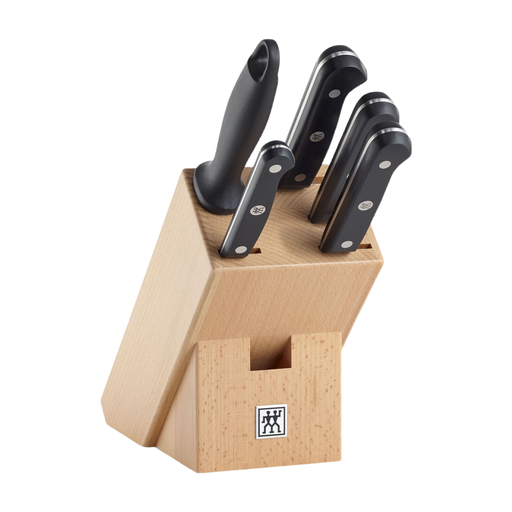
Why this product suits this profile: The set contains a paring knife, a carving or slicing knife, a chef’s knife, a bread knife, a honing steel and a knife block. It therefore covers typical tasks in a demanding home kitchen.
The included blades are separated by intended use. The block prevents loose storage; however, before buying, you should check whether six pieces and the required amount of worktop space are genuinely practical for you.
FRIODUR ice-hardened blades, beechwood block and dishwasher suitability up to 55 °C according to the product information. Hand washing is recommended to protect the knives.
We have put together a complete, regularly updated list of products that fully meet these strict selection criteria and the safety regulations applicable in the EU.
A kitchen knife’s service life depends on more than just the steel. Use a wooden or plastic cutting board, clean the blade as soon as possible after use and dry it thoroughly. A honing steel realigns the cutting edge between sharpening sessions; if the blade has become noticeably blunt, an appropriate sharpening method is required.
Store knives in a block, on a secure magnetic rail or in a blade guard. Loose knives in a cutlery drawer can knock against one another and pose an injury risk. For catering businesses, workplace hygiene requirements and the manufacturer’s precise instructions must also be followed.
This depends on the specific model. According to the product information, some ZWILLING Gourmet and TWIN Cuisine models are dishwasher-safe, while certain Professional S, Four Star and carving knives should expressly be cleaned by hand. The product page for the specific knife is the authoritative source.
For versatile tasks in a home kitchen, 18 to 20 cm are common sizes. A 20 cm blade provides more cutting surface for large ingredients, while an 18 cm blade can be easier to control in small kitchens or when using more compact cutting movements.
There is no reliable fixed interval. The frequency and type of use, cutting surface, cleaning and ingredients all affect the condition of the edge. Regular honing with a suitable honing steel can help maintain the cutting edge; if there is visible damage, the knife should not be used again.