
Lieferung heute & morgen

Qualitätsgarantie

Willkommens-Angebote freischalten: KOSTENLOSE Lieferung | Bis zu 80 % RABATT | Kostenlose 30-Tage-JoyPlus-Testphase
App herunterladen
As a Joybuy Product Recommendation Officer, I see every day how challenging it can be to choose the right camping gear. A comfortable night for two under the stars is the goal, but the path to achieving it is often hindered by subpar products. Especially when it comes to an inflatable sleeping pad for 2 people, there are several common pitfalls that can quickly ruin your hoped-for comfort. This guide will help you avoid them and make an informed decision.
Many products promise more than they deliver. Pay attention to these three points to avoid disappointment:
sleeping pad with a built-in pump sounds convenient, but if the pump is inefficient, setup becomes a test of patience. Likewise, the lack of a quick-deflate valve can make packing up in the morning unnecessarily long.ultralight sleeping pad for two requires a close inspection of the weight and dimension specs.To find the right sleeping pad for your tent and outdoor adventures, you should focus on objective criteria instead of marketing promises.
The durability of an inflatable pad depends heavily on its material. Look for a TPU (Thermoplastic Polyurethane) coating. This material makes the pad waterproof and significantly more resistant to abrasion and punctures than basic PVC. A top fabric made of ripstop polyester (e.g., 50D) prevents small tears from spreading. The internal baffle structure is also crucial: honeycomb or longitudinal baffles distribute weight more evenly than simple transverse baffles and prevent the "hammock effect" where you sink into the middle.
A thick camping sleeping pad of 8 cm or more offers good cushioning against uneven ground. But its true performance is revealed in its insulation. The R-value indicates how well a pad insulates against cold from the ground. For three-season use (spring to fall), an R-value between 2 and 4 is generally sufficient. For winter camping, values above 4 are required. A thick pad without an adequate R-value can still feel cold on cool nights.
The choice of inflation mechanism is a matter of personal preference and intended use:
sleeping pad small pack size) than air-only models.Here are a few options tailored to specific user profiles that are designed to avoid the pitfalls mentioned above.
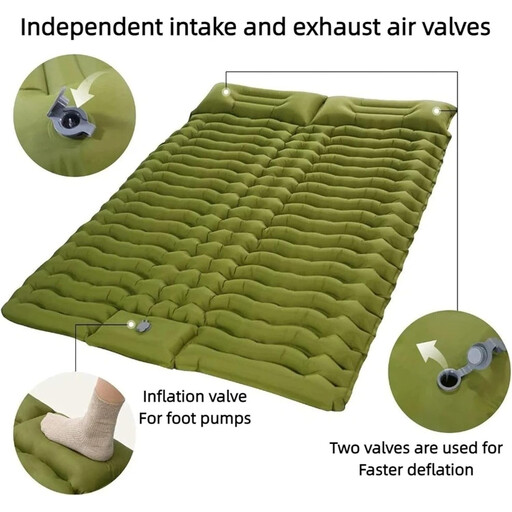
Why This Fits Their Persona: Ideal for couples or small families who travel by car and don't want to sacrifice the comfort of a real bed. The generous surface area provides ample space for two adults.
The 8 cm thickness, combined with its honeycomb structure, ensures a stable surface without bottoming out. The integrated foot pump allows for setup in minutes without any extra equipment.
A spacious surface (200 x 160 cm) and built-in pillows. The quick-deflate valve enables fast packing. The material is specified as durable 50D polyester with a TPU coating.
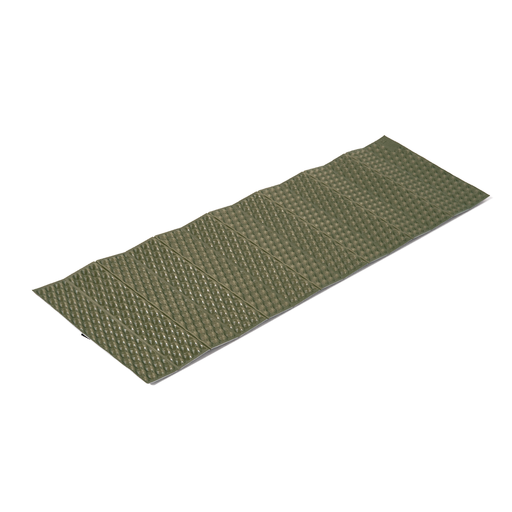
Why This Fits Their Persona: For couples on trekking tours, combining two lightweight single pads is often the better choice. It offers flexibility, redundancy, and a lower total weight than many double air pads.
As a foam pad, it's 100% puncture-proof—a hole can't ruin the trip. There's no inflation process, which saves time and effort. The folding design makes its packed size fixed and reliable.
Extremely lightweight (approx. 750g per pad) and completely puncture-proof. The stated R-value of 2.6 provides solid 3-season insulation. It can also be used as a seat pad during breaks.
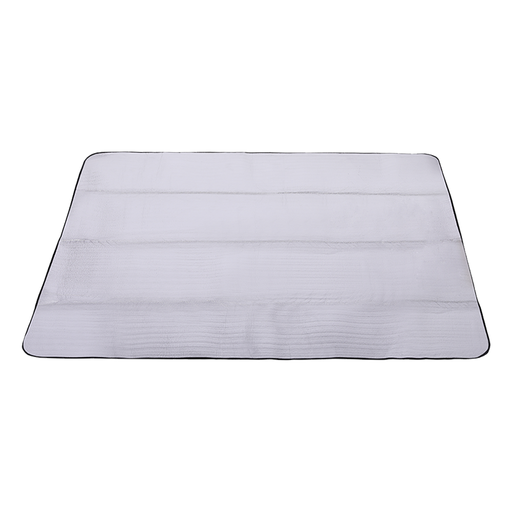
Why This Fits Their Persona: This isn't a primary sleeping pad, but an ultralight supplement. It's perfect as a groundsheet to protect against moisture and sharp rocks, or as an extra layer of insulation under another sleeping pad.
It doesn't promise sleeping comfort but delivers a clear function: moisture protection and heat reflection with minimal weight (approx. 300g) and pack size. It serves its purpose without setting false expectations.
Extremely light and compact, waterproof, and dirt-repellent. The aluminum coating reflects body heat and shields from ground cold, improving the performance of any pad placed on top of it.
A good night's sleep is the foundation of any outdoor adventure. Discover more pads selected based on objective criteria for comfort and durability.
1. How do you repair a hole in an inflatable sleeping pad? Most high-quality inflatable sleeping pads come with a repair kit containing patches and adhesive. To find the hole, you can submerge the inflated pad in water and look for air bubbles. Alternatively, spray the surface with soapy water. Once found, mark the spot, dry it, lightly roughen the surface, and apply the patch according to the manufacturer's instructions.
2. What exactly does the R-value of a sleeping pad mean? The R-value is a physical unit of measurement for thermal resistance. The higher the R-value, the better the pad insulates against cold from the ground. An R-value of 1-2 is suitable for warm summer nights, 2-4 for 3-season camping, and values above 4 are recommended for winter use in freezing temperatures. This value is a more reliable indicator of thermal performance than the pad's thickness alone.
3. Can you connect two single sleeping pads to make one large one? Yes, this is a common and flexible solution. Some pad models have snaps or Velcro straps on the sides to connect them. Alternatively, a special double-pad coupler strap or simply a shared sleeping bag can be used to hold the two pads together and prevent them from drifting apart during the night.