
Lieferung heute & morgen

Qualitätsgarantie

Willkommens-Angebote freischalten: KOSTENLOSE Lieferung | Bis zu 80 % RABATT | Kostenlose 30-Tage-JoyPlus-Testphase
App herunterladen
Investing in a home charging station for your electric car is a critical step. Especially with high-performance models like a 22kW wallbox with dynamic load management, there are important details to consider to ensure a safe, efficient, and cost-effective charging solution. Many offers sound tempting, but the details often hide pitfalls that can lead to unexpected costs or functional limitations. This guide will help you understand the essential features and make an informed decision.
Before you make a decision, you should be aware of three common problems that can arise when selecting a charging station:
To avoid the problems mentioned above, you should carefully examine three core technical parameters. These define the performance and safety of your future home EV charging station.
Dynamic load management is the central feature of a future-proof wallbox. It acts as an intelligent traffic controller for the electricity in your home.
A charging power of 22 kilowatts (kW) enables very fast charging times but also places high demands on the electrical installation.
Modern wallboxes offer much more than just charging. The right interfaces increase convenience and control.
Based on the criteria above, we have identified several models that are suitable for different user profiles.
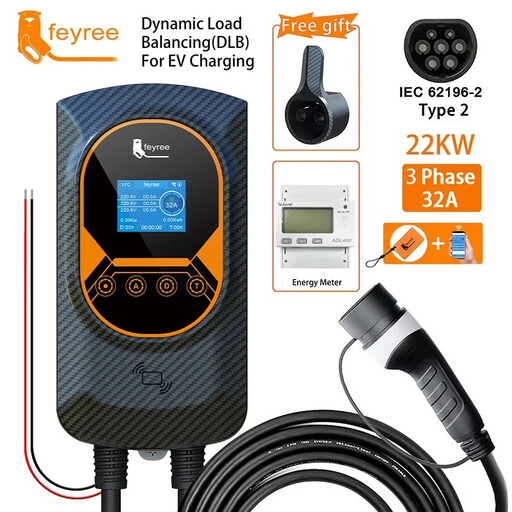
Why This Fits Their Persona: Ideal for owners of high-performance EVs who want to utilize the maximum charging power of 22 kW while ensuring the stability of their home's electrical grid. The app control allows for full cost and charging management.
The integrated dynamic load balancing (DLB) actively prevents overloading the home's main connection. The connection to the established Tuya app platform prevents issues with unstable software.
Full 22 kW charging power with intelligent load balancing. The charging current is flexibly adjustable between 8A and 32A via the app. Includes RFID function for access control.
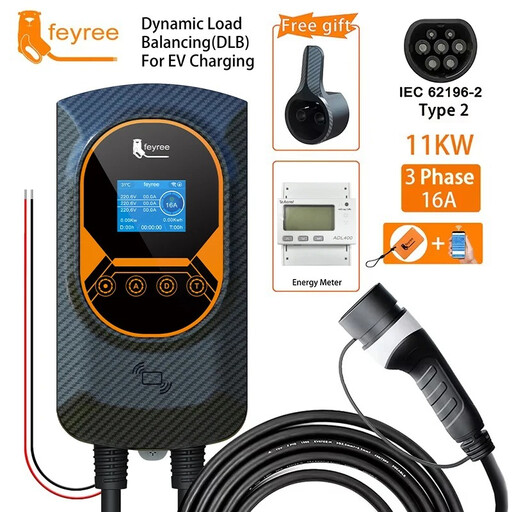
Why This Fits Their Persona: Perfect for users whose current vehicle or home connection is designed for 11 kW, but who don't want to miss out on the safety and convenience of dynamic load management and app control.
Offers the most important premium feature—dynamic load management—in a more affordable 11 kW version. This avoids the mistake of buying a non-smart wallbox and regretting it later.
Full functionality with DLB and app control at 11 kW power. The installation only needs to be reported, not approved, which simplifies the process.
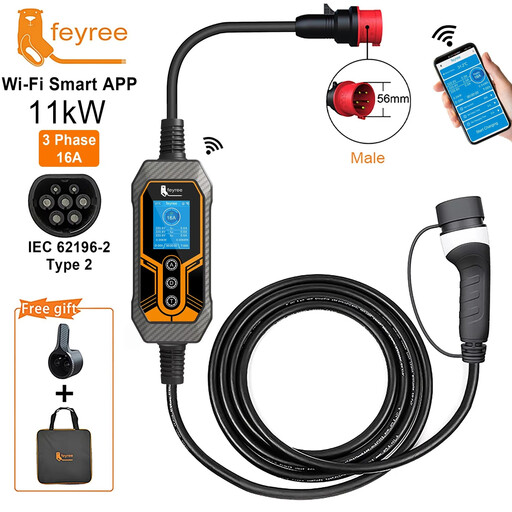
Why This Fits Their Persona: For users who need a mobile charging solution, e.g., for a holiday home, a relative's garage, or for travel, without sacrificing the power of 3-phase charging and smart app features.
Bypasses the high installation costs of a permanently installed wallbox. This portable charger can be operated directly from an existing CEE industrial socket.
Combines portability with powerful 11 kW three-phase charging. Offers app control via Wi-Fi and Bluetooth for scheduled charging and current adjustment.
We have compiled a complete, up-to-date list of products that fully meet these strict selection criteria and German safety regulations.
1. Does a 22 kW wallbox need to be approved by the grid operator? Yes. In Germany, charging equipment for electric vehicles with a power output of over 11 kW is subject to approval. This means the installation must be registered with and approved by your local grid operator before commissioning. A qualified electrician must perform the installation and handle the registration for you.
2. What happens if my car only supports 11 kW charging? A 22kW EV charging station communicates with the vehicle via the Type 2 connector. It automatically detects that the vehicle can only accept 11 kW and adjusts the charging power accordingly. The charging process is completely safe. Buying a 22 kW wallbox can still be a wise investment for the future, in case you later purchase a vehicle with a higher charging capacity.
3. How does dynamic load management work in practice? A small sensor (current transformer) is clamped around the main power line in the main breaker box. It measures the total current flow of the house and sends this information to the wallbox via cable or wirelessly. If the total consumption threatens to exceed a preset limit (e.g., because you are cooking), the wallbox throttles the car's charging power. When the household consumption drops again, the wallbox automatically releases more power for the vehicle.