
Lieferung heute & morgen

Qualitätsgarantie

Willkommens-Angebote freischalten: KOSTENLOSE Lieferung | Bis zu 80 % RABATT | Kostenlose 30-Tage-JoyPlus-Testphase
App herunterladen
Choosing a wallbox is a major step for any electric vehicle owner. A 22kW wallbox with load management, in particular, promises fast charging and intelligent control. However, the market is flooded with technical jargon and marketing claims that can make the selection process difficult. Before you make a decision, it's crucial to understand the common pitfalls that can lead to unnecessary costs or limited functionality.
This guide focuses on the objective criteria that define a high-performance, future-proof charging solution, helping you make the right choice for your home.
Investing in a charging station should simplify your daily routine, not complicate it. Pay attention to these three points to avoid making a poor purchase:
To avoid these issues, you should carefully examine three core technical aspects. These define the performance and safety of your future home wallbox.
This is the most critical feature for high-power wallboxes. Think of DLB as an intelligent energy manager for your home. A sensor continuously measures the building's total electricity consumption. For example, if you start the washing machine while your car is charging, the wallbox automatically reduces its charging power to prevent an overload. Once the washing machine cycle is complete, the charging power is increased again. This ensures the fastest possible charging speed without compromising the stability of your electrical grid.
A reliable wallbox with Wi-Fi or Bluetooth connectivity is the foundation for all smart features. A good wallbox with app control allows you to manage the following parameters:
Based on the criteria above, we have identified several models that are well-suited for different user profiles and their specific needs.
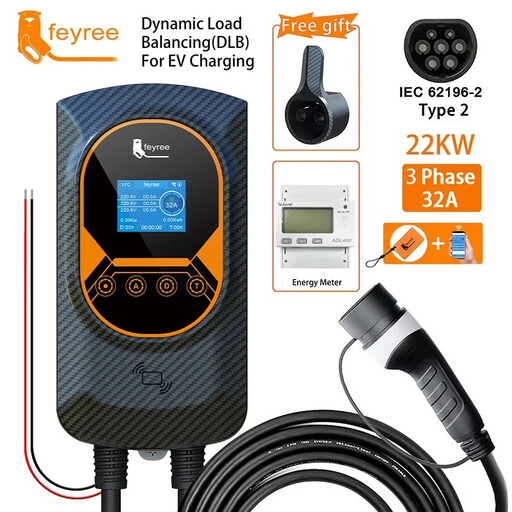
Why This Fits Their Persona: Ideal for households with high electricity demand, multiple EVs, or plans for them. It offers maximum charging power without compromising the stability of the home's electrical grid.
The integrated dynamic load balancing (DLB) actively prevents overloading the main electrical connection. Its integration with the Tuya app provides established and reliable smart home control.
Combines full 22kW charging power with intelligent, automatic energy distribution. Adjustable charging current (8A-32A) and app control via Wi-Fi.
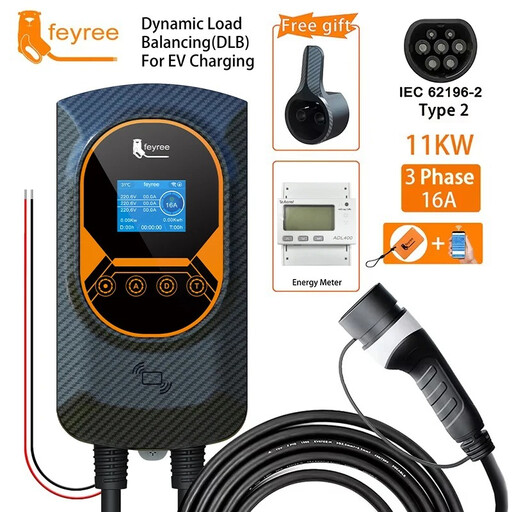
Why This Fits Their Persona: Perfect for users who find 11kW charging power sufficient but don't want to sacrifice the intelligence of load management and prefer a simpler registration process.
It offers the crucial DLB function to prevent grid overload while bypassing the approval requirement and high connection demands of a 22kW solution.
Intelligent load management in a widely compatible 11kW package. The installation is less complex and only requires notification. Full app control for maximum efficiency.
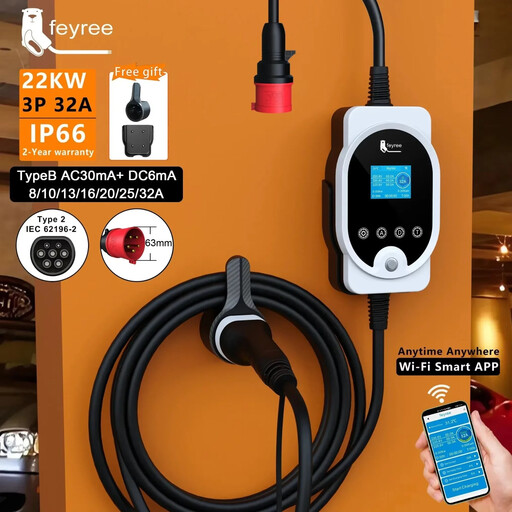
Why This Fits Their Persona: Suitable for renters, vacation home owners, or anyone who needs a powerful charging solution that isn't permanently installed and can be used in different locations with a CEE socket.
The ability to manually adjust the charging current (8A-32A) via the app or directly on the device allows for flexible adaptation to the available power supply, thus preventing overloads.
Maximum portability with high 22kW charging power. It offers smart features like scheduled charging and current adjustment via the app, all without a fixed installation.
For a more comprehensive selection of charging solutions that meet strict selection criteria and safety regulations, you can explore our range of charging accessories.
Yes, in many regions, the installation of an EVSE charging station with a charging capacity greater than 11 kW requires approval. You must obtain written consent from your local grid operator before installation. In contrast, wallboxes with up to 11 kW of power typically only need to be registered.
Static load management distributes a predefined, fixed total power output across multiple charging points, regardless of other electricity consumption in the house. Dynamic load management is more advanced: it measures the household's total real-time power consumption and flexibly adjusts the vehicle's charging power to the available residual capacity. This is more efficient and protects the home's main electrical connection.
Yes, that is perfectly fine. The communication between the vehicle and the wallbox (according to the Type 2 connector standard) ensures that the car only draws the maximum power its on-board charger can handle. A 22kW wallbox is therefore fully backward-compatible and represents a future-proof investment in case your next vehicle can charge faster.