
Lieferung heute & morgen

Qualitätsgarantie

Willkommens-Angebote freischalten: KOSTENLOSE Lieferung | Bis zu 80 % RABATT | Kostenlose 30-Tage-JoyPlus-Testphase
App herunterladen
By the Joybuy Product Recommendation Officer Published July 28, 2026
For many, Appel herring fillets are a pantry staple—a quick, nutritious, and convenient meal. However, when buying tinned fish, there are a few pitfalls that can spoil the experience. If you're not careful, you might end up with products that don't meet your expectations for quality and sustainability. This guide will help you define the right criteria for your selection and find the perfect variety for your taste.
When purchasing tinned fish like herring fillets from Appel Feinkost, there's more to consider than just the flavour. Two common mistakes can make the choice difficult:
To ensure you get a high-quality and responsibly produced product, you should check two key parameters before you buy tinned fish online.
The blue label of the Marine Stewardship Council (MSC) is an internationally recognised certificate for sustainably caught fish. An MSC-certified tinned herring guarantees that the fish comes from a fishery that meets three core principles:
Appel's products carry this label, offering transparent and reliable guidance for environmentally conscious buyers.
The quality of tinned fish is also measured by its contents. Pay attention to the declared fish content, which is usually given as a percentage. A higher fish content means more of the actual product and less sauce. At Appel, this content is typically around 60%.
The sauce's ingredient list provides insight into the quality of the other components. For varieties like herring fillets in tomato cream, tomato paste should be high on the list. Check the sugar content in the nutritional information to make an informed decision for a quick fish meal. If you plan to stock up on herring, you should favour products with simple, clear ingredient lists to ensure consistent quality.
Depending on the occasion and your preference, a different variety of Appel herring fillets will be the right fit. Here are three recommendations tailored to different needs.
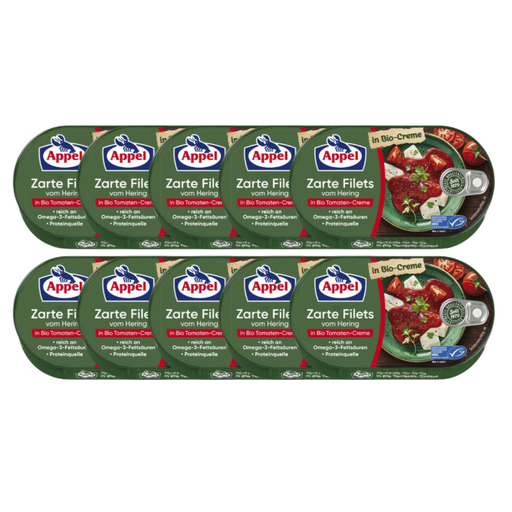
Why it's a great fit: Ideal for those who appreciate the traditional taste of herring fillets in tomato cream but prioritise organically grown ingredients. Perfect for family meals or for stocking the pantry.
The ingredient list is transparent, and 33% of the agricultural components come from certified organic farming (DE-?KO-001). The MSC label ensures the sustainable origin of the fish.
Combines the classic flavour with certified organic ingredients like tomato paste and raw cane sugar. The 10-pack is ideal for stocking your pantry with herring.
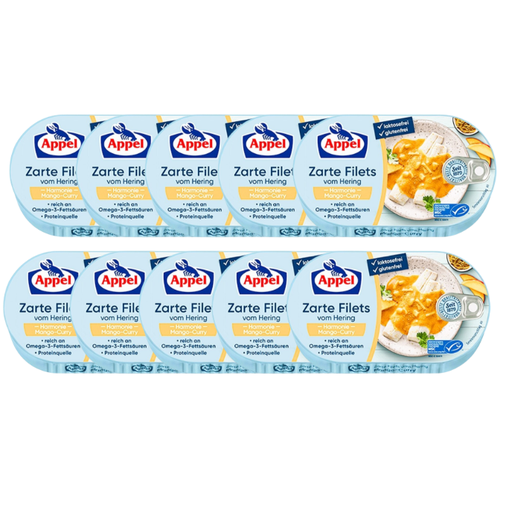
Why it's a great fit: For working professionals and students looking for a quick meal that goes beyond the standard fare. The fruity and spicy sauce brings variety to your plate.
Despite the exotic sauce, the ingredients remain transparent. According to the manufacturer, the product is gluten- and lactose-free and contains no flavour enhancers. The MSC label is also present.
A harmonious combination of sweet mango and spicy curry. The sauce also contains pineapple and bamboo shoots for an interesting texture.
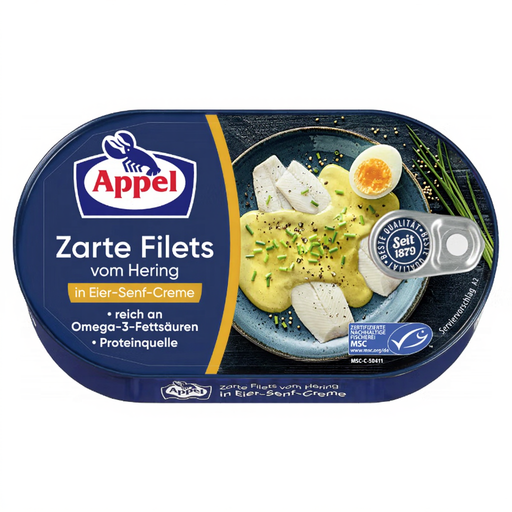
Why it's a great fit: An excellent choice for a classic supper or as a side with jacket potatoes. The strong mustard note, rounded out with egg, appeals to lovers of savoury flavours.
The sauce is based on a high mustard content (12%) and avoids excessive sweetness. At 1.8 g of sugar per 100 g, it is one of the lower-sugar options in the range.
The high protein content of 11.5 g per 100 g makes this variety a filling meal. The creamy consistency from egg yolk (2.1%) provides a full-bodied flavour experience.
We've compiled a complete, up-to-date list of products that fully meet these strict selection criteria and UK regulations.
Once the tin is opened, the herring fillets should be transferred to a non-metallic, sealable container. Stored in the refrigerator, they will typically last for up to two days, according to the manufacturer.
The MSC (Marine Stewardship Council) label is a certificate confirming that the fish comes from a sustainable and well-managed fishery. It ensures that fish stocks are preserved for the future and that the impact on the marine ecosystem is minimised.
Yes, tinned herring fillets can also be heated. They are suitable, for example, as a quick sauce for pasta or as a filling for a baked potato. It is recommended to heat them gently over low heat so the fillets don't fall apart.