
Lieferung heute & morgen

Qualitätsgarantie

Willkommens-Angebote freischalten: KOSTENLOSE Lieferung | Bis zu 80 % RABATT | Kostenlose 30-Tage-JoyPlus-Testphase
App herunterladen
A toolbox should keep everything organised, make repairs easier and ensure the tools you need are always close at hand. In practice, choosing one simply because it has a high piece count or eye-catching design doesn’t always lead to the right purchase. What matters is how you’ll use it, what it’s made from, how it stores your tools and what it actually contains.
A “100-piece” or “200-piece” set sounds comprehensive. But the count often includes individual bits, wall plugs, screws or adapters. So check the full contents list: does it include a ratchet, sockets, screwdrivers, pliers, a hammer and a tape measure? For flat-pack furniture assembly and household repairs, a well-balanced tool set is usually more practical than a high count of small accessories.
A toolbox packed with lots of items can become difficult to navigate if the inserts aren’t a good fit. Without secure holders, sockets and bits can move around during transit. If you use your tools regularly, a toolbox with drawers, a modular tool chest or a tool box with compartments may be more practical.
A compact case is easy to store, but may not have room for larger tools. A large aluminium toolbox protects its contents and can be locked, but may be heavy when fully loaded. Before buying, compare the dimensions, empty weight, handle, wheels and maximum load capacity.
For household tasks, flat-pack furniture assembly and smaller DIY projects, a DIY toolbox with the basic hand tools is often enough. Useful tools include:
If you work on a bicycle, motorbike or car, look for a ratchet and socket set with the right sizes. A toolbox with a ratchet is particularly useful for reaching fastenings in awkward places. For electrical work, insulated tools and a suitable voltage tester are important. However, work on electrical installations should be carried out by appropriately qualified professionals.
Hand tools are often described as being made from chrome vanadium steel, alloy steel or heat-treated carbon steel. These details tell you about the material, but they don’t prove quality on their own. Also look for:
A plastic case is lightweight and often perfectly adequate for household use. Aluminium or steel is a better choice if you’ll be transporting the contents regularly or using them in a workshop. A coating can help resist corrosion, but it’s no substitute for storing tools somewhere dry.
Compare the external dimensions with the space where you plan to keep the case and the available room in your vehicle. For example, a case measuring 44 × 34 × 8 cm can be stored flat. Foam inserts and a dust-protected case are useful for delicate machinery or measuring equipment. For building sites, garages or trailers, seals, sturdy catches and a lock can be useful additions.
If your workshop has lots of individual tools and small parts, consider a rolling tool box with drawers. Look for lockable wheels, sturdy drawer runners and a stated maximum load capacity. Also bear in mind that not every storage box is waterproof. Terms such as “water-repellent”, “dust-protected” and “waterproof” don’t mean the same thing.
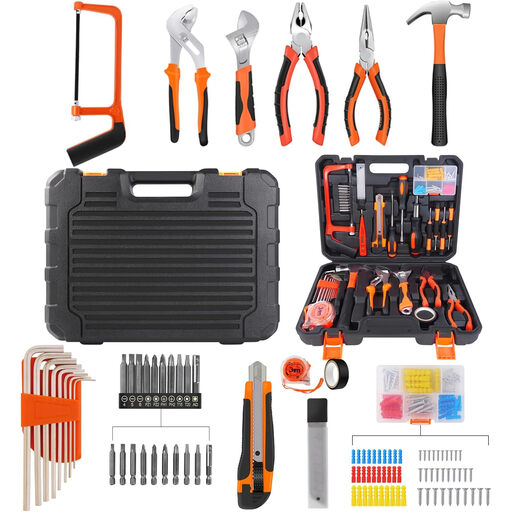
Why it suits this type of user: This set covers common household tasks and straightforward DIY projects. It includes a hammer, screwdrivers, pliers, an adjustable spanner, hex keys, a voltage tester and a 3 m tape measure, among other tools.
The contents list names specific tools rather than just accessories. At 375 × 280 × 80 mm, the case is also relatively easy to store.
CR-V and heat-treated carbon steel; tools kept organised in a portable case.
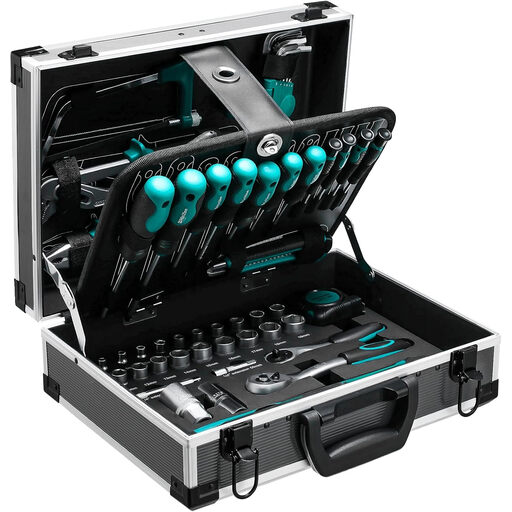
Why it suits this type of user: This lockable aluminium case is designed for people who value organised storage, portability and protection for their tools. Its contents include sockets, ratchets, screwdrivers, pliers, a hammer, a saw and a spirit level, among other tools.
Built-in compartments, hook-and-loop straps and rubber holders help keep the 107 pieces from getting jumbled during transport.
Measures 36.5 × 29.5 × 14 cm; shock-protected aluminium case with a lock and organised compartments.
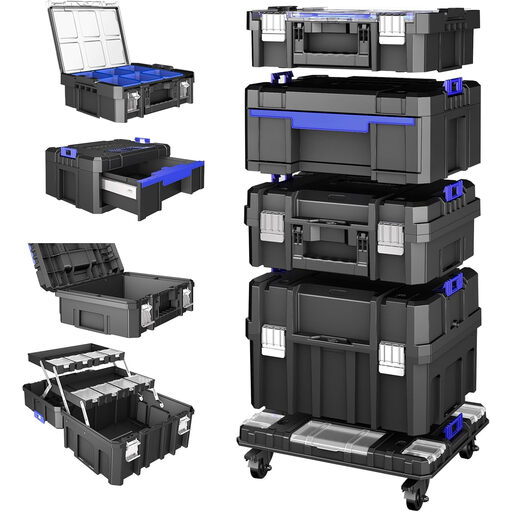
Why it suits this type of user: This modular system is designed for workshops, garages and frequent users who want to store hand tools, small parts and accessories separately, and move them around their workspace.
Multiple modules, drawers and dividers make it less likely that small parts will get lost in one large compartment. Lock the wheels when loading the unit.
Five-tier design made from PP plastic; braked wheels and reinforced base ribs.
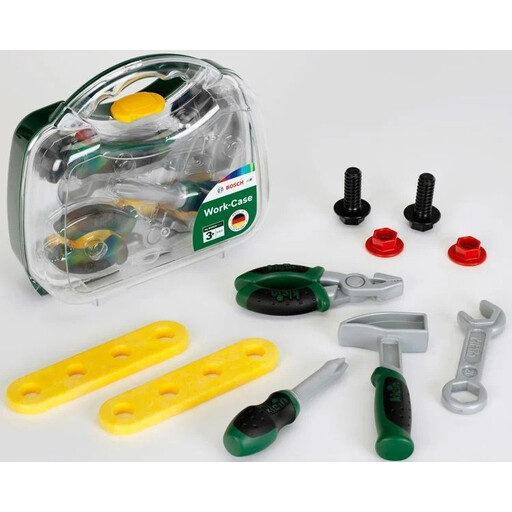
Why it suits this type of user: The case contains plastic toy tools, including a hammer, pliers, screwdriver, strips, screws and nuts. According to the product description, it’s intended for children aged three and over.
It’s clearly identified as a toy, not a real tool set. As it contains small parts, it should only be used in line with the stated age guidance and under supervision.
Carry handle and clear front; plastic toy for imaginative play.
We’ve put together a complete, regularly updated list of products that meet these strict selection criteria and fully comply with the safety regulations in force in the EU.
Before each use, check your tools for cracks, loose handles or damaged coatings. After use, wipe metal parts dry and store them in their designated compartments. Moisture inside the case can cause corrosion. When working with electrical equipment, disconnect the power supply. Depending on the task, you may also need suitable protective equipment such as safety glasses and work gloves.
A toolbox for the home and car shouldn’t be overloaded either. With rolling systems, lock the wheels before opening or loading the unit, and observe the stated load capacity.
For occasional repairs, a compact case with the essential hand tools is often enough. For car maintenance, workshop use or regular DIY projects, larger models with a socket set, compartments or drawers are a good choice. Don’t just consider the external dimensions: think about the weight when the case is fully loaded, too.
A filled case is convenient if you don’t already have the basic tools and want to keep everything together. An empty tool box, on the other hand, is a better option if you already own quality individual tools or want to build up your kit to suit your needs over time.
Its lifespan depends on the materials, build quality, workload and care. Tools made from coated or alloy steel can remain usable for a long time if they’re stored somewhere dry and used properly. Check ratchets, pliers and hinges regularly for play, correct operation and visible damage.