
Lieferung heute & morgen

Qualitätsgarantie

Willkommens-Angebote freischalten: KOSTENLOSE Lieferung | Bis zu 80 % RABATT | Kostenlose 30-Tage-JoyPlus-Testphase
App herunterladen
A smart planter promises to revolutionise plant care. For professionals looking to liven up their office or for people without a green thumb, an intelligent planter seems like the ideal solution. It's designed not only to simplify care but to transform a plant into an interactive companion.
However, the market is filled with products whose functionality doesn't always live up to their marketing promises. Before you make a purchasing decision, it's crucial to understand the common pitfalls that can quickly turn a promising gadget into a disappointment.
The 3 Most Common Problems with Smart Planters:
low-maintenance planter should be autonomous and hassle-free in daily life.planter with a face is entertaining at first. But if the animations and reactions become repetitive after a short time, the interactive plant pot loses its charm and becomes just another decorative object with a display.To avoid buyer's remorse, you should pay attention to a few core technical parameters. These determine whether an AI plant pot is a genuine help or just a short-lived gimmick.
A high-quality plant pot with sensors is the foundation of effective, intelligent plant care. Make sure the product has multiple, dedicated sensors. The crucial ones are:
Only the interplay of these sensors allows for a precise analysis of the plant's needs.
Interactivity is often the main selling point, and there are significant differences here. Simple models use only coloured LEDs to indicate the plant's condition. Advanced models feature a display that visualises emotions and needs. Check the variety of expressions shown. A model with over 50 different animations offers a sustainably engaging experience, unlike devices with only a handful of repetitive displays.
Autonomy is a critical factor for practical use. A permanently attached cable severely limits placement options. A battery-powered model is more flexible. Pay attention to the battery capacity, specified in milliampere-hours (mAh). A capacity of 2000 mAh or more indicates a practical runtime of several hours to a full day before the pot needs to be recharged.
Based on the criteria mentioned, we have identified some products that are well-suited for specific user profiles and their requirements.
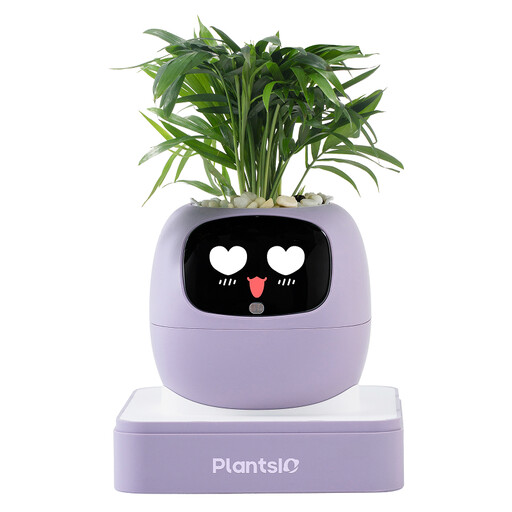
Why This Fits Their Persona: This model serves as an ideal office plant gadget. It not only adds greenery to the desk but also acts as an interactive companion through its facial expressions, providing a small distraction during stressful work periods.
The combination of moisture, water level, and light sensors avoids the trap of inaccurate measurements. With over 80 expressions, according to the manufacturer, the interaction won't become repetitive quickly.
Combines precise plant care monitoring with emotional interaction. The CE and RoHS certifications signal compliance with EU standards for safety and environmental friendliness.
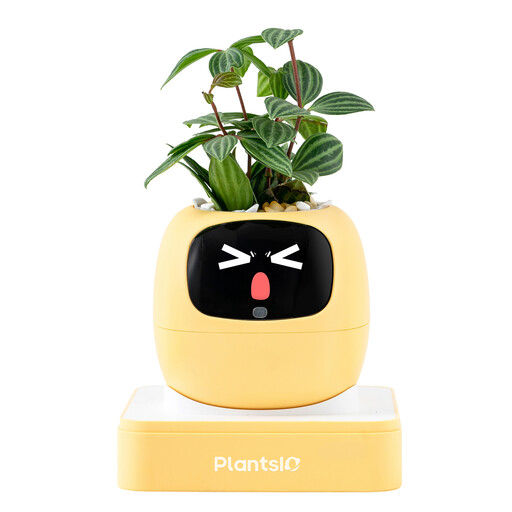
Why This Fits Their Persona: As a gift for plant lovers or tech fans, this product offers high novelty value. It's more than just a pot—it's an interactive experience that will be remembered for a long time.
The 2000mAh battery provides up to 8 hours of use according to the manufacturer, thus avoiding the pitfall of an impractical power supply. After all, a gift should bring joy, not create extra work.
The anthropomorphic interaction with a variety of facial expressions and reactions to touch creates a unique, playful experience. The packaging is designed as a gift box.
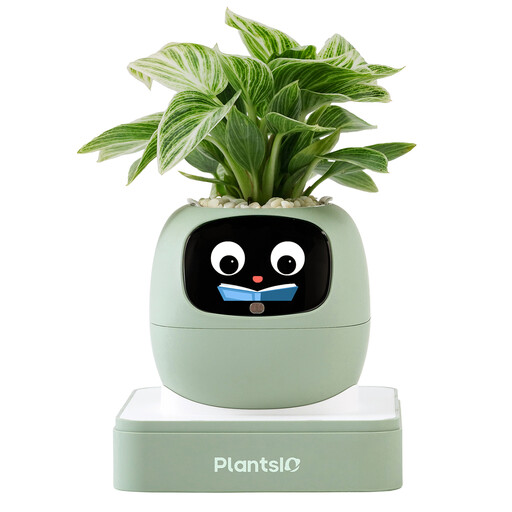
Why This Fits Their Persona: For individuals who have lacked experience in plant care, this device translates the plant's needs into easily understandable visual signals. It makes care intuitive and helps avoid common beginner mistakes.
Instead of relying on potentially inaccurate automation, the pot clearly communicates its needs to the user. It indicates when it's thirsty or needs more light, leaving control in the user's hands, supported by precise sensor data.
The real-time monitoring of environmental factors and direct visual feedback turn plant care into a guided, learning-based process. This significantly lowers the barrier to entry for plant ownership.
We have compiled a complete, up-to-date list of products that fully meet these strict selection criteria and German safety regulations.
The charging frequency heavily depends on the model and intensity of use. Models with a 2000-mAh battery, like the Ivy Smart Planter, offer up to 8 hours of runtime with normal use, according to the manufacturer. This means that with daily use in an office, it should be charged at the end of the workday or overnight. With less interaction, the battery life can be longer.
Smart planters are generally designed for smaller houseplants. The size of the plant insert is the deciding factor here. For the Ivy model, for example, the diameter of the area intended for soil is 54.5 mm. This is well-suited for succulents, small herbs, or young plants. They are not suitable for large, deep-rooting plants due to the limited volume.
A self-watering pot is a passive system. It has a water reservoir from which the plant can draw water as needed through a wick or a porous material. A smart planter is an active, electronic system. It uses an AI plant pot approach with sensors to actively monitor the plant's condition (moisture, light) and provide the user with precise feedback via a display or an app about when and what care is needed. It doesn't automate the watering itself, but rather the communication of the plant's needs.