
Lieferung heute & morgen

Qualitätsgarantie

Willkommens-Angebote freischalten: KOSTENLOSE Lieferung | Bis zu 80 % RABATT | Kostenlose 30-Tage-JoyPlus-Testphase
App herunterladen
A balance board, also known as a wobble board or balance trainer, is a piece of fitness equipment based on the principle of an unstable surface. The need to maintain balance on the moving platform challenges the body's proprioception—the sense of your body's position in space. This activates and strengthens the deep muscles, particularly the core muscles responsible for stabilising the spine. Training with this type of device helps improve coordination, reaction time, and overall body stability.
Its applications are diverse, ranging from stability training in fitness and use as a physiotherapy balance board in rehabilitation to fall prevention for seniors. A balance board can also be used in the office with a standing desk to actively promote better posture.
Selecting the right balance board should be based on objective technical parameters to ensure the product meets your individual safety and functional requirements.
The choice of material affects the board's durability, weight, and feel. Common materials include:
The diameter of the standing surface is a key factor in determining the difficulty level.
The underside of the balance board determines its range of motion. The most common design features a fixed hemisphere. The tilt angle the board can achieve defines the maximum deflection and thus the intensity of the exercise. An angle of 10 to 20 degrees is standard. Some models, often called wobble discs, are designed for specific multi-directional movements, allowing for 360-degree rotation.
The manufacturer's specified maximum load capacity is a critical safety feature. It indicates the maximum body weight the material can safely support without risk of failure. It is recommended to choose a model with a load capacity significantly higher than your own body weight, especially if you plan to use additional weights (e.g., dumbbells) during exercises.
Based on an analysis of technical specifications and functional design, we present two standout models.
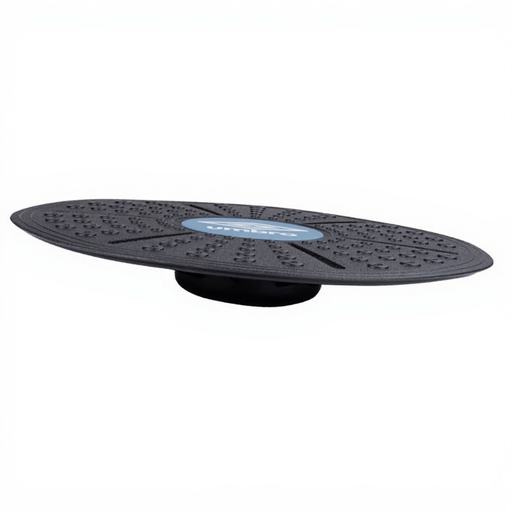
Why We Recommend This Product The Umbro Balansbord is a balance trainer designed for pure functionality. With a 36 cm diameter, it effectively challenges your stabilising muscles. Its polypropylene construction aims for high durability while maintaining a low weight. The specified maximum load capacity of 150 kg makes it accessible to a wide range of users.
Pros
Who It's For This model is suitable for fitness enthusiasts looking to intensify standard exercises like squats or planks, as well as for home users who want to specifically train their balance and core muscles.
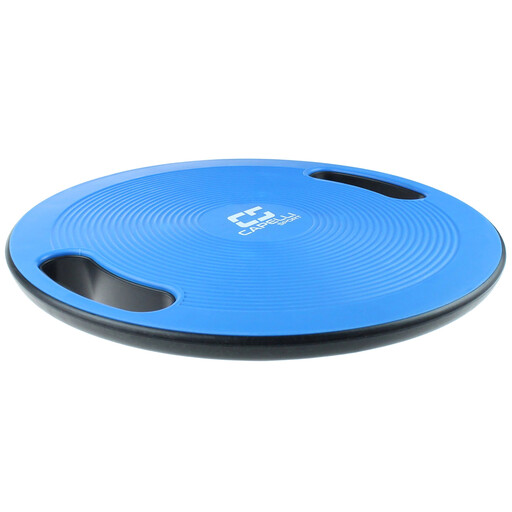
Why We Recommend This Product The Capelli Sport Balance Board combines functionality with portability. A standout feature is its integrated carrying handle, which simplifies transport. The material combination of a PP base and a TPR surface is engineered for durability and grip. With a 40 cm (15.7-inch) diameter and a 15-degree tilt angle, it offers a versatile platform for a wide range of exercises.
Pros
Who It's For This model is ideal for users who value mobility and for beginners who prefer a larger, more secure standing surface. It is well-suited for use in physiotherapy, fitness training, or as an active element at the workplace.
If you are looking for complementary equipment for your stability training beyond the models featured here, you can find more products to help improve strength, coordination, and flexibility in our pilates accessories category.
1. Who can benefit from a balance board? A balance board is beneficial for a wide range of people. This includes fitness enthusiasts looking to intensify their workouts, athletes for injury prevention, individuals in rehabilitation to restore motor control, seniors for fall prevention by strengthening balance and leg muscles, and office workers who want to actively improve their posture at a standing desk.
2. What muscles does a wobble board train? A wobble board primarily trains the deep core muscles (abdominals, lower back) responsible for stabilising the spine. Additionally, it activates the muscles in the feet, ankles, knees, and hips to compensate for the instability. This makes it an effective tool for comprehensive stability training.
3. How do I start training on a balance board? Beginners should start near a wall or a sturdy piece of furniture for support. Begin by standing on the board with both feet and trying to keep the edges from touching the floor. Hold this position for 15-30 seconds. Once you feel secure, you can incorporate simple exercises like gentle squats or shifting your weight from one leg to the other. Always wear appropriate footwear.