
Lieferung heute & morgen

Qualitätsgarantie

Willkommens-Angebote freischalten: KOSTENLOSE Lieferung | Bis zu 80 % RABATT | Kostenlose 30-Tage-JoyPlus-Testphase
App herunterladen
Drivers of older vehicles know the problem: the car is mechanically sound, but its infotainment system is outdated. Retrofitting a modern system is often costly and complex. A CarPlay display with a dashcam offers a flexible and integrated solution. It not only modernises navigation and entertainment but also increases safety with a recording function.
However, the market is crowded and full of products whose marketing promises often don't hold up in practice. Before you make a decision, you should be aware of three common pitfalls that can lead to disappointment.
To avoid these problems, you should focus on three core technical parameters. These are the key determinants of your device's reliability and functionality in daily use.
A portable CarPlay screen is only as good as its connection to your smartphone. For stable wireless CarPlay and Android Auto functionality, two components are crucial: Bluetooth and Wi-Fi. While Bluetooth is used for the initial pairing and for phone calls, the data-intensive transmission of screen content (maps, music apps) happens over Wi-Fi.
Look for devices that support dual-band Wi-Fi (2.4 GHz and 5 GHz). The 5 GHz band is less prone to interference and offers higher bandwidth, resulting in a significantly smoother and more responsive display. This is the key to ensuring a true wireless CarPlay adapter with screen experience without constant interruptions.
The "4K" label alone is no guarantee of good video quality. The crucial factor is the combination of sensor quality, lens, and, above all, the right storage medium. 4K recording requires a high and consistent write speed.
For this, special high-endurance memory cards with a V30 (Video Speed Class 30) classification are essential. These are designed for continuous write and erase cycles and operate reliably even in extreme temperatures. A normal memory card would quickly wear out under this constant load, leading to corrupted or incomplete recordings. A good Plug and Play CarPlay system should either include a suitable card or provide clear recommendations for purchase.
The way you retrofit the car display affects daily use and the aesthetics of your cockpit. There are two common variants:
The screen size, typically between 10 and 12 inches, should be chosen to provide good readability without obstructing the driver's field of view.
Here are some product recommendations tailored to different user needs that take the above criteria into account.
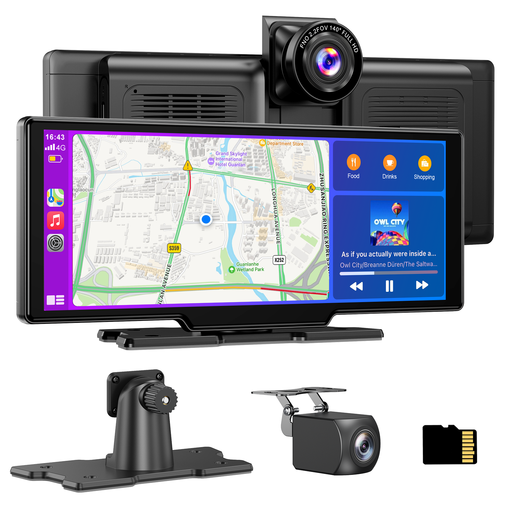
Why This Fits Their Persona: Ideal for drivers looking for an all-in-one solution. This device combines a large display for navigation and media with a 4K dashcam and a rearview camera, reducing the number of devices on the dashboard and ensuring a clutter-free cockpit.
The device supports dual-band Wi-Fi for a stable wireless connection. Additionally, a 64 GB memory card is already included, which avoids hidden follow-up costs.
Complete package: 4K front camera, 1080P rear camera, and memory card included. The plug-and-play installation via the 12V port makes it suitable for any car.
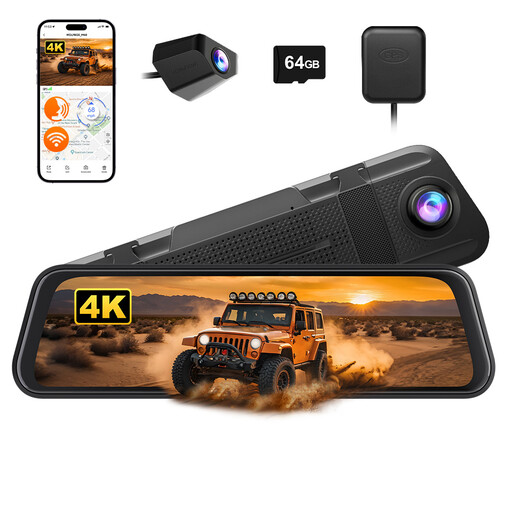
Why This Fits Their Persona: Perfect for drivers who prefer a discreet, factory-look aesthetic. The device replaces the rearview mirror and integrates seamlessly into the interior without cluttering the dashboard or obstructing the view.
This model comes as a complete set with a 64 GB card, eliminating the need for a separate purchase. The mirror mount also avoids the direct sunlight that can cause dashboard units to overheat.
Discreet integration thanks to the rearview mirror design. Combines a 4K front camera and a 1080P rear camera with a full-featured touchscreen display that functions as a normal mirror when not in use.
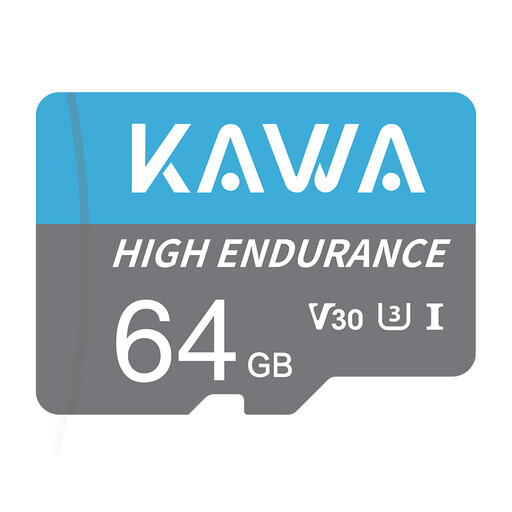
Why This Fits Their Persona: This isn't an optional accessory but a necessity for anyone who wants to ensure the reliability of their dash cam recordings. It is the foundation for preserving evidence in an emergency.
This card is explicitly designated as "High Endurance" and designed for the constant stress of use in dash cams. It prevents the most common point of failure: recording failure due to an overwhelmed standard memory card.
Meets U3 and V30 standards, which guarantees a consistent write speed for 4K and Full HD videos. Designed for a wide temperature range, making it reliable in both summer and winter.
Found the right display? Now, make sure your dash cam records reliably when it matters most. A high-quality, high-endurance memory card is essential for this. Discover our selection of tested memory cards optimised for continuous use in vehicle cameras.
Yes, that's one of its biggest advantages. As long as your vehicle has a working 12V port (cigarette lighter), you can use a Plug and Play CarPlay system like this. No permanent modifications or interference with the vehicle's electronics are necessary, making this solution ideal for leased vehicles or classic cars.
Not during normal operation. The devices are powered by the cigarette lighter, which in most vehicles is only active when the ignition is on. So, the display turns off with the car. Some models offer a parking mode that records even when the engine is off. This feature typically requires a separate hardwire kit that connects directly to the vehicle's fuse box to prevent draining the battery.
Absolutely. A 4K dashcam with CarPlay places high demands on the storage medium. You need a Micro SD card that is marked as "High Endurance" and meets at least the UHS Speed Class 3 (U3) and Video Speed Class 30 (V30) standards. Only these cards are designed for the constant rewriting cycles and high data rates of 4K video recording and ensure reliable operation.