
Lieferung heute & morgen

Qualitätsgarantie

Willkommens-Angebote freischalten: KOSTENLOSE Lieferung | Bis zu 80 % RABATT | Kostenlose 30-Tage-JoyPlus-Testphase
App herunterladen
Many skincare enthusiasts are searching for effective solutions to specific concerns like dry patches, a dull appearance, or visibly enlarged pores. In Japanese skincare, also known as J-Beauty, rice-based ingredients have been celebrated for their nourishing properties for centuries. A Japanese rice mask leverages this tradition to provide intense hydration and refine the skin's texture.
This article serves as your guide. We will introduce a selection of rice and sake masks and explain their key features to help you make an informed decision.
Selecting the right product depends on your skin type and specific skincare goals. Here are some objective criteria to help you decide.
The efficacy of a rice face mask is based on its ingredients. Look for the following components, which are commonly found in J-Beauty skincare:
Analyse your primary skin goal. Are you looking for an intensive hydrating mask for dry skin or a face mask for large pores? Products with a high concentration of rice ferment filtrate and ceramides are often designed for hydration, while formulations with rice bran extract and sake lees can also target the refinement of skin texture and pores.
Based on ingredients and purpose, we have curated a selection of products that address different skin needs.
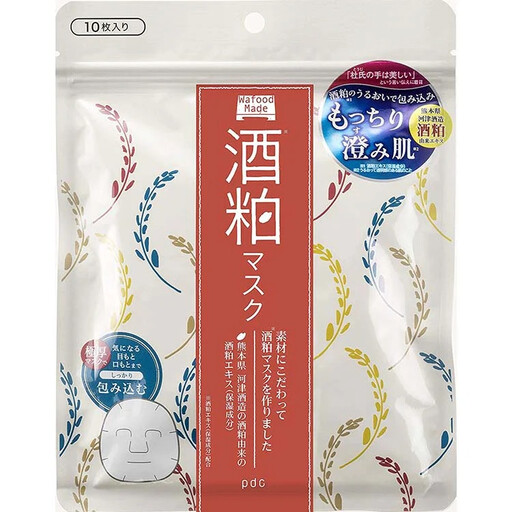
Why It Stands Out This mask uses sake lees extract (Sake Kasu), a traditional Japanese ingredient derived from sake production. The formula aims to nourish the skin, leaving it with a smooth, radiant appearance.
Benefits
Who It's For For users seeking a nourishing treatment with a traditional J-Beauty ingredient to hydrate the skin and brighten its appearance.
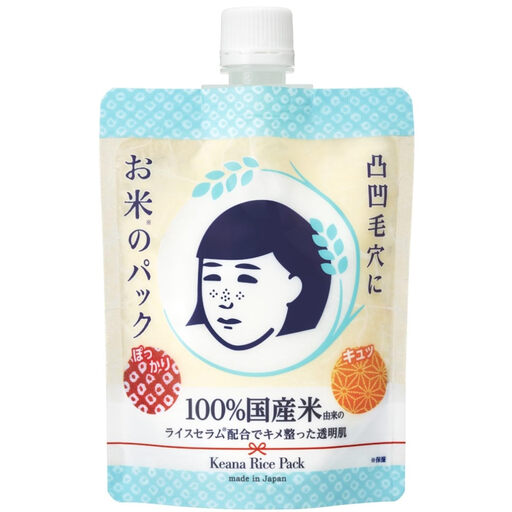
Why It Stands Out This wash-off mask is based on a formula of 100% Japanese-grown rice ingredients. It combines four different rice derivatives to specifically target dryness, rough texture, and enlarged pores.
Benefits
Who It's For For individuals who prefer a wash-off mask and are looking for a targeted solution for uneven skin texture and visible pores.
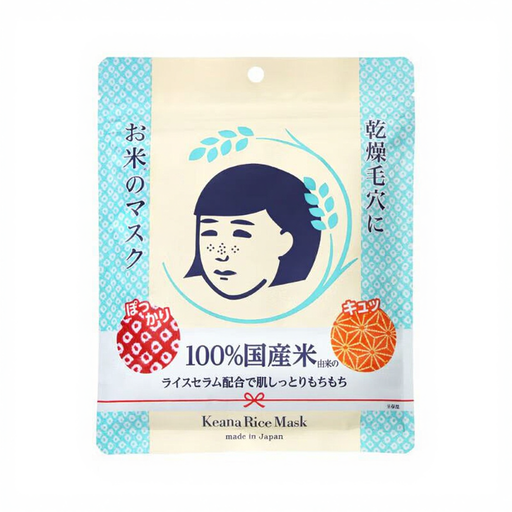
Why It Stands Out The Keana Nadeshiko mask is a cult-favourite product in Japan, specially developed for dehydrated skin with enlarged pores. The sheet mask is generously soaked in a "rice serum" made from four pure rice derivatives.
Benefits
Who It's For For users whose main concern is enlarged pores caused by dryness and who are looking for a highly effective, moisturising sheet mask.
This selection represents only a small fraction of the available products. If you are looking for more specialised skincare solutions or prefer different formulations, you may find the right product in our broader collection.
Explore our entire range of Japanese face masks to compare more options.
The frequency of use depends on the specific product and your skin's condition. Sheet masks are often recommended for use 1 to 3 times per week. A similar frequency is common for wash-off masks. Always follow the application instructions on the product packaging.
Many J-Beauty products are known for their gentle formulations. Nevertheless, for sensitive skin, a patch test (testing on a small area of skin, such as the forearm) is always recommended before the first application on the face. Check the ingredient list for any known allergens or irritants.
Both types of masks are based on rice. A rice mask often uses various parts of the rice grain, such as rice bran oil or rice extract. A sake mask specifically contains rice ferment filtrate (sake) or sake lees (sake kasu). These ingredients are created through the fermentation process and contain a high concentration of amino acids and other nutrients that can offer additional nourishing properties.