
Lieferung heute & morgen

Qualitätsgarantie

Willkommens-Angebote freischalten: KOSTENLOSE Lieferung | Bis zu 80 % RABATT | Kostenlose 30-Tage-JoyPlus-Testphase
App herunterladen
The search for a new mattress can quickly become overwhelming. The market is filled with a vast array of materials, firmness levels, and marketing promises that make an informed decision difficult. An unsuitable mattress not only compromises sleep quality but can also lead to muscle tension. This guide will help you understand the crucial criteria and avoid common purchasing traps.
Before diving into the details, it's helpful to know the most common mistakes that often lead to an unsatisfactory choice.
To make an informed decision, you should focus on three fundamental aspects that determine a mattress's performance and comfort.
The heart of any mattress is its core, which is the primary determinant of its feel and support. The two most common types are cold foam and pocket spring mattresses.
A good mattress supports the body in its natural posture. This is achieved through the combination of zones and the appropriate firmness level.
Not every mattress is suitable for every purpose. The requirements for a mattress in the master bedroom are fundamentally different from those for a temporary guest bed or a cot mattress.
Here are some models tailored to specific user profiles that meet the criteria mentioned above.
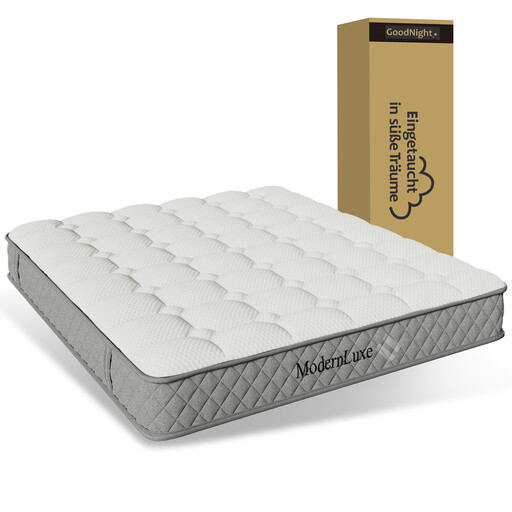
Why This Fits Their Persona: The 180x200 cm size offers ample space for two people. The pocket spring core minimises motion transfer, so a partner's sleep is not disturbed. The 7-zone structure and H3 firmness level provide balanced support for an ergonomic sleeping position.
Instead of a vague "one-size-fits-all" solution, this model offers clear, functional features (7-zone, H3, pocket spring) that address specific needs like motion isolation and ergonomic support for couples.
Combination of a point-elastic pocket spring core for undisturbed sleep and a 7-zone structure for targeted relief of the shoulders and pelvis. OEKO-TEX certified materials.
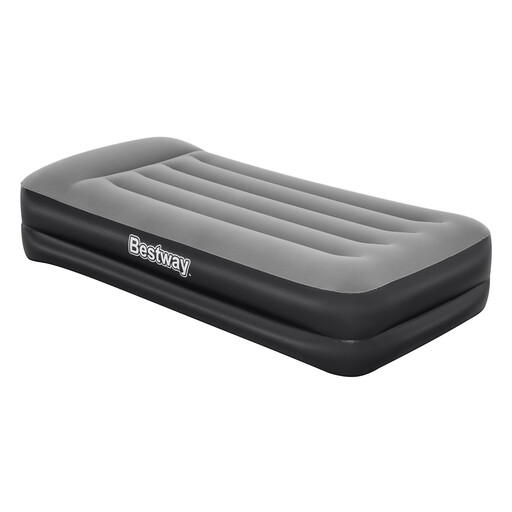
Why This Fits Their Persona: This air bed is ideal for temporary use as a guest bed or a comfortable camping mattress. The integrated pump allows for setup in just 3 minutes, and the included bag makes transport and storage easy.
The product is clearly positioned as a temporary solution, not a replacement for an everyday mattress. Its value lies in its practical handling (integrated pump) and durable material, not in exaggerated comfort promises.
Very fast setup thanks to the integrated electric pump. The durable Tritech material is designed for longevity and minimal air loss during the night.
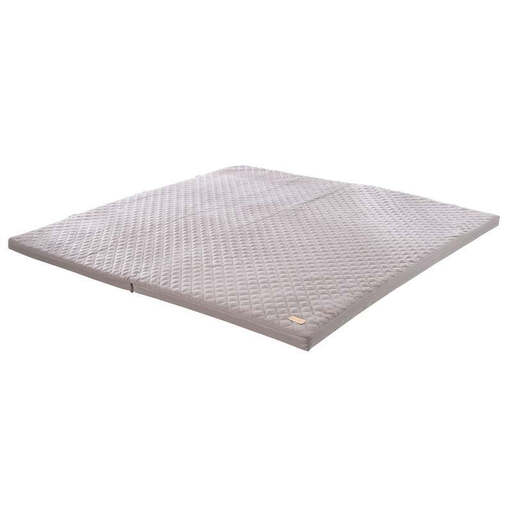
Why This Fits Their Persona: This cot mattress is a multifunctional product that serves as a soft play surface and, when folded, as a mattress for standard travel cots (60x120 cm). The focus is on safety and hygiene, with soft padding and a machine-washable cover.
The product serves a clear niche (babies/toddlers) with tailored, practical features (foldable, washable) instead of general marketing jargon. The benefit is immediately understandable.
2-in-1 functionality as a play and playpen mattress as well as a travel cot mattress. The cover is removable and washable at 40°C, which simplifies hygiene.
We have compiled a complete, real-time list of products that fully satisfy these strict selection criteria and UK safety regulations.
A vacuum-packed, rolled mattress typically needs 24 to 72 hours to fully expand and reach its final shape and height. During this time, it should be laid on a flat surface. Avoid using it immediately to ensure the material can perform at its best. Always refer to the manufacturer's specific instructions.
The right firmness level depends mainly on your body weight and preferred sleeping position. As a general guideline: H2 (medium-firm) is often recommended for people up to 80 kg, while firmness level H3 (firm) is suitable for people between 80 and 110 kg. Since these values are not standardised, it is essential to consult the manufacturer's specific weight recommendations for the particular mattress model.
To ensure even wear and extend its lifespan, it is recommended to flip (swap the top and bottom sides) and rotate (swap the head and foot ends) a mattress every two to three months. Some mattresses, such as those with a non-slip base or different firmness levels on each side, are designed only to be rotated. Check the product's care instructions for precise directions.