
Lieferung heute & morgen

Qualitätsgarantie

Willkommens-Angebote freischalten: KOSTENLOSE Lieferung | Bis zu 80 % RABATT | Kostenlose 30-Tage-JoyPlus-Testphase
App herunterladen
Sausages in a jar are a pantry staple across Europe. They represent a quick meal, a hearty addition to stews, or simply a comforting taste of home. But when buying preserved sausages online or at the supermarket, not all that glitters is gold. Many products entice with traditional branding but can be disappointing in practice. This guide will help you separate the wheat from the chaff and make an informed decision.
As a Joybuy Product Recommendation Officer, I'll analyse the facts for you and show you what really matters to sidestep common purchasing traps.
The 2 most common pitfalls when buying sausages in a jar:
To ensure you're getting a high-quality product, you should check three key aspects before buying. These will give you a reliable guide, far beyond marketing promises.
A look at the label is essential. A high meat content is the first indicator of quality. Values of 70% or more suggest the manufacturer isn't skimping on the main ingredient. Look for a short, clear ingredient list.
Ingredients like Diphosphates (stabiliser), Ascorbic acid (antioxidant), and Sodium nitrite (preservative) are common in industrial sausage production and serve to improve shelf life, colour, and texture. However, an excessively long list with many additives can indicate lower-quality raw materials. If you're looking for a shelf-stable sausage that's as natural as possible, opt for products explicitly made without flavour enhancers.
Although the terms are often used interchangeably, there are subtle differences that affect taste and use.
The casing is crucial for the mouthfeel. A natural casing (usually from sheep or pig) provides the characteristic "snap" when you bite into it. Products without a casing or with an artificial one do not offer this experience.
Always follow the preparation instructions: Sausages in a jar are already cooked. They should never be boiled, only heated for a few minutes in hot, non-simmering water. Boiling water causes the water in the sausage meat to evaporate suddenly, which inevitably leads to the casing bursting.
Here are some recommendations based on objective criteria, suitable for different needs and preferences.
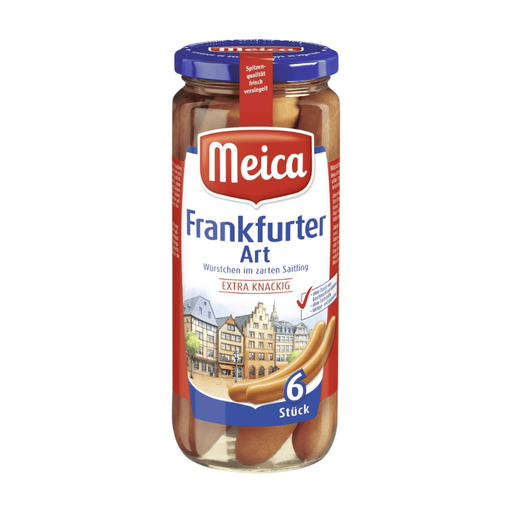
Why This Fits Their Persona: Ideal for anyone seeking the authentic taste of Frankfurter sausages. Perfect with potato salad or simply with mustard and bread—a piece of German sausage tradition.
With 80% pork and a clear declaration of its sheep's casing, this product avoids the low-meat-content trap and delivers the expected crisp snap.
Made without added flavour enhancers or colourings. The delicate sheep's casing ensures an authentic eating experience.
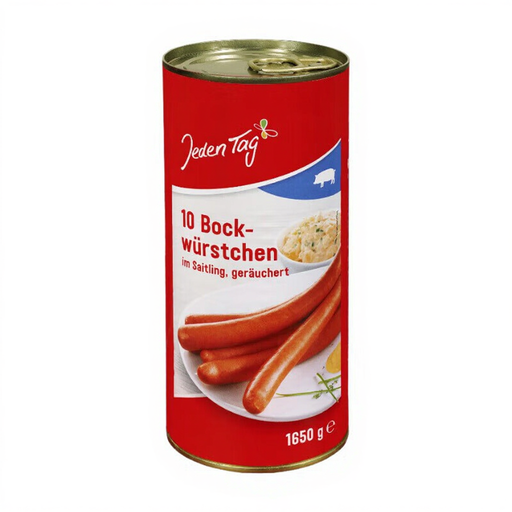
Why This Fits Their Persona: A practical bulk pack for stocking the pantry. These Bockwurst sausages are versatile, whether for a quick hot dog, an addition to lentil soup, or as a main course for the whole family.
With an 80% meat content and a transparent ingredient list, this product offers solid quality without hidden fillers, making it a reliable choice.
Good value for money in the 10-pack. The sausages are in a natural sheep's casing and smoked over beechwood, providing a classic, hearty flavour.
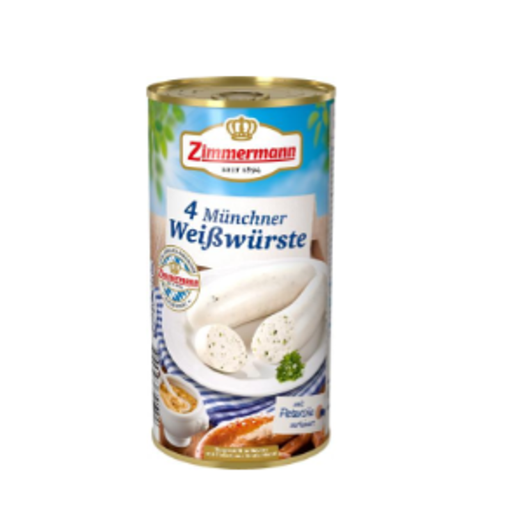
Why This Fits Their Persona: For anyone looking for a change from the classic Bockwurst. These canned Weisswurst (white sausages) bring Bavarian tavern culture into your own kitchen and are ideal for a traditional breakfast or snack.
This product isn't a vaguely "traditional" sausage but a clearly defined Munich speciality. The ingredient list, with 75% pork, parsley, and lemon oil, is specific and transparent.
Authentic taste of a regional speciality. The long shelf life makes it an excellent option for the pantry without having to sacrifice a special treat.
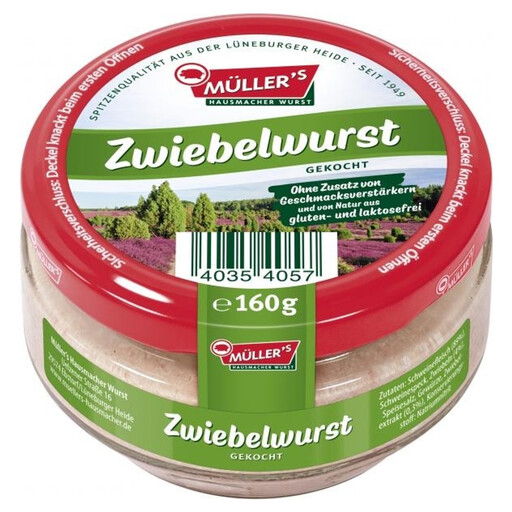
Why This Fits Their Persona: An excellent alternative to scalded sausages. This Mettwurst in a jar is a cooked, spreadable sausage, perfect for a quick and hearty snack on fresh bread or rolls.
This product bypasses the "tradition trap" with facts: it is explicitly made without added flavour enhancers and has a very high meat content of 89%.
Naturally gluten- and lactose-free. The safety seal, which pops when first opened, guarantees the product's freshness and integrity.
We have compiled a complete, up-to-date list of products that fully meet these strict selection criteria and German quality standards.
Bursting is almost always caused by excessively high temperatures. Sausages in a jar are already cooked. When placed in boiling water, the water contained in the sausage meat expands rapidly and ruptures the casing. The correct method is to let the sausages steep in a pot of hot, but no longer boiling, water for about 5-10 minutes until they are heated through.
After opening, any unused sausages should be transferred along with their brine into a non-metallic, sealable container (e.g., glass or plastic). Stored in the refrigerator, they will typically last for another 2 to 3 days. Always refer to the manufacturer's specific instructions on the label.
Although all three are types of scalded sausage, there are differences in their recipe and origin.