
Lieferung heute & morgen

Qualitätsgarantie

Willkommens-Angebote freischalten: KOSTENLOSE Lieferung | Bis zu 80 % RABATT | Kostenlose 30-Tage-JoyPlus-Testphase
App herunterladen
A Bialetti Moka pot brings the traditional way of making Moka coffee to your hob. Before you buy, though, it’s worth checking hob compatibility, capacity and materials. Product names such as Bialetti Moka Express, Bialetti Moka Induction and ‘Italian moka pot’ may sound similar, but they don’t all have the same features.
A classic aluminium Moka Express is generally designed for gas, electric and ceramic hobs. Aluminium on its own won’t work on an induction hob, though. You’ll need a compatible adapter plate or a model with a magnetic stainless steel base.
The Bialetti Moka Induction is specifically designed for induction hobs. If you’re considering a classic Bialetti Moka Express, check that the product description clearly states whether you need an induction adapter plate. If this isn’t mentioned, it’s best to be cautious.
For a Moka pot, ‘1 cup’, ‘3 cups’ or ‘6 cups’ usually means small Italian espresso cups. So its capacity is considerably smaller than that of a filter coffee machine.
As a guide, these models hold approximately:
The exact capacity may vary depending on the range and product details. So if you usually have a large mug of coffee in the morning, don’t automatically go for the 1-cup version.
Many Bialetti models are not dishwasher-safe. Detergent residue can damage aluminium surfaces and affect the taste of your coffee. For a classic clean, rinse the parts with clean water once they’ve cooled, then dry them thoroughly.
The safety valve must also remain clear. Don’t fill the pot above the marked safety level, and never leave it unattended while it’s heating.
Start by checking your hob type:
For induction, the materials used in the construction matter. The Bialetti Moka Induction combines an aluminium top with a stainless steel boiler. This sets it apart from a classic aluminium Moka Express.
Aluminium is used in traditional Moka pots because it conducts heat well. The classic octagonal shape is also part of the Moka Express design. Stainless steel versions and models with a stainless steel boiler are particularly relevant if you’re looking for an espresso maker for induction hobs.
Also look for:
A 1-cup Moka pot is often enough for one person or for use on the go. A 3-cup Moka pot or 6-cup Moka pot may be a better choice for the office or a household with several coffee drinkers. For camping and travel, compact dimensions, manual operation and no need for a power connection are useful features. Just make sure your hob or camping stove is compatible with the model you choose.
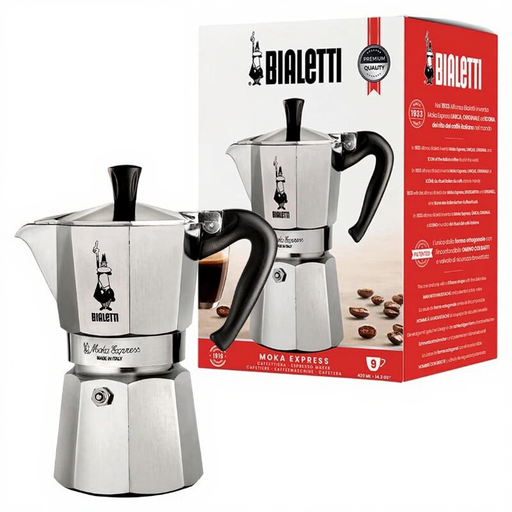
Why it suits this type of user: With a capacity of around 130 ml, the 3-cup size is ideal for one person having a small cup or for making two smaller servings. It’s manually operated and listed as suitable for gas, ceramic and electric hobs.
The product details specify the compatible hob types and capacity. A separate adapter plate is needed for induction.
Aluminium body, reusable filter, safety valve and a size that’s well suited to smaller households.
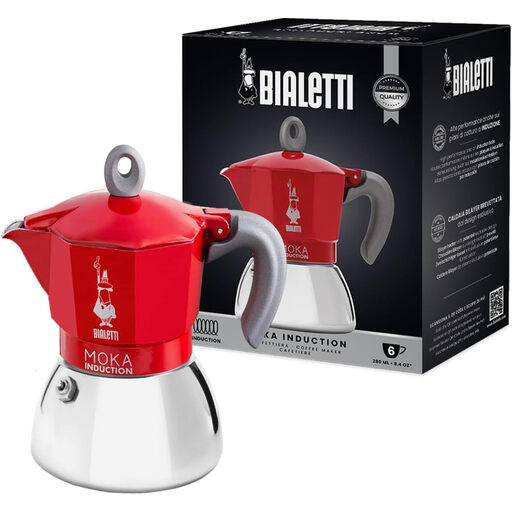
Why it suits this type of user: The stainless steel boiler is designed for induction hobs. With a capacity of 280 ml, this model is suitable for making several small servings.
Compatibility with induction, gas and electric hobs is clearly stated, so there’s no need to look for an additional adapter plate.
Aluminium top, stainless steel boiler, manual operation, reusable filter and safety valve.
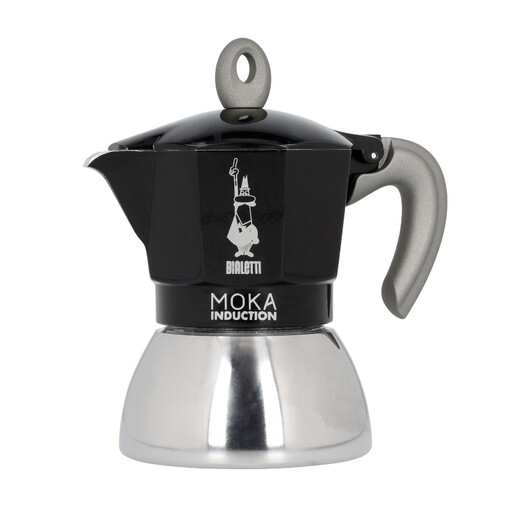
Why it suits this type of user: With a capacity of around 170 ml, the 4-cup version is suited to households, offices, camping and travel when you regularly need to make several servings.
Induction compatibility is included in the model name and technical description, reducing the risk of choosing an unsuitable aluminium pot.
Suitable for all the hob types listed, manual brewing, a reusable filter and a mid-sized capacity.
Fill the lower chamber with water up to the safety valve. Insert the filter and add suitably ground coffee without pressing it down. Screw the top and bottom sections together, then heat the pot over a medium heat. As soon as you hear the coffee rising and a gurgling sound, remove the espresso maker from the hob.
You don’t need capsules or paper filters to use it. The reusable filter helps keep ongoing accessory costs down. Check for limescale build-up and inspect the seals and safety valve regularly. Wear parts may be replaceable, depending on the model, so check the manufacturer’s information.
We’ve put together a complete, regularly updated list of products that meet these strict selection criteria and fully comply with the safety regulations in force in the EU.
Not every model is. A classic aluminium Moka Express generally needs a compatible adapter plate. The Moka Induction and similar induction models have a stainless steel boiler or base designed for this purpose. Always check the product description for the model you’re considering.
How long it lasts depends on how it’s cleaned, the condition of the seals and safety valve, and how often it’s used. Once the pot has cooled, rinse it with water, avoid putting it in the dishwasher and dry all the parts. Check the sealing ring and filter for visible wear and replace them if needed.
A 1-cup Moka pot is often a good fit for one small serving. If you’d like a larger serving or want to make two small cups, you could choose a 3-cup version. The cup count refers to Italian espresso cups, not the larger mugs commonly used in Germany.