
Lieferung heute & morgen

Qualitätsgarantie

Willkommens-Angebote freischalten: KOSTENLOSE Lieferung | Bis zu 80 % RABATT | Kostenlose 30-Tage-JoyPlus-Testphase
App herunterladen
A new bicycle helmet is on your shopping list, but the selection is vast and the marketing promises are endless. Whether for the daily commute, a weekend sport ride, or an off-road excursion, choosing the right helmet is crucial for your safety. However, many buyers fall into common traps that not only strain their wallet but can also compromise the helmet's protective function.
As your Joybuy Product Recommendation Officer, I'll help you separate the essential features from the non-essential. We'll shed light on the most common purchasing mistakes and show you what really matters when making your choice.
The 3 Most Common Mistakes When Buying a Helmet:
To avoid a bad purchase, you should focus on a few objective core parameters. These will help you find a helmet that is safe, comfortable, and suitable for your specific needs.
The correct size is the most critical factor. A helmet that's too large can slip, while one that's too small will cause pressure points.
Not every helmet is equally suited for every activity. The construction is optimised for its intended purpose.
A bicycle helmet sold in the EU must meet the EN 1078 standard. This certification mark ensures that the helmet meets basic requirements for shock absorption, construction, and strap system durability.
Additionally, there are technologies like the MIPS system. A MIPS helmet (Multi-directional Impact Protection System) includes a low-friction intermediate layer inside. This is designed to allow a slight rotation between the helmet and the head during an angled impact, helping to reduce the rotational forces that can be transferred to the brain.
Here are some recommendations tailored to specific user profiles that avoid common purchasing traps.
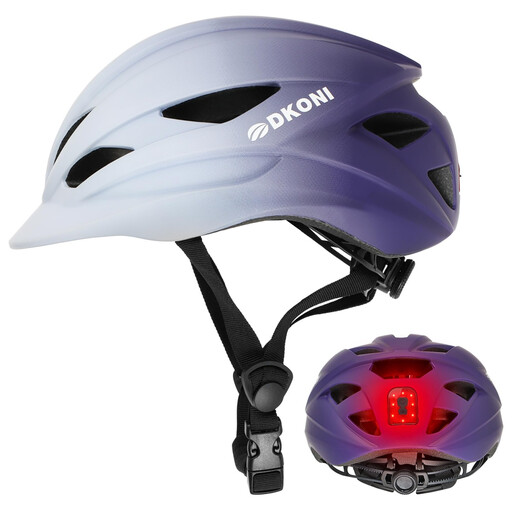
Why This Fits Their Persona: Ideal for commuters who navigate the city daily. The priority is on visibility and practical handling to arrive safely in dense traffic.
This helmet focuses on the essential safety feature for urban traffic—an integrated, USB-rechargeable rear light. It avoids the trap of paying for expensive aero features that offer no benefit in an urban environment.
Integrated LED rear light with 2 modes for enhanced visibility. Lightweight in-mould construction with 15 vents for good comfort.

Why This Fits Their Persona: Perfect for individuals who not only cycle but also use a skateboard, scooter, or inline skates and are looking for a durable all-rounder without breaking the bank.
This helmet bypasses the trap of needing to buy a separate, expensive model for each sport. Its robust ABS shell makes it a long-lasting companion for various activities.
Reinforced ABS outer shell and shock-absorbing EPS core. Two removable inner liners for size adjustment and easy cleaning.
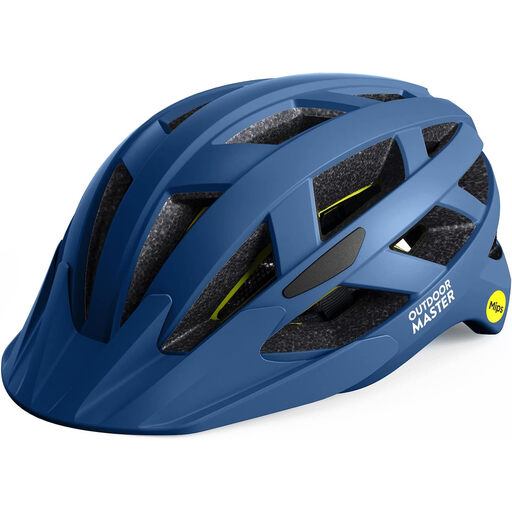
Why This Fits Their Persona: For mountain bikers and tour riders who value advanced safety features and high comfort on long rides, and are willing to invest in proven technology.
This helmet avoids the trap of skimping on safety. It integrates MIPS technology, which is aimed at reducing rotational forces—a factor often overlooked in basic helmets.
Integrated MIPS safety system. 25 vents for optimised airflow and a removable visor for versatile use.
We have compiled a complete, real-time list of products that fully satisfy these strict selection criteria and UK safety regulations.
Take a flexible measuring tape and place it at forehead level, about one centimetre above your eyebrows, and wrap it around your head. The tape should also pass over your ears and the most prominent point at the back of your head. The reading in centimetres corresponds to your head circumference and serves as a guide for the helmet size (e.g., 55–58 cm).
A bicycle helmet should be replaced after any crash or significant impact, even if no external damage is visible. The impact can create micro-cracks in the internal EPS foam, severely reducing its protective capability for future falls. Regardless of crashes, most manufacturers recommend replacing a helmet every 3 to 5 years, as materials like the EPS foam and plastics age and lose their protective function due to UV radiation, sweat, and temperature fluctuations.
MIPS stands for "Multi-directional Impact Protection System." It is a low-friction layer inside the helmet, positioned between the padding and the protective EPS layer. This design is engineered to allow the helmet to move 10–15 mm relative to the head during an angled impact. The goal is to redirect and absorb some of the rotational energy that would otherwise be transferred to the brain.