
Lieferung heute & morgen

Qualitätsgarantie

Willkommens-Angebote freischalten: KOSTENLOSE Lieferung | Bis zu 80 % RABATT | Kostenlose 30-Tage-JoyPlus-Testphase
App herunterladen
Orange juice is a breakfast staple in many households, as well as a popular choice for lunchboxes and stock cupboards. However, when buying orange juice online, the range can seem more straightforward than it really is: terms such as “orange”, “vitamin C” or “fruity” reveal little about the actual contents on their own. If you do not check the product information carefully, you could end up paying for a drink with considerably less fruit content than expected.
A 100% orange juice contains fruit juice only, possibly from concentrate. However, this does not mean that it contains no sugar. In these products, the carbohydrates, including the sugars, mainly come from the oranges themselves. Checking the nutrition table per 100 millilitres helps you assess the actual content.
By contrast, an orange nectar may contain water and other ingredients. An orange fruit juice drink often has a lower fruit content too. The description on the front should therefore always be checked against the ingredients list and the stated fruit content.
“With vitamin C” initially only indicates that vitamin C is present or has been added. For comparison purposes, the specific amount per 100 millilitres or per serving is what matters. In products containing acerola juice, vitamin C may also come from this fruit source. A balanced diet and healthy lifestyle cannot be replaced by a drink.
An orange juice multipack or orange juice 6x1L can be practical for families and frequent users. In smaller households, however, a large quantity may be difficult to finish in time once opened. Storage instructions also vary: some packs must be refrigerated after opening and consumed within three days, while other guidance may differ. The label on the individual product is always the deciding factor.
Pay attention to the exact product category:
If you are looking for pure juice, check the ingredients list for an entry such as “100% orange juice” or “orange juice from orange juice concentrate”. Mixed drinks may contain water, sugar, sweeteners, flavourings or acidity regulators.
Always compare the information per 100 millilitres. This makes it easier to compare different pack sizes and recipes. Relevant details include:
A product labelled orange juice with vitamin C should provide a clear quantity. For example, Hohes C Mild Orange states 32 milligrams of vitamin C per 100 millilitres, equivalent to 40% of the reference intake. This information comes from the product details provided and should be checked against the current packaging before purchase.
1-litre bottles or cartons are suitable for the fridge and regular consumption. An orange juice multipack with 6 x 1 litre is an appealing option for households with higher consumption. Small 0.2-litre portions, on the other hand, can be more practical for trips, breaks or lunchboxes.
Before buying, you should also check that the pack is undamaged and find out which storage conditions apply. Opened juice should generally be kept in the fridge. The specific time limit for consumption after opening depends on the product.
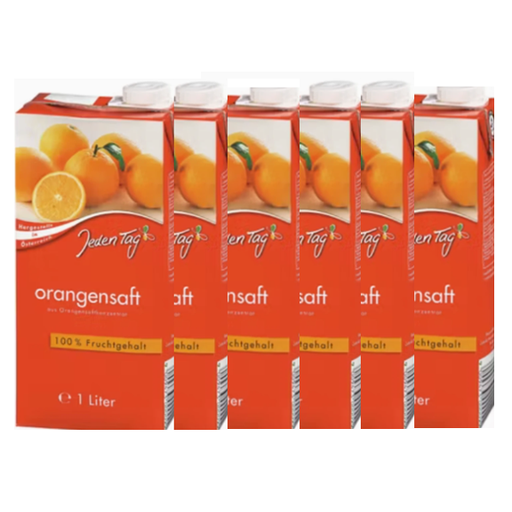
Why this product suits this profile: The multipack contains six 1-litre units, making it suitable for households that regularly drink juice, while providing clear product labelling.
The stated fruit content is 100%; the ingredients list states orange juice from orange juice concentrate. This makes the difference between this product and nectar or a fruit juice drink clear.
100% fruit content, six individual 1-litre packs and around 45 kcal per 100 ml according to the product information.
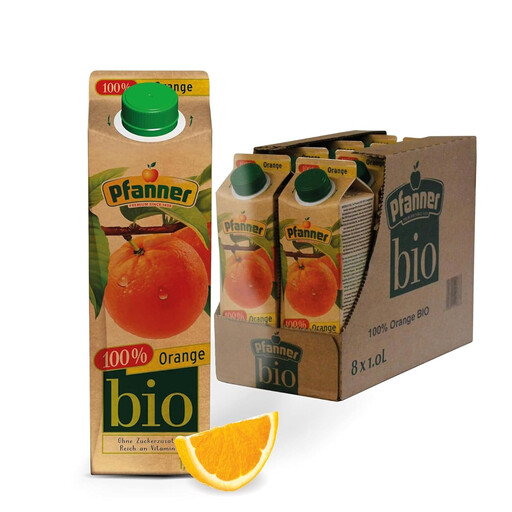
Why this product suits this profile: This option combines organic certification with 100% orange juice from concentrate and a bulk format for regular use.
The product description specifies organic orange juice with no added sugar. The ingredients list and organic seal on the packaging should be checked again before purchase.
100% organic fruit content, 8 x 1 litre and no added sugars according to the product information.
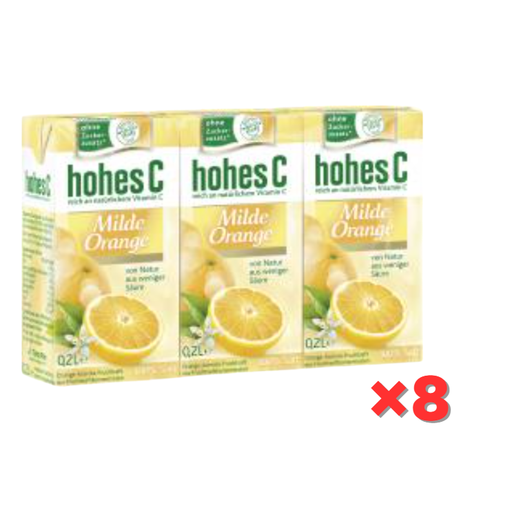
Why this product suits this profile: The small 0.2-litre individual portions are suitable for taking on the go, breaks, picnics or lunchboxes.
The portion format avoids the difficulty of storing an opened 1-litre pack while out and having to consume it within a short time.
8 x 0.2 litres, 1.6 litres in total, plus 32 mg of vitamin C per 100 ml according to the product information.
We have put together a complete, regularly updated list of products that fully meet these strict selection criteria and the safety regulations applicable in the EU.
Depending on the product, orange juice consists of 100% orange juice, often from concentrate or as not-from-concentrate juice. Orange nectar also contains water and may contain other ingredients such as sugar or vitamin C. The fruit content and ingredients list on the packaging are the key details.
This depends on the individual product. Many 1-litre packs should be refrigerated after opening and consumed within three to four days. Some products may have shorter time limits. The information on the packaging takes precedence.
A multipack can be suitable if you drink juice regularly and have enough storage space. Compare the price per litre, the total quantity and the best-before date. For smaller households or occasional consumption, individual packs or small portions are often easier to plan.