
Lieferung heute & morgen

Qualitätsgarantie

Willkommens-Angebote freischalten: KOSTENLOSE Lieferung | Bis zu 80 % RABATT | Kostenlose 30-Tage-JoyPlus-Testphase
App herunterladen
A dead car battery is more than just a nuisance—it means lost time, missed appointments, and potentially high costs for roadside assistance. A portable jump starter promises a quick, independent solution. But the market is overwhelming, filled with technical specs that confuse more than they clarify. Many drivers invest in a device that fails at the critical moment.
As your Joybuy Product Recommendation Officer, I'm here to help you separate the facts from the marketing hype. We'll shine a light on the most common purchasing pitfalls and show you what truly matters, so you can make an informed decision.
The 3 Most Common Traps When Buying a Jump Starter:
To avoid falling into these traps, you should check three core aspects. These define the true performance and safety of a device.
Ignore the big number on the box for a moment. The key question is: What engine is the device designed for?
A rule of thumb for selection:
A modern jump starter is often also a power bank with jump-starting capabilities. Look for the watt-hour (Wh) rating, if provided, as it's more realistic. However, the ports and charging speeds are more important:
Some models are designed as a complete roadside emergency kit and include a built-in air compressor. An emergency starter with a compressor is particularly practical, as correct tyre pressure is just as important for driving safety as a charged battery. Consider whether you need this multifunctionality, as it makes the device larger and heavier.
Look for CE and RoHS certifications, which ensure basic safety and environmental standards in the EU. The quality of the jumper clamps is also crucial:
Here are some recommendations tailored to specific user profiles that meet the criteria mentioned above.
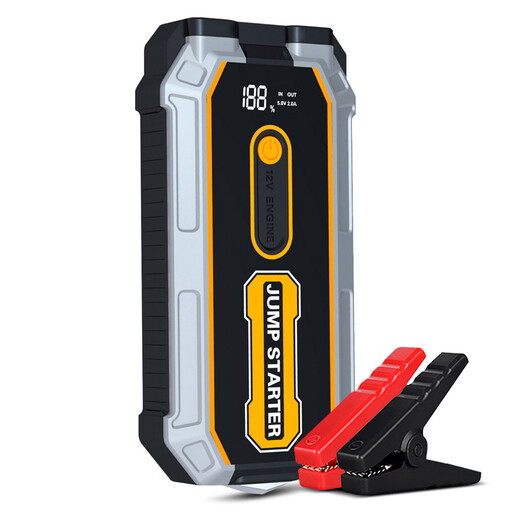
Why This Fits Their Persona: Ideal for drivers of small to mid-size petrol cars. This device provides reliable emergency power without breaking the bank on unnecessary features. Its compact size makes it perfect for storing in the glove compartment.
This unit doesn't make unrealistic claims. The 1200A peak current is an honest rating for its intended vehicle class, avoiding the trap of paying for unused power reserves.
Extremely compact and lightweight (approx. 330g): Easy to store anywhere. LCD Display: Clearly shows the remaining charge status.
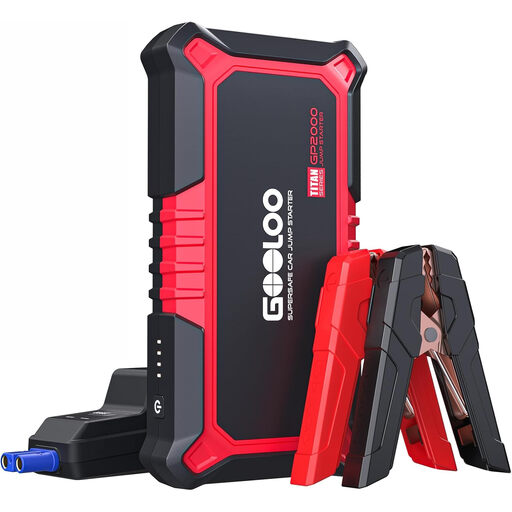
Why This Fits Their Persona: For drivers of diesel vehicles, SUVs, or vans who depend on reliable performance. With 2000A peak current, this model offers enough power for engines up to 6.0L (diesel) and places a strong emphasis on safety, which is essential for daily use.
This device directly addresses the safety trap. It lists 10 specific protection mechanisms, including spark-proof technology and reverse polarity protection, and uses robust, all-metal clamps instead of cheap plastic.
Rated for diesel engines up to 6.0L: Delivers the necessary power. Comprehensive Safety Protocols: The heavy-duty metal clamps and 10 protection features ensure safe operation.
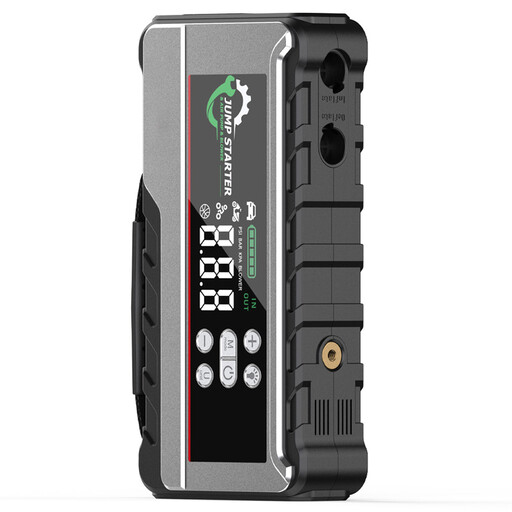
Why This Fits Their Persona: The ultimate multi-tool for campers, boat owners, and anyone who ventures off the beaten path. It combines a powerful 3000A jump starter with a 150 PSI compressor and a PD 65W fast-charging function that can even power a laptop.
Unlike devices where extra features are just a gimmick, this model delivers real performance: the compressor actually reaches 150 PSI, and the PD 65W charging is fast enough for demanding electronics like laptops.
All-in-One Solution: Jump starter, compressor, air blower, and a powerful power bank in one. PD 65W Fast Charging: Can charge laptops and other large devices on the go.
We've compiled a complete, up-to-date list of products that fully meet these strict selection criteria and EU safety regulations.
1. How often do I need to charge a jump starter? Even when not in use, a lithium-ion battery will slowly self-discharge. To maximise battery life and ensure the device is ready in an emergency, most manufacturers recommend fully charging it every 2 to 3 months.
2. Can I use a jump starter to revive a completely dead battery? Yes, many modern devices have a "Boost" or "Force Start" feature. This bypasses the automatic voltage detection to force power to a battery whose voltage is too low to be detected on its own. However, this function should be used with caution and exactly as instructed, as it often disables some of the automatic safety checks.
3. Are higher peak amps always better? Not necessarily. Extremely high peak amps are overkill for a small petrol car and make the device unnecessarily expensive. It's more important to choose a device with power matched to your vehicle's engine size (displacement) and type (petrol/diesel). A 2000A unit for a 1.6L petrol engine offers no practical advantage over a suitable 1200A model but can be bulkier and more expensive.