
Lieferung heute & morgen

Qualitätsgarantie

Willkommens-Angebote freischalten: KOSTENLOSE Lieferung | Bis zu 80 % RABATT | Kostenlose 30-Tage-JoyPlus-Testphase
App herunterladen
A custom starlight headliner gives any vehicle a unique atmosphere. However, the path to a successful retrofit is paved with potential pitfalls. Before you invest in a kit, it's crucial to understand the most common mistakes that can lead to an unsatisfactory result or even technical problems. Many buyers focus on the number of light points but overlook critical technical details that determine the longevity and quality of the effect.
This guide focuses on the objective criteria you should check before buying to make an informed decision and avoid disappointment.
The market offers a wide selection, but not every product delivers on its promises. Pay close attention to these three points to avoid a bad investment:
starlight app control constantly loses connection or fails to execute commands, the most advanced feature quickly becomes a nuisance.To separate the wheat from the chaff, you should focus on verifiable technical specifications. These three parameters are central to the performance and visual outcome of your car starlight headliner retrofit project.
The heart of every system is the light source, often called the "engine." This is where the light that is channelled through the fibre optics is generated.
RGBW starlight headliner thus offers a much more authentic and flexible colour design.The fibre optics transport the light from the engine to the individual points on the headliner. Their properties determine the appearance of the headliner stars.
fibre optic starlight kit with fibres of different diameters (e.g., 0.5 mm, 0.75 mm, 1.0 mm) creates a more natural image, as the "stars" vary in brightness and size.Modern systems offer more than just static light. The type of control and the available effects are important features for convenience and customisation.
starlight headliner with twinkle effect simulates the natural shimmer of stars. Technically, this is often achieved by a rotating wheel with small openings in the light source, which rhythmically varies the light entering the fibres. This is a feature of higher-quality kits and creates a much more dynamic car interior star lighting.Based on the objective criteria mentioned above, we have identified some products that are suitable for different user profiles and use cases.
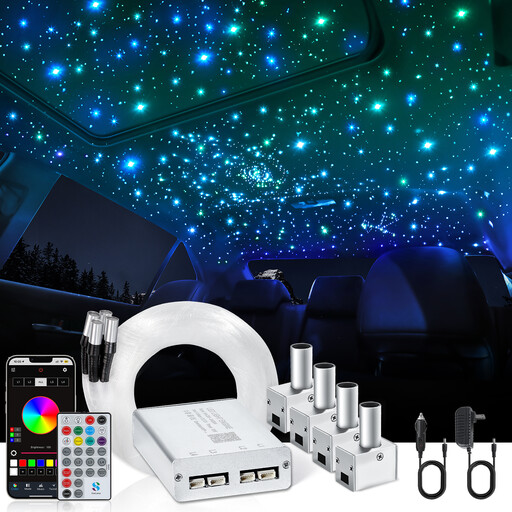
Why This Fits Their Persona: Ideal for DIY enthusiasts looking for a comprehensive kit for their first installation. It offers a high number of fibres and modern control options at an accessible price point, without compromising on core features.
With 1000 fibre optic strands, it avoids the risk of a sparse, unrealistic star pattern. The dual control via app and RF remote provides a reliable alternative if one method is not preferred.
The 4-port design of the light source allows for more even light distribution and separate control of four zones. The RGBW technology ensures pure white light.
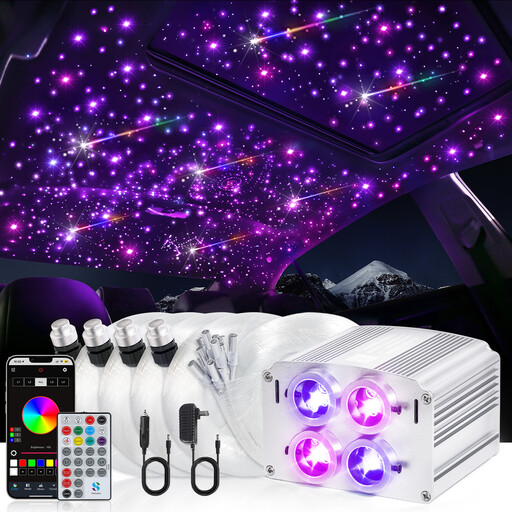
Why This Fits Their Persona: For users who want maximum brightness and a particularly realistic effect. The high power and integrated twinkle effect make this kit the choice for a premium experience in cars, vans, or home cinemas.
The 32-watt light source delivers high luminosity and prevents a result that is too dim. The mechanical twinkle effect from an internal rotating wheel is more durable and realistic than purely software-based blinking modes.
The combination of high power and an integrated twinkle effect provides an exceptionally dynamic and bright ceiling illumination. The 4-metre-long fibres offer flexibility even for large vehicles.
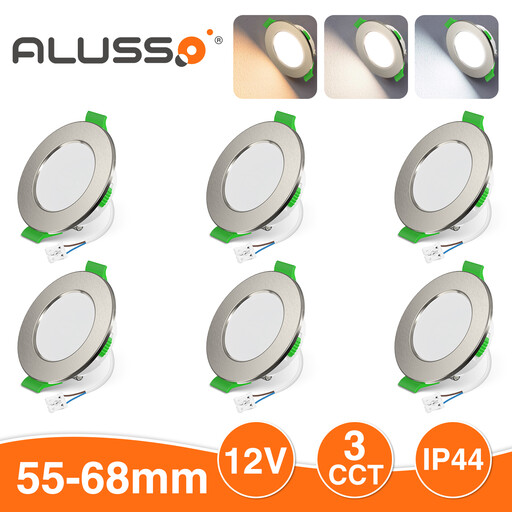
Why This Fits Their Persona: For owners of motorhomes, campers, or boats who prefer functional, high-quality interior lighting instead of a purely aesthetic starlight headliner. The focus is on simple installation and a robust design for vehicle use.
This kit bypasses the complexity of a fibre optic installation. It provides reliable, bright, and adjustable lighting specifically designed for the requirements of 12V to 24V electrical systems.
The IP44 certification makes the spotlights resistant to moisture, ideal for kitchen or bathroom areas in an RV. The colour temperature (3000K/4000K/6500K) can be selected before installation.
We have compiled a complete, real-time updated list of products that fully meet these strict selection criteria and local safety standards.
Yes, a car starlight headliner retrofit is a popular DIY project. However, it requires patience and care. The process typically involves removing the headliner, drilling hundreds of small holes for the fibres, inserting the fibres, and connecting the light source to the vehicle's 12V electrical system. Basic skills with tools and vehicle electrics are advantageous.
The power consumption is very low. An LED car starlight headliner with a 12-watt light source consumes about 1 amp on a 12-volt system. A 32-watt engine requires about 2.7 amps. This does not represent a significant load for a modern car battery during operation. Nevertheless, the lighting should not be run for many hours with the engine off to conserve the battery.
The installation time depends heavily on experience, the vehicle model, and the number of fibre optic strands. For an experienced DIYer, the installation can take between 8 and 15 hours. The most time-consuming steps are the careful removal and reinstallation of the headliner and the precise placement of each individual light point.