
Lieferung heute & morgen

Qualitätsgarantie

Willkommens-Angebote freischalten: KOSTENLOSE Lieferung | Bis zu 80 % RABATT | Kostenlose 30-Tage-JoyPlus-Testphase
App herunterladen
If you're looking to buy a children's bike, you'll find a huge selection online: from balance bikes for kids through classic bikes with stabilisers to BMX bikes for children or youth bikes. However, product images and marketing promises don't always show whether a model actually suits your child's height, riding ability and intended use.
Three typical buying mistakes often lead to unnecessary spending:
The inch measurement refers to the wheel diameter, not automatically the correct height. As a rough guide:
These ranges are not a fixed rule. Your child should be able to reach the ground securely while seated, without their knees being too bent when pedalling. A bike that is too big makes starting and stopping difficult; one that is too small can restrict freedom of movement.
For riding on public roads in Germany, the requirements of the Road Traffic Licensing Regulations (StVZO) apply. These include suitable brakes, reflectors and mandatory lighting. Not every leisure, BMX or mountain bike model is automatically equipped for road use.
Look out for:
A dynamo light can be practical for regular rides at dusk. The RoyalBaby XCOOL, for example, is listed with a self-powered front light of 30 lumens and mudguards. Nevertheless, buyers must check whether the entire specification meets the current regulations for the intended public use.
A lightweight aluminium bike is usually easier for children to manoeuvre and carry. Steel frames, on the other hand, can offer a robust construction, such as the Hiland BMX with its Hi-Ten steel frame. The weight should always match your child's strength and age: a bike they can barely carry is impractical for stairs, bike racks or bus journeys.
For paved paths, a rigid bike is often sufficient. A children's mountain bike with front suspension and knobbly tyres can be useful for light forest and gravel tracks. For jumps, tricks and ramps, a BMX model with suitable brakes and protective gear is designed. These bike types should not be chosen purely on looks.
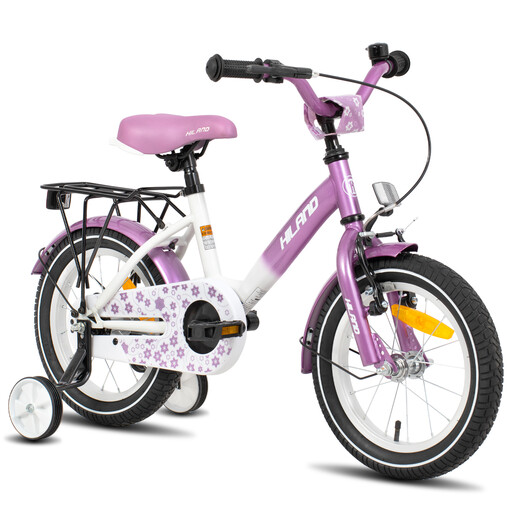
Why this product fits the profile: The 12-inch model is listed for children aged 2 to 4 years and 80 to 105 cm in height. It is aimed at beginners and comes with stabilisers, a basket and tools.
The specific size and height information reduces the risk of a starter bike being too big. Two braking systems, a chain guard and handlebar protectors are listed as features.
12-inch wheels, single-speed drive, V-brake at the front and coaster brake at the rear; reportedly about 90% pre-assembled.
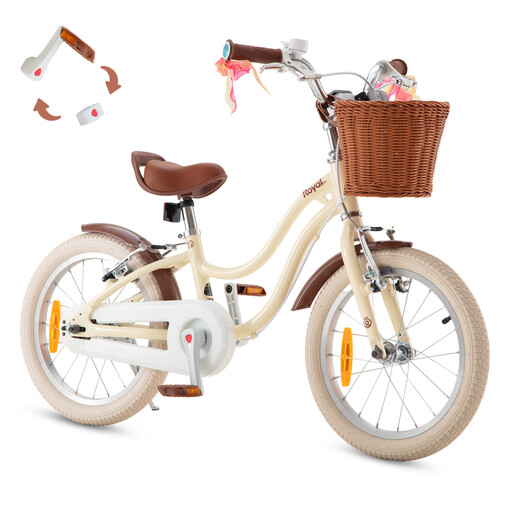
Why this product fits the profile: The aluminium frame, low step-through and the listed 2-in-1 concept appeal to families who value weight, adjustability and ease of use.
The size information for 14 and 16 inches is listed separately. This allows the choice to be based more on height rather than just age.
Aluminium frame, two hand brakes, hybrid tyres and tool-free switch between balance and pedal mode according to the product description.
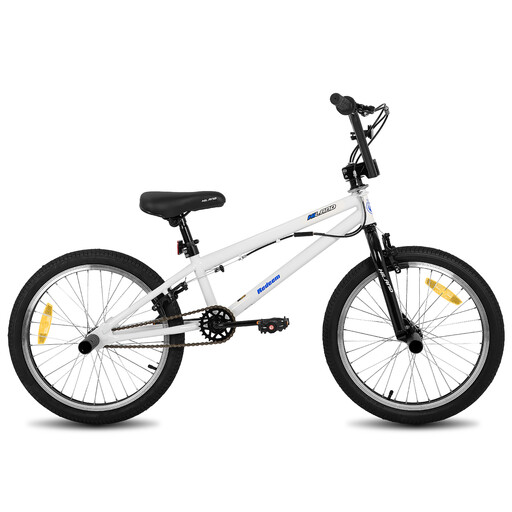
Why this product fits the profile: According to the description, this model is aimed at children and young people for freestyle, tricks and dirt riding. It is therefore not comparable to a classic everyday bike.
The specific intended use prevents a trick bike from being accidentally bought for school runs on public roads. Before each use, the rotor, brakes, tyres and bolts should be checked.
20-inch tyres with 2.35-inch width, 360-degree rotor, BMX U-brake and five pegs according to the product data.
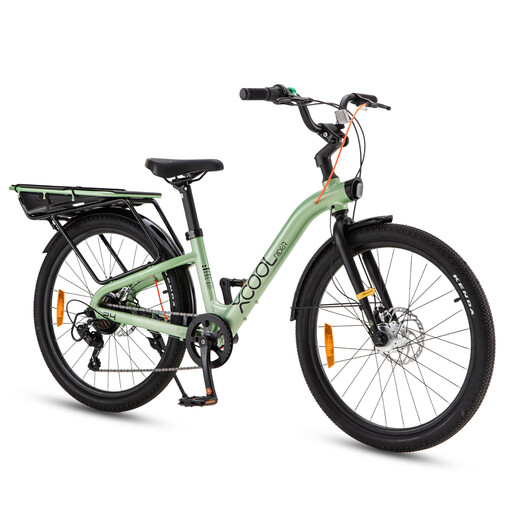
Why this product fits the profile: The 24-inch model is listed for heights of 135 to 170 cm and combines everyday features with equipment for paved paths and light gravel tracks.
The stated height range and adjustable stem help with fitting. The specification is clearly aimed at commuting rather than jumps or extreme terrain.
Aluminium frame, disc brakes front and rear, 24-inch tyres, mudguards and hub dynamo front light according to the product details.
We've put together a complete, regularly updated list of products that fully meet these strict selection criteria and the safety regulations in force in the EU.
Many children's and youth bikes are delivered partially assembled. Before the first ride, you should check the handlebars, pedals, saddle, brakes and wheels. For a children's BMX bike, the rotor, pegs and all bolts should also be on the checklist.
Ongoing costs mainly come from:
A bike with a hub dynamo doesn't need batteries for the front light. Disc brakes may require different maintenance than rim brakes under heavy use. The respective manufacturer's instructions are key for tyre pressure, weight limit and replacement parts.
The right size depends mainly on height, inside leg measurement and riding ability. The inch size is only a guide. Your child should be able to get on and off safely, brake and stop the bike in a controlled manner.
A children's balance bike first encourages independent balancing. Stabilisers can make the transition to a pedal bike easier for some children, but they don't replace the correct adjustment of the saddle and handlebars. The decision should depend on your child's development and safe use.
The length of use depends on frame quality, maintenance, how often it's ridden and your child's growth. Adjustable seat posts and handlebars can extend the range of adjustment. As soon as your child's knees, back or arms are in a persistently awkward position, the bike size should be checked again.