
Lieferung heute & morgen

Qualitätsgarantie

Willkommens-Angebote freischalten: KOSTENLOSE Lieferung | Bis zu 80 % RABATT | Kostenlose 30-Tage-JoyPlus-Testphase
App herunterladen
The search for a suitable cleanser for blemish-prone skin can quickly become overwhelming. The market is saturated with products that promise rapid results, yet not every formula delivers on its promise. Many users find that an unsuitable product can worsen skin problems rather than improve them. Before you make a decision, it's crucial to understand the common pitfalls that can lead to the wrong choice.
A widespread mistake is assuming that more aggressive cleansing leads to better results. Products marketed as "extra-strength" often contain harsh surfactants that attack the skin's natural protective barrier. This can trigger a vicious cycle of dryness, increased sebum production, and new blemishes.
Another pitfall is the belief in an "ingredient cocktail." A long list of ingredients may look impressive, but it doesn't guarantee effectiveness. Often, the concentrations are too low, or the active ingredients are not stable within the formulation. An effective facial cleanser for acne focuses on a few proven ingredients at meaningful concentrations.
To find the right cleansing gel for oily skin, you should focus on objective criteria rather than marketing claims. Three parameters are decisive here.
Surfactants are the cleansing agents that remove dirt and excess sebum from the skin. Aggressive sulphates (e.g., Sodium Lauryl Sulfate) can weaken the skin barrier. Milder, sugar- or coconut-based surfactants like Coco-Glucoside or Sodium Cocoyl Glutamate are often a better choice. They provide an effective yet gentle cleanse that respects the skin's natural balance.
A targeted formulation is more critical than a long list of ingredients. For blemish-prone skin, certain active ingredients have proven particularly beneficial:
The texture of a cleansing product affects the application experience and its suitability for your skin type.
Instead of making a one-size-fits-all recommendation, we have matched products to different user profiles.
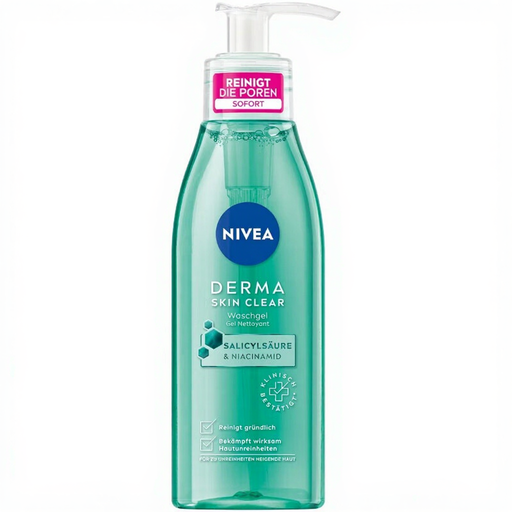
Why it's a great fit: This cleansing gel provides a solid foundation for anyone seeking a straightforward and accessible solution for blemish-prone skin. It combines well-known active ingredients in a formula designed for daily use.
It sidesteps the "extra-strength" pitfall by combining salicylic acid with soothing niacinamide, creating a balance between clarifying action and skin care.
The formula with salicylic acid and niacinamide counteracts blemishes while simultaneously supporting the skin barrier.
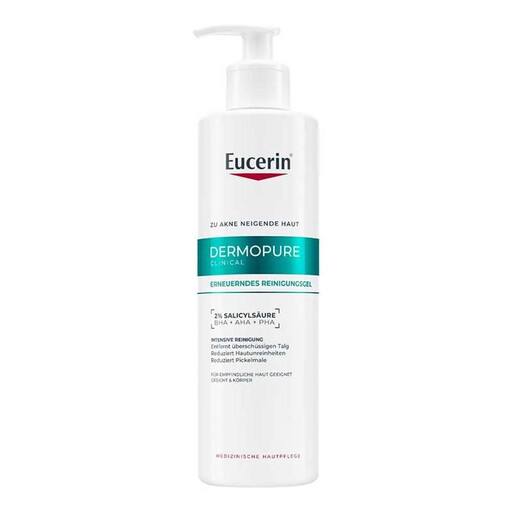
Why it's a great fit: For users with persistently oily skin and blemishes who are looking for an effective, dermatologically-focused solution. It is designed to thoroughly remove excess sebum.
Instead of being non-specifically "strong," it relies on a specific cleansing system with 6% Ampho-Tensides that cleanses effectively without stripping the skin barrier.
The soap-free formula effectively removes excess sebum and dirt, leaving the skin feeling clean and supple without any tightness.
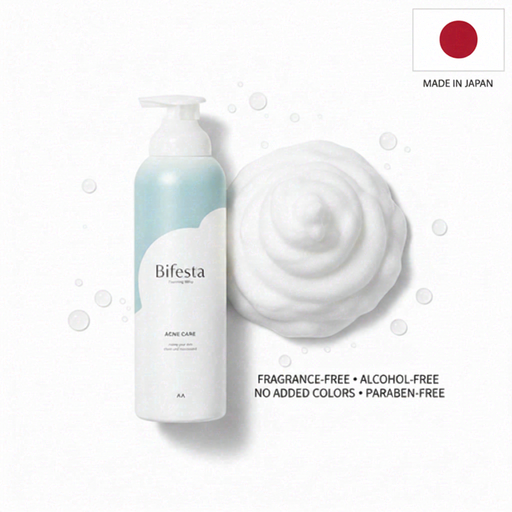
Why it's a great fit: For users who prefer an exceptionally gentle cleansing experience and are interested in Japanese skincare innovation. The dense foam minimises friction on the skin.
It directly addresses the pitfall of using the wrong texture. The dense foam acts like a cushion, preventing skin irritation from friction and enabling a thorough yet gentle cleanse.
The ultra-dense, carbonated micro-foam penetrates deep into the pores to remove impurities, while hyaluronic acid keeps the skin hydrated.
We have compiled a complete, up-to-date list of products that fully meet these strict selection criteria and UK/EU safety regulations.
As a general rule, using it twice daily—morning and evening—is recommended to remove makeup, dirt, and excess sebum. However, if you notice your skin becoming dry or tight, it may be wise to reduce usage to once a day, preferably in the evening, and use only water or a very mild cleanser in the morning.
A cleanser with salicylic acid can have a drying effect, especially at higher concentrations or on sensitive skin. That's why it's important to choose a well-formulated product that also contains hydrating or soothing ingredients like glycerin, hyaluronic acid, or niacinamide. Following up with a moisturiser after cleansing is essential to support the skin barrier.
Yes, that is possible. For combination skin, which is characterized by an oily T-zone and drier cheeks, you can apply the cleansing gel for oily skin specifically to the oilier areas. Another option is to choose a balancing cleanser formulated for combination skin that regulates sebum production without further drying out the drier parts of your face.