
Lieferung heute & morgen

Qualitätsgarantie

Willkommens-Angebote freischalten: KOSTENLOSE Lieferung | Bis zu 80 % RABATT | Kostenlose 30-Tage-JoyPlus-Testphase
App herunterladen
A cordless impact wrench can save you a great deal of time when changing tyres, repairing your car or carrying out assembly work. At the same time, unclear torque specifications, incompatible batteries and unsuitable attachments often lead to disappointing purchases. The key consideration is therefore not simply the biggest number on the product page, but the combination of intended use, drive, battery, accessories and controllable power transmission.
A stated torque figure initially describes a technical peak value under specific conditions. When loosening seized wheel nuts, factors such as the thread, corrosion, tightening torque, battery charge and socket being used can also play a role.
For changing tyres on a private car, a compact model is often more suitable than an especially powerful cordless impact wrench. Vans, commercial vehicles and regular workshop use involve different requirements. Check whether the manufacturer distinguishes between loosening and tightening torque, and what screw sizes the tool is designed for.
A 21V impact wrench and an 18-volt model cannot be assessed solely by their voltage. With lithium-ion batteries, the nominal voltage may be stated differently from the maximum voltage. In addition, capacity in Ah, cell quality, charging time and the number of batteries supplied all determine practical runtime.
Pay attention to the battery system, too. An 18V cordless drill driver such as the Makita DHP489Z requires batteries from Makita’s 18V LXT platform. These are not included with the set mentioned. What appears to be an inexpensive purchase may therefore result in additional costs for a battery and charger.
An electric impact wrench with a 1/2-inch square drive is primarily designed as a wheel nut remover and for powerful screwdriving tasks. A cordless impact drill driver, on the other hand, usually has a chuck and additional drilling functions for wood, metal or masonry.
For fitting tyres, a square drive with suitable impact sockets is the more practical option. For versatile assembly and drilling tasks, a tool with a chuck may be the better choice. Neither type of tool replaces a torque wrench for the final tightening of wheel nuts.
A high torque can be useful when loosening seized screws, but it increases the risk of overloading the connection during tightening. Several speed settings, a precisely controllable trigger and a forward/reverse switch make it easier to adapt the tool to different tasks.
For car repairs, you should also check:
A brushless motor does not require traditional carbon brushes and may, by design, contain motor components that are less susceptible to wear. However, this alone is not proof of a particular service life. The gearbox, bearings, cooling system and battery quality also affect how the tool performs in use.
A metal gearbox housing or an aluminium motor head can be beneficial under regular use. Statements such as “maintenance-free” or “longer runtime” should always be considered alongside the specific operating conditions.
For mobile breakdown services or longer jobs, two batteries are more practical than a single battery. A charge indicator, overload protection, overheating protection and deep-discharge protection can make the tool easier to use. When reviewing the accessories list, the following points are particularly relevant:
CE marking is relevant for many electrical devices sold in the EU, but it is not an independent assessment of quality. Also check the product information, items included and safety instructions.
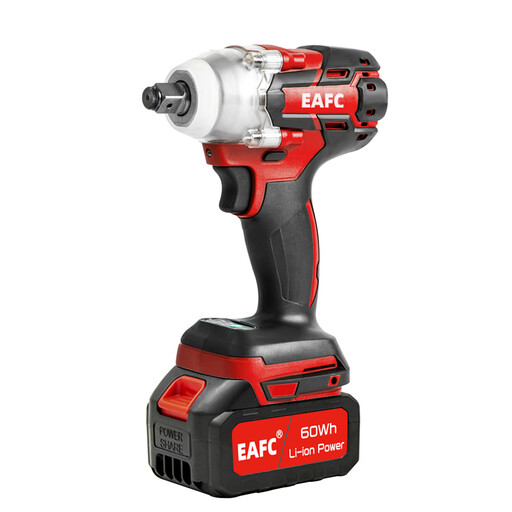
Why this product suits the profile: This model is aimed at private car owners and DIY enthusiasts looking for a cordless tool for occasional tyre changes and assembly work.
The product information states 200 Nm, but the 1/2-inch square drive should be checked on the detail page before purchase. A battery, USB charging cable and LED light are listed; the items included should nevertheless be verified.
Brushless motor according to the product description, forward/reverse function, continuously variable speed control and a stated application range for M10 to M24.
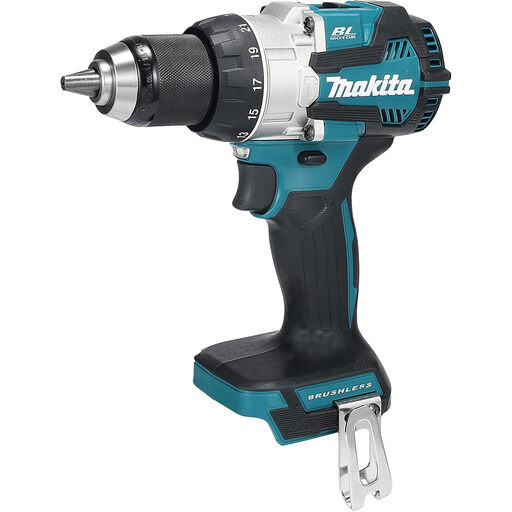
Why this product suits the profile: For users who want to work on wood, metal and masonry as well as carrying out screwdriving tasks, and who already use Makita’s 18V LXT battery system.
The product page clearly states that the battery and charger are not included. This makes it easier to plan the actual total cost before purchase.
18 V, brushless motor, 13 mm chuck, two gears, LED light and a stated maximum torque of 73 Nm.
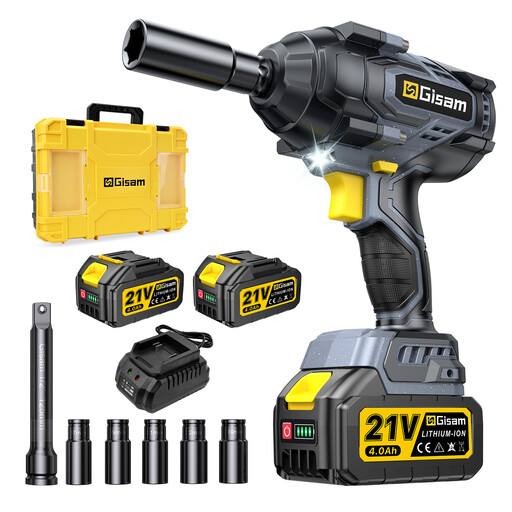
Why this product suits the profile: The set is designed for frequent tyre work on cars, SUVs, vans and selected lorry applications, provided the vehicle’s actual torque requirements fall within the appropriate range.
Four speed settings allow for graduated use. The very high torque specification of 1,800 Nm should be checked against the vehicle and manufacturer information before purchase.
According to the product information: 21 V, brushless 1/2-inch drive, two 4.0 Ah batteries, five sockets, plus overheating and overload protection.
A cordless impact wrench is used to loosen wheel nuts and quickly run them on. For final tightening, a torque wrench set to the value specified by the vehicle manufacturer is required. Always use suitable impact sockets, and check before use that the battery, square drive and accessories are undamaged.
When fitting tyres, you should also ensure a level surface, secure support for the vehicle and compliance with the vehicle handbook. An LED light improves visibility, but it does not replace adequate workspace lighting.
We have put together a complete, regularly updated list of products that fully meet these strict selection criteria and the safety regulations applicable in the EU.
This depends on the type of vehicle, wheel bolts and condition of the connection. For cars, a tool in the medium torque range may be sufficient. For SUVs, vans or lorries, the vehicle’s technical data and the actual loosening torque must be taken into account. The manufacturer’s maximum torque specification is not a substitute for checking the specific vehicle.
It can position and run on wheel nuts. However, final tightening should be carried out with a suitable torque wrench. This allows you to apply the specified tightening torque more accurately and avoid overloading the thread or wheel rim.
Runtime is affected by battery capacity, torque setting, screw size, temperature and operating intervals. Two batteries allow you to continue working while one is charging during frequent use. With an 18V or 21V tool, you should use only compatible batteries and the charger intended for that system.