Parents preparing to start baby-led weaning
You want to decide whether crispbread could work as a first finger food. A child’s readiness for solids and a suitable, soft texture matter more than a ‘premium’ label.


Standard shop-bought crispbread is not an obvious choice when starting baby-led weaning. The Federal Institute of Public Health describes first finger foods as soft pieces, whereas the crispbreads considered here are crunchy. If you’re buying crispbread for the rest of the family, assess its suitability for your baby separately and check the ingredients, salt and allergens for the specific variety – regardless of labels such as ‘premium’ or ‘wholegrain’.
You want to decide whether crispbread could work as a first finger food. A child’s readiness for solids and a suitable, soft texture matter more than a ‘premium’ label.
Crispbread may be intended for other family members without being suitable for your baby. The ingredients, salt and allergen information on the specific pack can help you choose.
When comparing rye, spelt and seeded varieties, check which gluten-containing cereals are listed, along with sesame and any ‘may contain’ warnings. If an allergy has been diagnosed, follow the individual medical advice you’ve been given.
First, decide whether you’re looking for finger foods to start weaning or crispbread for older family members. Then it makes sense to compare individual varieties.
| What matters | What to check | Who it matters most to |
|---|---|---|
| Texture and readiness for solids | Before starting solids, look for signs that your child is ready. Choose soft pieces rather than crunchy crispbread as a first finger food. | If my child is just getting to know finger foods, I want to find out first whether they’re ready and can manage the texture. This is the top concern for around 45% of shoppers. |
| Salt and ingredients | Check the ingredients list and salt content per 100 g on the specific pack. Neither ‘organic’ nor ‘wholegrain’ is a substitute for checking these details. | When shopping for the family, I don’t want to choose a variety for my baby just because of its name. Around 33% of shoppers prioritise salt and ingredients. |
| Cereals and seeds | Check the ingredients and allergen information for the variety you’ve chosen, including rye, spelt or wheat, sesame and any ‘may contain’ warnings. | When choosing between cereal and seeded varieties, I need the labelling to be suitable for any known allergies in my family. This is the most important consideration for around 22% of shoppers. |
These labels don’t tell you whether a food has the right texture to be a first finger food. The crispbreads considered here are crunchy, and the recipes checked contain salt.
When starting baby-led weaning, opt for soft finger foods and make sure your child is ready for solids. For crispbread for the family table, compare the information on the pack.
The Federal Institute of Public Health notes that it can be harder to ensure an adequate supply of nutrients when following baby-led weaning exclusively.
Don’t plan your baby’s weaning around crispbread. If you want to follow baby-led weaning exclusively, speak to your child’s GP or paediatrician.
A sesame variety has different ingredients from plain rye crispbread. For example, EDEKA Bio Sesame Crispbread lists rye and sesame as ingredients and also warns that it may contain traces of milk.
Check the current pack whenever you choose a new variety. If an allergy has been diagnosed, follow the individual medical advice you’ve been given.
EDEKA notes in its product information that availability may vary from store to store, and that the information on the pack may differ from the online listing.
Before buying, check the pack that’s actually on offer, especially the recipe, nutritional information and allergens.
The rye and sourdough varieties give you useful points of comparison for crispbread for the family table, but they shouldn’t be used to make a blanket judgement about suitability as a first baby-led weaning food.
The Rye and Spelt Crispbread variety is a useful example for comparing the specific cereals and ingredients in different products.
The information for the Wholegrain Rye and Sesame crispbreads lets you compare these two specific recipes.
These varieties are worth considering when comparing rye, sourdough and sesame crispbread for older family members. Their inclusion here is not a recommendation to offer them as a baby’s first finger food during baby-led weaning.
 No image available
For the family table when you want to compare a variety made with sesame and flaxseed. Separately assess whether the crunchy texture is suitable for your baby and check the ingredients and allergen information on the pack.
 No image available
A wholegrain rye variety to compare for the family table later on – it isn’t automatically a suitable choice for starting baby-led weaning just because it’s wholegrain. Check the current salt content and allergen information on the specific pack.
 No image available
For families who want to compare a sesame variety with other crispbreads. Check the specific pack for sesame and any gluten-containing cereals. This crunchy variety isn’t an obvious choice for starting baby-led weaning.
 No image available
A rye sourdough variety for the family table later on. Compare its current ingredients list and salt content with those of other varieties, but don’t assume that sourdough makes it suitable as a first finger food.
 No image available
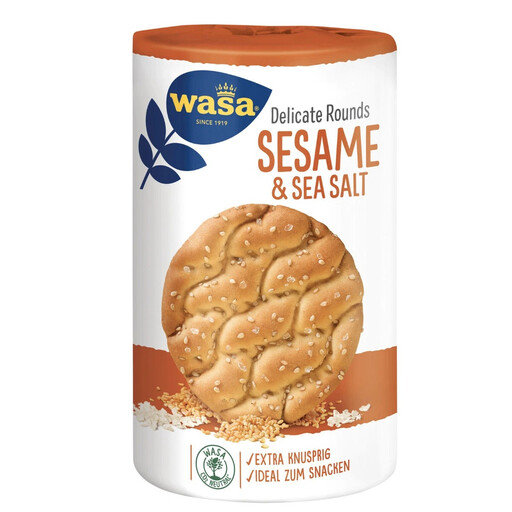
A round sesame and sea salt variety for older family members. Compare the ingredients and nutritional information with rye varieties, and check the labelling for sesame and gluten-containing cereals when choosing.
It’s not an obvious first choice. The Federal Institute of Public Health describes the start of baby-led weaning as involving soft pieces of food. A ‘premium’ label doesn’t change the crunchy texture of the crispbread considered here. You should also take your child’s readiness for solids into account.
The Healthy Start Network recommends that full-term babies who are breastfed or fed infant formula start no earlier than the beginning of their fifth month and no later than the beginning of their seventh month. Your baby’s individual signs of readiness are also important, including being able to control their head and sit upright with support.
‘Wholegrain’ doesn’t tell you whether the texture is soft enough for starting baby-led weaning, and on its own it says nothing about salt content. For example, both Wasa Original Crisp and EDEKA Bio Wholegrain Rye list salt in their recipes. Check the information for the variety you’re actually buying.
Read the ingredients and allergen information on the specific pack. For example, EDEKA Bio Sesame Crispbread lists sesame and rye as ingredients and also warns that it may contain traces of milk. If you have a known allergy, follow the individual medical advice you’ve been given.