What to look for when buying
When choosing crispbread for a toddler, first check whether the texture and eating situation are right for your child. Then compare the wholegrain content, ingredients and pack information.
| Criterion |
What to check when buying |
Who it matters most to |
| Texture and eating situation |
Compare descriptions such as “delicate” or “extra crunchy” with your child’s chewing ability. Offer manageable pieces and stay with them while they eat. |
If my child doesn’t yet chew crunchy pieces reliably, I need a manageable texture and must stay alert while they eat. Around 31% of consumers would put texture and the eating situation first. |
| Wholegrain and basic recipe |
Read the specific wholegrain claim and the ingredients list; a wholegrain claim doesn’t tell you how hard the crispbread is to bite. |
For family breakfast, I’d like to choose wholegrain without assuming that a particularly crunchy slice is suitable for that reason alone. This criterion would come first for around 25% of consumers. |
| Ingredients and allergens |
Check the current ingredients list and highlighted allergens on the pack, especially for varieties containing milk or sesame. |
If I need to avoid a particular ingredient, the label on the individual pack determines my choice. Around 25% of consumers would prioritise checking ingredients and allergens. |
| Everyday comparability |
Compare the product name, pack size and nutritional information, such as salt per 100 g, across specific varieties. |
If I buy crispbread regularly, I want to be able to compare packs using the same information. Around 19% of consumers would put this everyday practicality first. |
Crispbread to compare
This Joybuy selection pairs a milk variety described as having a delicate bite with rye wholegrain and seed varieties. Compare their ingredients and texture descriptions with what your child can already chew well.
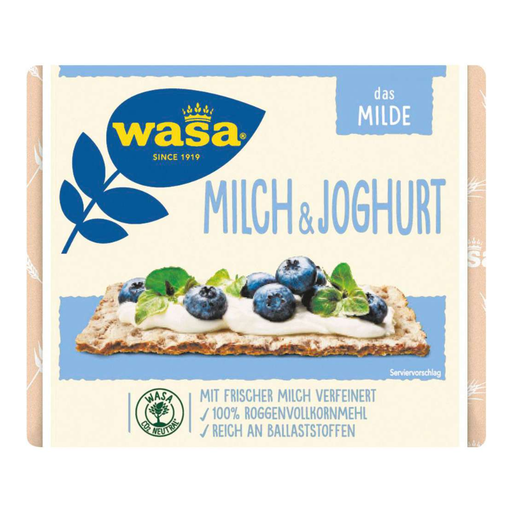 Image unavailable
Wasa Delicate Crisp Milk & Yoghurt, 230 g
An option to compare if you’re looking for a less crunchy bite and your child can already chew crispbread well.
Wasa describes its Milk & Yoghurt variety as having a particularly delicate bite. It contains milk ingredients; the texture description is not a guarantee of safety.
View at Joybuy
 Image unavailable
Wasa Whole Grain Rye, 260 g
For families who prefer wholegrain rye and whose child already chews a very crunchy texture well.
Wasa lists wholegrain rye flour, yeast and salt in its wholegrain rye crispbread, and describes it as particularly crunchy. This description doesn’t suggest a specifically delicate bite.
View at Joybuy
 Image unavailable
Wasa Delicate Crisp Oats & Sesame, 230 g
An option for families who would like to include oats and sesame in their selection.
Check the current allergen information if needed. If a less crunchy bite is important, assess the texture of this specific variety rather than assuming it from the name “Delicate Crisp” alone.
View at Joybuy
 Image unavailable
Wasa Sesame & Flaxseed, 210 g
A seed variety to compare if sesame and flaxseed are suitable for your family.
Check the ingredients and allergens on the current pack. When choosing crispbread for a toddler’s breakfast, also consider the specific texture, your child’s chewing ability and supervision at mealtimes.
View at Joybuy
Frequently asked questions
Is crispbread suitable for every toddler?
No. You can’t determine whether it’s suitable simply from the product name. The Gesund ins Leben network gives general warnings about hard pieces of food posing a choking risk. Pay attention to how your child chews, offer manageable pieces if needed and stay with them while they eat.
Should I choose wholegrain crispbread for a toddler’s breakfast?
For children, the consumer advice centre recommends choosing wholegrain versions of bread and cereal products wherever possible. Even so, check the texture of the specific crispbread: wholegrain varieties can also be particularly crunchy, and the wholegrain claim alone doesn’t tell you how well your child can chew it.
How can I check for milk, sesame and other allergens?
Always check the current ingredients list and highlighted allergens on the pack. Wasa lists milk ingredients in Milk & Yoghurt; sesame is clear from the name of Oats & Sesame varieties. The product name is never a substitute for checking the full pack.
Should I check the topping as well for a toddler’s breakfast?
Yes, assess the topping separately from the crispbread. Among other foods, the Gesund ins Leben network advises against giving toddlers raw meat, raw sausage, raw fish, raw eggs and raw-milk products. So consider the full combination you plan to serve.


