
Lieferung heute & morgen

Qualitätsgarantie

Willkommens-Angebote freischalten: KOSTENLOSE Lieferung | Bis zu 80 % RABATT | Kostenlose 30-Tage-JoyPlus-Testphase
App herunterladen
A tidy shower makes for a clear mind, but the path to get there is often paved with obstacles—literally. For those who rent or simply don't want to damage their bathroom tiles, creating storage space without reaching for a drill is a common challenge. The market for a drill-free shower caddy is vast, but not every solution delivers on its promise.
As your Joybuy Product Recommendation Officer, I'm here to filter through the noise and show you what really matters. We'll highlight the most common pitfalls that lead to frustration and wasted money, and define the crucial criteria for a functional and long-lasting choice.
Many products look practical at first glance, only to reveal their weaknesses in the humid, everyday environment of a bathroom. Watch out for these three typical flaws to avoid disappointment.
To prevent these problems, you should check three core aspects before buying: the mounting method, the material, and the specific design.
The installation method is the heart of any drill-free solution. Each technique has its pros and cons, which depend on the surface of your bathroom walls.
The material determines not only the look but also the durability in a humid shower environment.
Consider how much space you need and where the caddy will be positioned. A corner shower shelf makes optimal use of space, while rectangular baskets offer more placement flexibility. Pay attention to the specified maximum load capacity in kilograms and ensure the design has sufficient drainage holes to keep your products dry.
Here are some recommendations tailored to different needs and living situations.
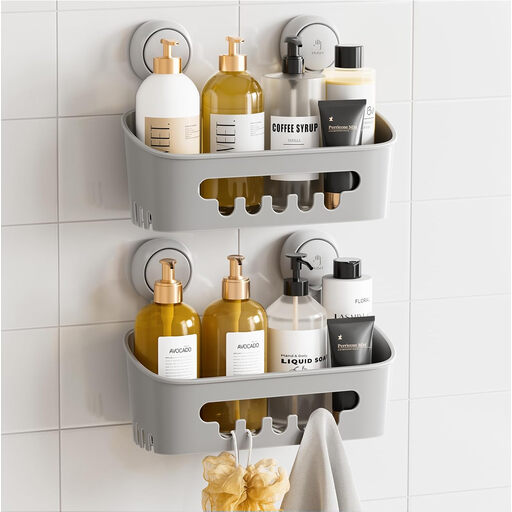
Why this model is a great fit: Ideal for students and renters looking for a flexible solution that can be removed without a trace. The 2-pack offers excellent value and enough space for essential shower items.
According to the manufacturer, the TPE suction cups are based on the bionic principle of octopus tentacles and are designed for a powerful grip on smooth surfaces. The ABS material is completely rust-proof, and numerous drainage holes prevent water from pooling.
Tool-free installation in seconds and residue-free repositioning. The stated load capacity per caddy is up to 10 kg.
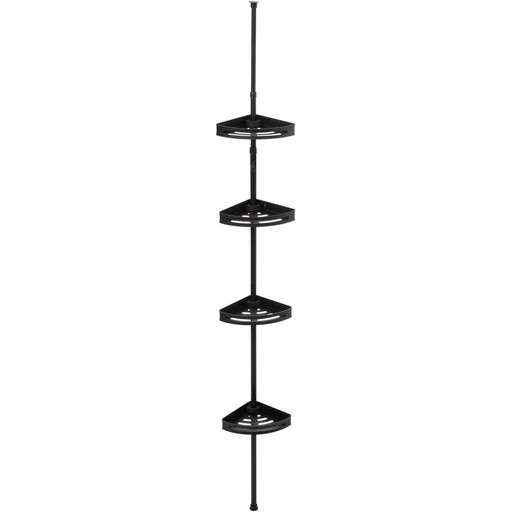
Why this model is a great fit: When multiple people use the same shower, maximum storage is essential. This telescopic caddy uses the full height of the shower, offering four tiers of space for all your bottles, tubes, and sponges.
The tension mounting between the floor and ceiling is independent of wall surfaces and provides a stable, mechanical anchor. The combination of steel and aluminium is designed for durability in a wet environment.
Maximum space utilisation across four adjustable tiers. The black finish adds a modern accent to the bathroom.
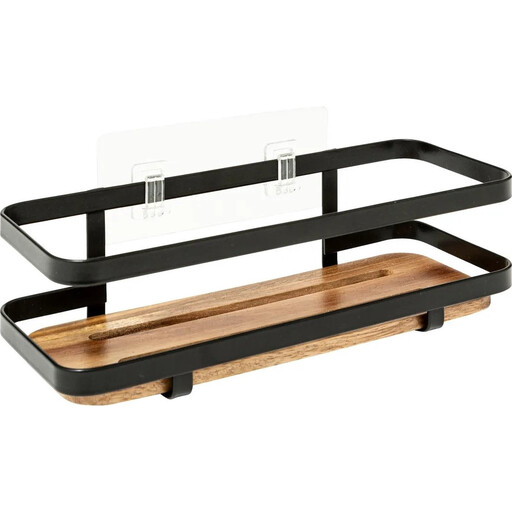
Why this model is a great fit: For anyone who wants to create a cosy, spa-like atmosphere in their bathroom. The combination of warm acacia wood and a minimalist black steel frame is a visual highlight.
Acacia wood is naturally water-resistant, making it well-suited for wet environments. It is mounted using an included adhesive strip, which provides a reliable alternative to simple suction cups.
High-quality material combination and an appealing design. The wood used is FSC-certified, attesting to responsible forest management.
We've compiled a complete, up-to-date list of products that fully meet these strict selection criteria and current regulations.
The lifespan of a suction cup heavily depends on the surface, the weight of the load, and the environmental conditions. On ideal, non-porous surfaces like glass or smooth tiles, high-quality suction cups can last for several years. It's advisable to check the adhesion every few months and re-press the suction cup if necessary. Thoroughly cleaning the surface and the suction cup before installation is crucial.
Yes, in most cases, adhesive residue can be removed. It often helps to warm the area with a hairdryer to soften the adhesive. The residue can then be carefully removed with a plastic scraper and a suitable cleaning agent (e.g., isopropyl alcohol or a special adhesive remover). Always test the agent on an inconspicuous spot first.
When installed correctly according to the manufacturer's instructions, telescopic caddies are very stable. The tension between the floor and ceiling provides a secure hold that is independent of the wall surface. It is important that the floor and ceiling are level and solid, and that the pole is adjusted to the correct length.