
Lieferung heute & morgen

Qualitätsgarantie

Willkommens-Angebote freischalten: KOSTENLOSE Lieferung | Bis zu 80 % RABATT | Kostenlose 30-Tage-JoyPlus-Testphase
App herunterladen
Published on August 29, 2026 by Joybuy Product Recommendation Officer
Shower chaos is a common problem: shampoo bottles litter the floor, shower gel teeters on the tub's edge, and there's simply no room for that new conditioner. A no-drill shower caddy promises a quick and easy solution. However, the market is flooded with products whose promises quickly fade in the humid reality of a bathroom. Before you make a decision you'll later regret, it's crucial to understand the typical weak points.
Many buyers invest in a caddy only to find out a few weeks later that it doesn't live up to its claims. Here are the most common problems that lead to a regrettable purchase:
To avoid these issues, you should base your selection on objective criteria. Focus on three crucial parameters that determine durability and functionality.
The attachment type is the most critical factor. Each method has specific surface requirements and its own set of pros and cons.
The material determines not only the look but also the lifespan of your caddy.
A good bathroom shelf is more than just a storage surface.
Here are some models that represent a considered choice for different user profiles based on the criteria mentioned.
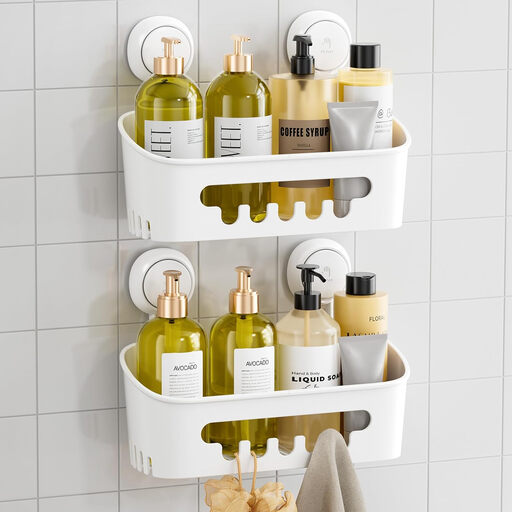
Why this model is a good fit: Ideal for renters looking for a residue-free, removable solution. Installation requires no tools and is done in seconds. The set of two baskets offers flexible arrangement options for different products.
The system uses TPE suction cups, which the manufacturer claims are based on the bionic principle of octopus tentacles, providing a stronger hold than conventional PVC cups. The ABS material is completely rust-proof, and numerous drainage holes prevent water from pooling.
High stated load capacity of up to 10 kg (22 lbs) and the ability to be repositioned at any time without damaging tiles.
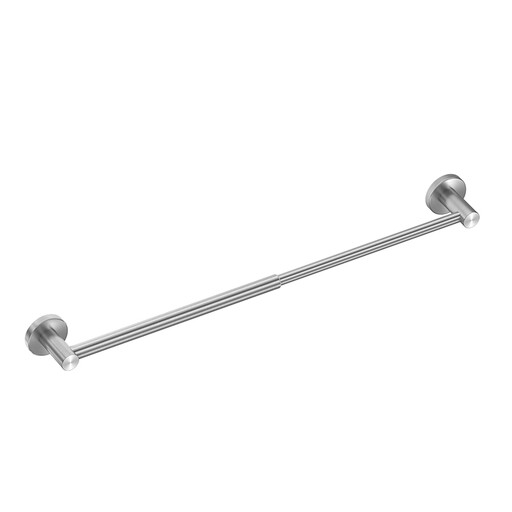
Why this model is a good fit: For users seeking an aesthetic, built-in look without drilling. The clamping system for the shower pole looks like a custom accessory and blends seamlessly into modern bathrooms.
The clamp attachment to the shower pole is mechanically stable and unaffected by moisture. The open-bottom design guarantees optimal water drainage and prevents soap buildup.
Elegant, minimalist appearance and a firm, wobble-free installation. The height on the pole is flexibly adjustable.
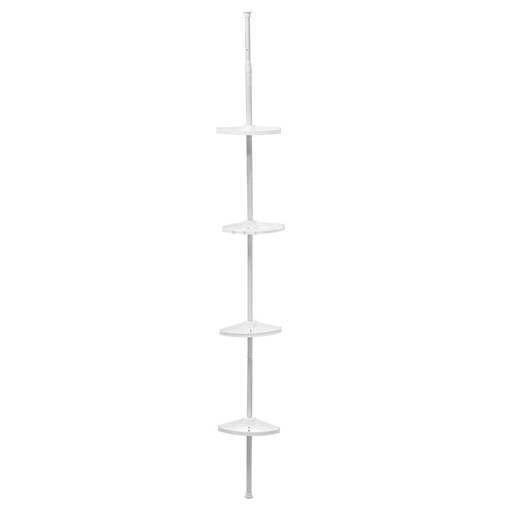
Why this model is a good fit: This telescopic shelf makes optimal use of vertical space, offering maximum storage on four tiers. It's ideal for families or shared living situations where many different personal care products need to be stored.
The tension from the telescopic pole provides a robust mechanical anchor between the floor and ceiling, which is far more resilient than suction cups. The wire grid bases of the baskets ensure complete water drainage and prevent pooling.
Enormous storage capacity with four tiers and flexible height adjustment from 100 cm to 250 cm, fitting most standard bathrooms and shower stalls.
We have compiled a complete, up-to-date list of products that fully meet these strict selection criteria and current safety standards.
Durability heavily depends on the quality of the suction cup, the wall surface, and the weight of the products. High-quality systems on a clean, smooth, and non-porous tile can last for months or even years. It is advisable to briefly press the suction cups firmly every few weeks to renew the adhesion. Avoid mounting directly over grout lines. If the suction power diminishes, a thorough cleaning of the suction cup and the tile often helps.
In most cases, yes. Removal typically requires heating the adhesive pad with a hairdryer to soften the glue. Afterwards, the mount can be carefully detached from the wall using something like dental floss or a plastic scraper. Be sure to read the manufacturer's instructions for this process. Any remaining adhesive residue can often be removed with special cleaning agents.
To reliably prevent rust, caddies made from high-quality Type 304 stainless steel, powder-coated aluminum, or ABS plastic are the safest choices. These materials are naturally corrosion-resistant. With chrome-plated steel, the quality of the coating is crucial; if it gets damaged, rust can form quickly.