
Lieferung heute & morgen

Qualitätsgarantie

Willkommens-Angebote freischalten: KOSTENLOSE Lieferung | Bis zu 80 % RABATT | Kostenlose 30-Tage-JoyPlus-Testphase
App herunterladen
As a Joybuy Product Recommendation Officer, I regularly analyse the market for tools and electronics accessories. An electric precision screwdriver is indispensable for repairing modern small devices. However, a purchase can quickly lead to disappointment if the tool doesn't meet your needs. This guide will help you identify the crucial features and make an informed choice.
When selecting a tool kit for electronics, hidden flaws that only become apparent during use are common. Three problems are particularly prevalent:
mini cordless screwdriver for electronics whose battery dies mid-repair and then needs hours to charge significantly disrupts your workflow. Outdated charging ports like Micro-USB are also impractical.To avoid these pitfalls, you should check three technical specifications before buying. These largely determine the functionality and longevity of your tool.
A high-quality electric precision screwdriver is distinguished by precisely adjustable torque settings. For work on micro-devices, values in the range of 0.05 N.m to 0.4 N.m are ideal.
Additionally, a manual mode with a significantly higher torque (often up to 3 N.m) is crucial. This allows you to loosen stubborn screws by hand without damaging the motor and to precisely hand-tighten screws.
The quality of the bits is just as important as the screwdriver itself. Look for bits made from S2 steel. This material is significantly harder and more wear-resistant than the commonly used chrome-vanadium steel (CR-V), minimising the risk of damaging screw heads.
A good electric precision bit set should cover a wide range of screw profiles to be prepared for various devices. The following are indispensable:
Such a set serves as a universal phone repair tool and laptop screwdriver set.
Battery capacity, specified in milliampere-hours (mAh), determines the usage time. Models with 350 mAh to 500 mAh typically offer enough power for several hundred screwing operations. However, the combination of runtime and charging efficiency is more important than raw capacity. A modern USB-C port is standard today and allows for fast charging with common power adapters.
Based on the criteria mentioned, we have identified products that offer a suitable solution for specific user groups.
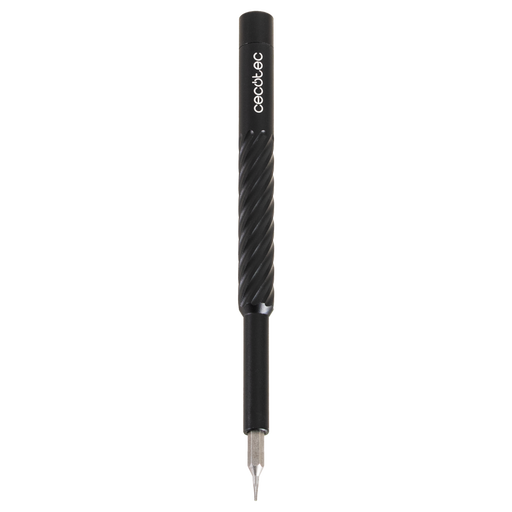
Why This Fits Their Persona: This manual set is a cost-effective solution for users who only perform occasional repairs. With 128 pieces, it offers extremely broad bit coverage for almost any conceivable device, without having to worry about batteries or torque settings. Ideal as a universal PC tool kit.
As a manual tool, it completely bypasses the problems of uncontrolled torque and dead batteries. The user has full control over the applied force.
Comprehensive bit selection for maximum compatibility; no dependency on a power source; integrated magnetiser in the case.
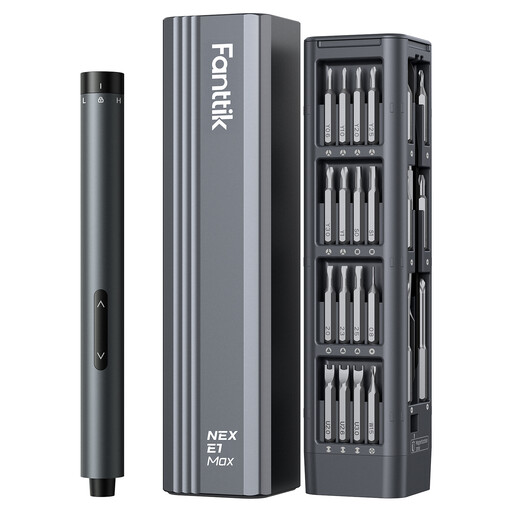
Why This Fits Their Persona: This set is tailored to the needs of tech hobbyists who regularly work on sensitive electronics. The design and functionality are geared towards precision and efficiency. The magnetic case and high-quality bits make it a reliable companion for any project.
It directly addresses the torque problem with two precise settings (0.05 N.m / 0.2 N.m) and a manual mode (3 N.m). The 50 bits made of S2 steel prevent premature wear and damage.
Precise torque control for sensitive components; high-quality S2 steel bits; magnetic storage system for bits and the screwdriver.
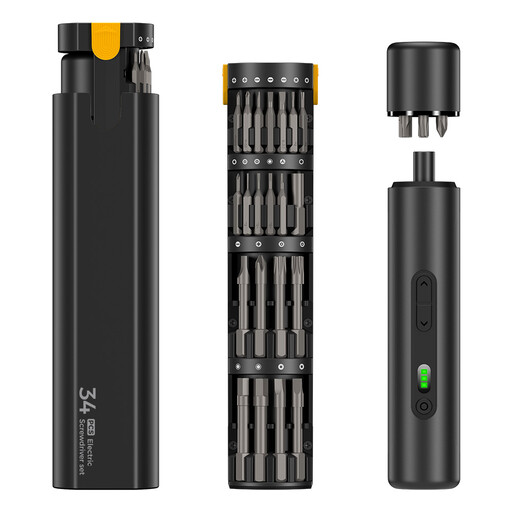
Why This Fits Their Persona: This model is designed for DIYers who need a powerful tool for a variety of tasks—from furniture assembly to minor repairs. The large battery and higher torque range make it a flexible all-rounder for the household.
The adjustable torque range of 1.2 N.m to 3 N.m is powerful enough for general tasks, avoiding the issue of being underpowered for larger screws. The large 1500 mAh battery prevents frequent charging interruptions.
High adjustable torque range for versatile applications; large battery capacity for long runtime; robust case with magnetic storage.
We have compiled a complete, up-to-date list of products that fully meet these strict selection criteria and German safety regulations.
Always start with the lowest torque setting and increase it gradually if needed. For most screws in electronics like smartphones or laptops, a range of 0.15 N.m to 0.3 N.m is sufficient. For very small screws, such as in a smartwatch, the lowest available setting (e.g., 0.05 N.m) is recommended.
S2 steel is an alloy tool steel known for its high hardness (typically 58-62 HRC) and toughness. It is more resistant to wear and deformation under load, making it ideal for precision bits that must fit screw heads exactly. Chrome-vanadium steel (CR-V) is softer and cheaper to manufacture. It is well-suited for larger hand tools but is more prone to wearing out and damaging screw heads in precision applications.