
Lieferung heute & morgen

Qualitätsgarantie

Willkommens-Angebote freischalten: KOSTENLOSE Lieferung | Bis zu 80 % RABATT | Kostenlose 30-Tage-JoyPlus-Testphase
App herunterladen
The complexity of modern vehicles is constantly increasing. For workshops and ambitious DIY mechanics, simply reading fault codes is often no longer enough to perform a precise and efficient diagnosis. A full-system automotive diagnostic tool provides the necessary depth not only to identify fault codes but also to configure control units, reset service intervals, and actively actuate components.
This article serves as a guide. It highlights the crucial functions that define a modern diagnostic tool and presents a selection of models suitable for different user profiles—from professional workshops to demanding home users.
The choice of the right device depends on your specific requirements. The following points will help you objectively evaluate the functions and features of various models.
A professional car diagnostic tool goes far beyond simply reading and clearing fault codes. Two key functions are critical here:
A diagnostic tool for all makes is essential for workshops or users working on a variety of vehicles. Pay attention not only to the number of supported brands but also to compatibility with modern communication protocols. CAN FD and DoIP are particularly relevant here:
Vehicle technology is continuously evolving. Regular software updates are therefore essential to be able to diagnose future models. Check the manufacturer's update model: some offer free updates for a specific period or even for life, while others charge annual license fees.
A good Service Reset Tool should also cover a wide range of maintenance functions, such as resetting the oil service, performing a throttle body relearn, calibrating the steering angle sensor (SAS), or regenerating the diesel particulate filter (DPF).
Based on the criteria mentioned, we have compiled a selection of devices that stand out for their functionality and application areas.
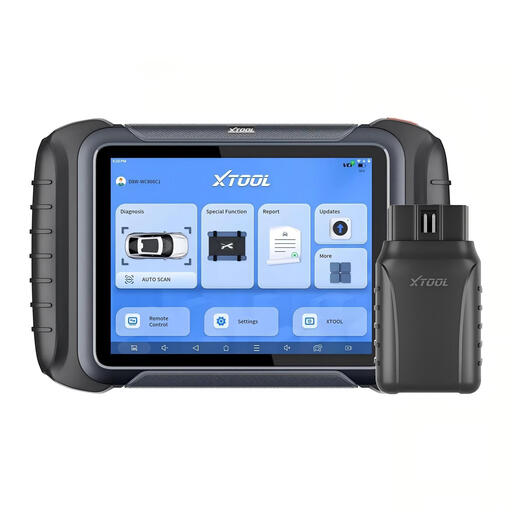
What sets it apart: The XTOOL D8W is a wireless diagnostic tool that communicates via a stable Wi-Fi connection, offering maximum flexibility in the workshop. It is distinguished by its very broad coverage of special functions and native support for CAN FD and DoIP without needing additional adapters.
Pros:
Who it's for: Professional automotive workshops and highly ambitious technicians who need a powerful and future-proof full-system automotive diagnostic tool with maximum functionality.
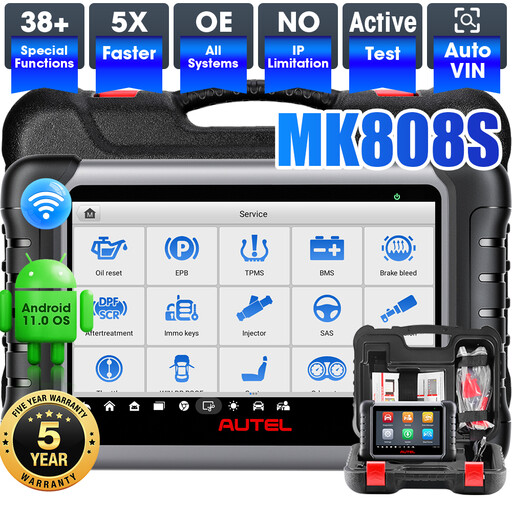
What sets it apart: The Autel MK808S offers a balanced combination of professional diagnostic functions and an attractive price-performance ratio. As an evolution of the popular MK808, this model features upgraded hardware (Android 11, faster processor) and the crucial bi-directional control function.
Pros:
Who it's for: Small to medium-sized workshops and experienced DIY mechanics looking for a reliable OBD2 scanner with coding and bi-directional capabilities without breaking the bank for a high-end device.
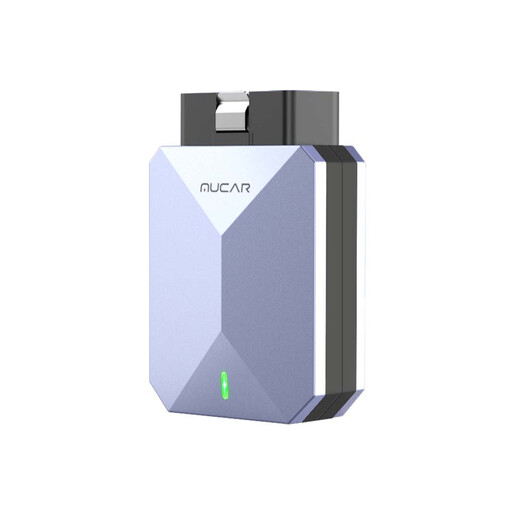
What sets it apart: The MUCAR BT200 MAX is a compact Bluetooth adapter that turns a smartphone or tablet into a powerful diagnostic tool. Its standout feature is the AI-powered diagnostic assistant, which helps interpret fault codes. The lifetime free updates make it a cost-effective long-term solution.
Pros:
Who it's for: Car enthusiasts, used car dealers, and semi-professional users who want a cost-effective yet powerful solution with professional features like bi-directional control and appreciate the flexibility of an app-based system.
The models presented here cover a broad spectrum of requirements. If you haven't found the right device for your specific use case or are looking for simpler tools just for reading fault codes, you can find a larger selection in our main category.
Discover more OBD Diagnostic Scanners and compare different models to find the optimal solution for your workshop or hobby.
1. What is the difference between a basic OBD2 scanner and a full-system automotive diagnostic tool? A basic OBD2 scanner can, according to the mandated standard, only access the engine control unit to read and clear emissions-related fault codes. In contrast, a full-system automotive diagnostic tool communicates with all control units installed in the vehicle, such as ABS, Airbag (SRS), transmission, climate control, and comfort electronics. It also offers advanced functions like service resets, coding, and actuator tests.
2. What exactly does "bi-directional control" mean? Bi-directional control, also known as an active or actuator test, describes the ability of a diagnostic tool not only to receive data from the vehicle but also to send commands to the control units. This allows the technician to specifically trigger individual components (actuators)—for example, turn on a radiator fan, activate the headlights, or test an injector—to verify their function without having to remove them.
3. Do I need a device with CAN FD and DoIP support? If you regularly work on modern vehicles, support for CAN FD and DoIP is highly recommended. CAN FD has been used by manufacturers like GM, Ford, and Chrysler since around 2019/2020 for faster communication between control units. DoIP (Diagnostics over Internet Protocol) is the standard for diagnostics on newer models from BMW, Jaguar, Land Rover, and Volvo. Without these protocols, in-depth diagnostics cannot be performed on these vehicles.