
Lieferung heute & morgen

Qualitätsgarantie

Willkommens-Angebote freischalten: KOSTENLOSE Lieferung | Bis zu 80 % RABATT | Kostenlose 30-Tage-JoyPlus-Testphase
App herunterladen
A hair clipper can complement regular visits to the barber, keep your beard neatly trimmed or enable quick touch-ups while travelling. However, there are clear differences between a basic home hair clipper, a versatile beard and hair trimmer, and a professional-grade hair clipper.
Many disappointing purchases are not caused by an excessive price, but by unsuitable technical specifications. For example, a device with long battery life is of little benefit if the included attachments do not cover the desired hair length. Likewise, the term “waterproof” can be misleading if only the detachable blade head may be rinsed under water.
Manufacturers generally state battery life under specific conditions. Actual usage time depends on factors including hair density, motor power, selected speed and the condition of the blades. A cordless hair clipper should therefore not be chosen solely on the basis of the highest stated runtime.
The following details are also important in practice:
A cordless hair clipper is particularly useful for travel and hard-to-reach areas. For longer cutting sessions, mains operation can also be beneficial.
The protection rating should be stated specifically in the product information. An IPX6 or IPX7 rating describes the relevant level of protection against water, but it does not replace checking the operating instructions. With some devices, only the blade head may be cleaned under running water, while the main housing must remain dry.
Even with a specifically waterproof hair clipper, remember: The charger and charging port must not come into contact with water while charging.
What matters is which length settings are actually covered. A device with just a few comb attachments may be sufficient for short beards, while a hair clipper for family haircuts requires a broader range. Pay attention to:
Stainless-steel blades are common on many electric hair clippers. Ceramic blades may also be available, but the material specifications alone do not provide a general indication of cutting quality. A precisely fitted blade head, regular cleaning and—where specified—blade-oil maintenance are all important.
The cutting width determines how many passes are needed to cover a larger area. Wider heads can be practical for uniform haircuts, while narrower T-blades may be better suited to edging and detailed work.
A hair clipper with multiple length settings should suit your preferred style. For beard shaping, short increments between approximately 1 and 5 mm are often sufficient. For head hair, attachments reaching 20, 30 or more millimetres are relevant.
Also check whether the length is adjusted using a rotary dial, sliding comb or separate attachments. An integrated sliding comb reduces the number of loose accessories, while multiple attachments can provide a broader range of options.
With an electric hair clipper, charging time, runtime and charging method should be considered together. USB-C can be convenient when travelling, provided a suitable power adapter or power bank is available. Devices with a charging station require a dedicated place, but offer a neat storage solution there.
Hair should be removed from the cutting system after every use. Washable heads must be allowed to dry completely before the device is charged or stored again. Blade oil should only be used if recommended by the manufacturer.
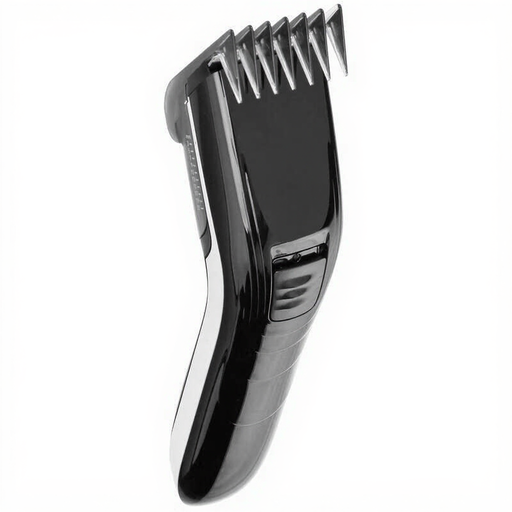
Why this product suits the profile: This corded hair clipper is designed for regular household haircuts and eliminates the need to manage battery levels.
The power supply is clearly specified as mains operation. This removes any uncertainty around runtime, although the device is less flexible for travel.
11 cutting lengths from 3 to 21 mm, plus 0.5 mm without a comb attachment; 41-mm cutting unit and dry cleaning.
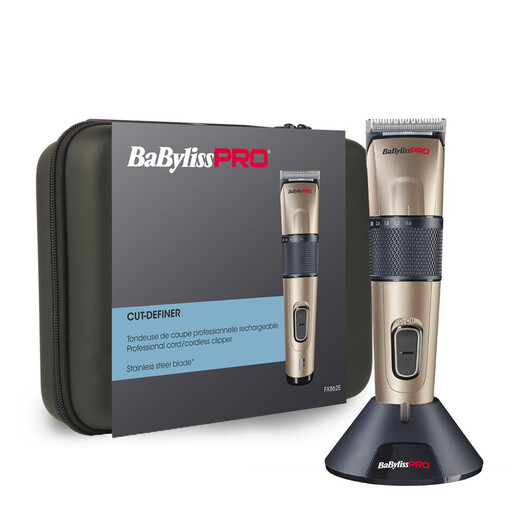
Why this product suits the profile: This model combines a 45-mm stainless-steel blade set with a charging station and multiple attachments for structured cutting work.
The cutting ranges are clearly specified: five blade positions from 0.6 to 3.0 mm and eight comb attachments from 3 to 25 mm. The device is not waterproof.
7,000 cuts per minute according to the product specifications, a weight of 244 g and up to 75 minutes of cordless operation.
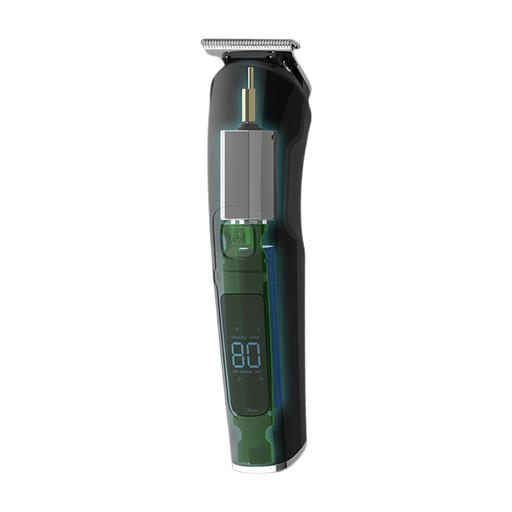
Why this product suits the profile: This set is designed for users who want to trim not only head hair and beards, but also different contours and body areas with a single device.
The water-resistance rating is clearly specified as IPX6. Nevertheless, the USB port should be dry before charging; suitability for every application cannot be assumed automatically.
90-minute runtime, LED display, T-blade, nose-hair trimmer, body-hair attachment and comb attachments measuring 3, 6, 9 and 12 mm.
We have compiled a complete, regularly updated list of products that fully meet these strict selection criteria and the safety regulations applicable in the EU.
Before using the device for the first time, charge the battery according to the instructions. Work on dry, clean hair unless the device is explicitly designed for wet use. Guide the hair clipper slowly against the direction of hair growth and apply only light pressure.
Maintenance includes:
If the device is shared within the household, the cutting system should be cleaned between uses. Electrical appliances with sharp blades should also be kept out of the reach of young children.
Ideally, remove loose hair after every use. More thorough cleaning depends on the model: washable blade heads may be rinsed according to the instructions, while non-waterproof devices should be brushed clean when dry. All components must be dry before charging.
Service life depends on frequency of use, maintenance, blade quality and the battery. Regular oiling, careful cleaning and dry storage can reduce wear. If cutting performance declines, clean and inspect the blade head first. Some models have replaceable blades, while others do not.
A battery-powered device uses comparatively little electricity while charging. Ongoing costs are more likely to come from replacement blades, comb attachments, blade oil and a future battery replacement. With a corded model, battery maintenance is unnecessary, but use is tied to a power outlet. The key consideration is therefore whether you prioritise mobility or a permanently fixed place of use.