
Lieferung heute & morgen

Qualitätsgarantie

Willkommens-Angebote freischalten: KOSTENLOSE Lieferung | Bis zu 80 % RABATT | Kostenlose 30-Tage-JoyPlus-Testphase
App herunterladen
A click, a sputter, then silence. A dead car battery is more than just an inconvenience—it means lost time, missed appointments, and often, a dependency on roadside assistance services. A jump starter power bank promises a quick and straightforward solution. However, the market is confusing and full of technical claims that don't always deliver what they suggest. As your Joybuy Product Recommendation Officer, I'll help you separate the wheat from the chaff and find a device that works reliably when it matters most.
Many drivers invest in a battery booster only to discover in an emergency that it's unsuitable for their vehicle. Two common pitfalls repeatedly lead to bad purchases:
To make an informed decision, don't be dazzled by marketing buzzwords. Instead, focus on three objective parameters that determine the real-world usability of a 12V jump starter.
The most important question is: Does the device match my engine? The required power depends directly on the engine displacement and fuel type.
As a rule of thumb:
The capacity, specified in milliampere-hours (mAh), primarily relates to its function as a power bank for charging smartphones or tablets. A high mAh number does not automatically mean higher jump-starting power. However, it does indicate how many times you can charge your phone or how many jump-start attempts you can make on a full charge.
Modern devices are often multifunctional. A portable jump starter can integrate other useful tools:
An emergency car starter works with high currents, making integrated protection circuits essential. Look for the following features, which are standard in high-quality devices:
The operating temperature range is crucial for use in regions with cold winters. A device should function reliably from at least -20°C to +60°C (-4°F to 140°F). Models with sodium-ion batteries often offer an even wider operating range.
Instead of presenting a confusing list, we have selected models that meet specific needs and avoid the common pitfalls mentioned.
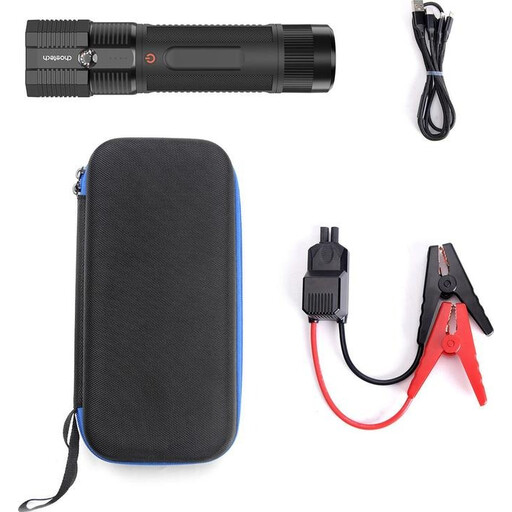
Why This Fits Their Persona: Ideal for drivers of small and compact cars who need a simple, space-saving solution for urban use. The device is not oversized and fits easily into the glove compartment.
This device avoids the pitfall of unrealistic performance claims. With a 600A peak current, it is honestly rated for smaller engines and doesn't create false expectations.
Very compact, flashlight-style design; operating temperature from -20°C to 60°C; doubles as an 8000 mAh power bank.
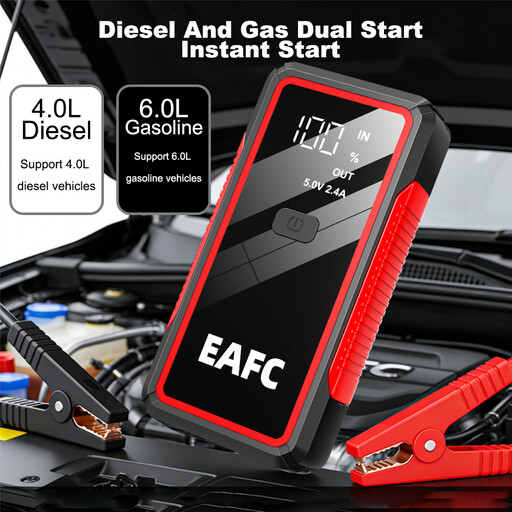
Why This Fits Their Persona: Perfect for the average driver with a modern gasoline car or a mid-size diesel (sedan, estate, SUV). It offers a solid balance of power, portability, and price.
This model addresses the cold-start issue with a specified operating range down to -10°C. The 2000A peak current provides enough reserve power for most common vehicles without being excessive.
Sufficient power for gasoline engines up to 6.0L and diesel up to 4.0L; digital display for battery status; all necessary safety features.
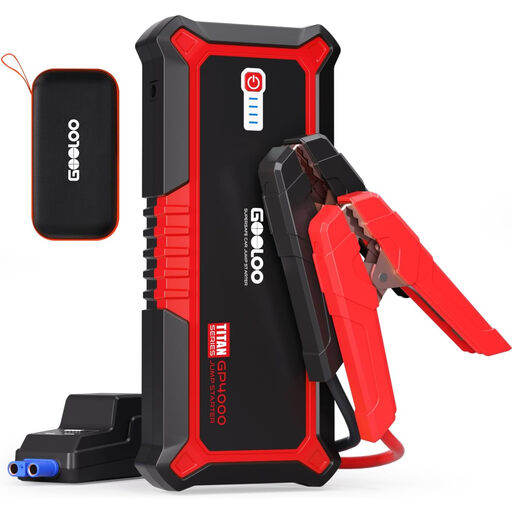
Why This Fits Their Persona: Designed for owners of large-displacement vehicles, especially high-displacement diesel engines in SUVs, pick-up trucks, or vans who need uncompromising starting power.
This device delivers the genuinely high power required. With 4000A peak current and suitability for diesel engines up to 10.0L, it bypasses the pitfall of weaker boosters failing on large engines.
Extremely high peak current; "BOOST" button for deeply discharged batteries; heavy-duty metal clamps; suitable for use in extreme temperatures (-20°C to 60°C).
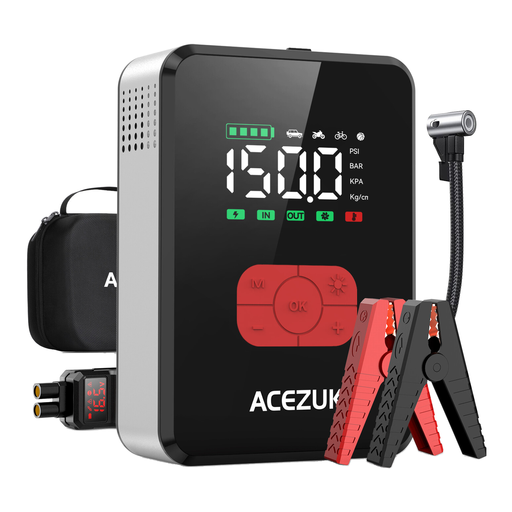
Why This Fits Their Persona: The all-in-one solution for outdoor enthusiasts, campers, and anyone who values maximum functionality in a single device. It's not just a jump starter, but a complete emergency and maintenance tool.
This device clearly positions itself as a multi-function tool. It avoids the trap of competing solely on peak current and instead offers genuine added value with its integrated compressor.
Integrated 150 PSI air compressor with display and auto-stop; very high 7000A peak current for all vehicle types; smart display directly on the clamps.
We have compiled a complete, up-to-date list of products that fully meet these strict selection criteria and relevant safety regulations.
Even when not in use, a jump starter power bank loses charge through self-discharge. Most manufacturers recommend fully charging the device every 2 to 3 months. This ensures it is ready for an emergency and extends the battery's lifespan.
When used correctly, the risk is minimal. Modern devices are equipped with a range of protection mechanisms (e.g., reverse polarity, short circuit, overvoltage protection). These smart clamps prevent current from being delivered if an error is detected, protecting both the jump-starting device and the vehicle's sensitive electronics. Nevertheless, always read the manufacturer's instructions carefully before the first use.
Yes, many more powerful models have a special "Boost" or "Force Start" function. This allows you to jump-start batteries with a voltage so low that the jump starter can no longer detect them automatically. However, this function should be used with caution and only as instructed, as it bypasses some of the automatic safety checks.