
Lieferung heute & morgen

Qualitätsgarantie

Willkommens-Angebote freischalten: KOSTENLOSE Lieferung | Bis zu 80 % RABATT | Kostenlose 30-Tage-JoyPlus-Testphase
App herunterladen
A dead car battery is more than just an annoyance—it means lost time, missed appointments, and potential uncertainty, especially in the dark or bad weather. A jump starter power bank, also known as a jump starter or battery booster, promises a quick and straightforward solution. However, the market is flooded with devices making bold claims. Many drivers invest in a unit that fails at the critical moment.
As your Joybuy Product Recommendation Officer, I'll help you identify the common pitfalls and make an informed decision. We'll focus on the facts so you can find a reliable car jump starter for your vehicle emergency kit.
Before we dive into the important features, let's expose the marketing traps that often lead to a bad purchase.
To ensure your portable jump starter works in an emergency, you should check three core technical aspects.
The peak current is the maximum amperage the device can deliver for a few seconds to start the engine. This value is the most important indicator of its performance.
You can identify a high-quality car jump starter by its included "smart" clamps. These contain a small electronics box with LEDs and often a buzzer to signal a correct connection and protect against user errors. Look for the following protection features:
These features are not luxury extras, but essential safety standards.
Modern jump starters use Lithium-Polymer (LiPo) or Lithium-Ion (Li-Ion) batteries. These are compact, lightweight, and have a low self-discharge rate. The specified capacity in mAh is primarily relevant for its function as a power bank with jump-starting capabilities—that is, how many times you can charge your smartphone or tablet with it. A USB-C port for charging the power bank itself is now standard and allows for faster charging times. An integrated LED flashlight with different modes (solid, SOS, strobe) is a valuable extra for roadside emergencies at night.
Here are some product recommendations tailored to different needs and use cases.
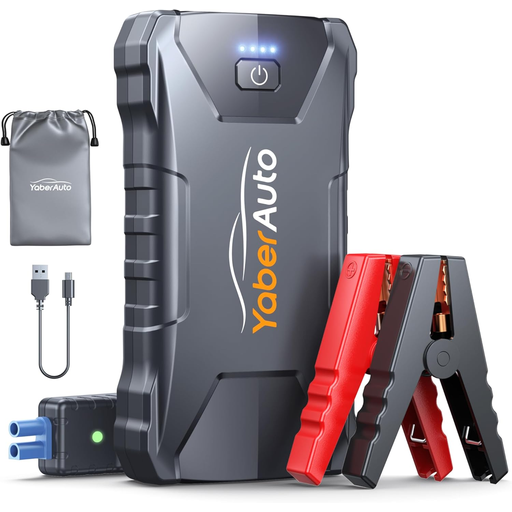
Why This Fits Their Persona: This device is a compact and reliable all-in-one solution. It fits easily in the glove compartment and offers enough power for most common passenger cars, making it ideal for the daily commute and family trips.
It addresses the trap of exaggerated claims with clear specifications (2000A peak current for gasoline engines up to 7.0L and diesel up to 5.5L) and bypasses the safety pitfall with 10 built-in protection features in its smart cable.
Multifunctionality as a jump starter, 13800mAh power bank, and 3-mode LED flashlight. Its low weight of just 0.340 kg makes it extremely portable.
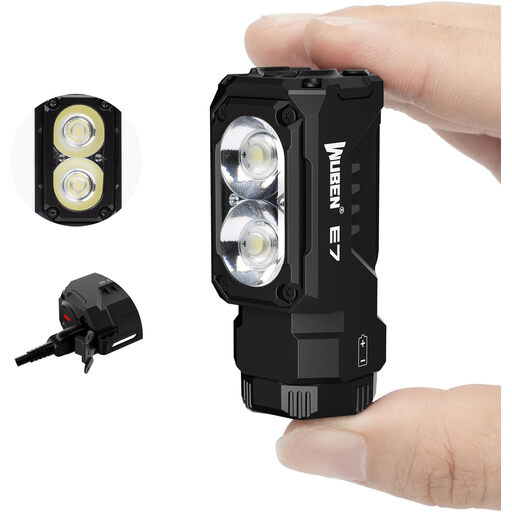
Why This Fits Their Persona: An emergency kit is incomplete without a reliable, separate light source. This flashlight is extremely bright and, thanks to its magnetic tail cap, is ideal for vehicle repairs, as it sticks to the car body and leaves your hands free.
Avoids the trap of relying on a single, potentially weak or faulty light source in an emergency (e.g., the one on the jump starter or a smartphone). It provides a dedicated, powerful, and robust lighting solution.
Very high brightness of 1800 lumens, an IP68 waterproof rating for use in any weather, and a magnetic base for hands-free work.
A complete car emergency kit often includes more than just a jump starter. A powerful, rechargeable flashlight is essential for safety at night.
1. How often do I need to charge a jump starter power bank? Even when not in use, a jump starter power bank should be fully charged every 2 to 3 months. This maintains the battery's health and ensures the device is ready for an emergency.
2. Can I use a jump starter power bank to start a diesel engine? Yes, provided the device has a sufficiently high peak current. Pay close attention to the manufacturer's specifications regarding compatibility with diesel engines and their maximum displacement. Models designed for diesel engines typically require more power than those intended only for gasoline engines.
3. Is using a battery booster safe for my car's electronics? Yes, modern, high-quality devices are safe. The crucial element is the integrated protection mechanisms of the "smart" jumper cables. Features like reverse polarity, short-circuit, and over-temperature protection are essential to prevent damage to your vehicle's onboard electronics.