
Lieferung heute & morgen

Qualitätsgarantie

Willkommens-Angebote freischalten: KOSTENLOSE Lieferung | Bis zu 80 % RABATT | Kostenlose 30-Tage-JoyPlus-Testphase
App herunterladen
A high-quality kitchen grater is an indispensable tool for preparing fresh ingredients. However, the market is flooded with products whose promises often fall short of reality. Many buyers quickly find that the blades dull, the material rusts, or handling is unsafe. This guide will help you identify the crucial quality hallmarks and steer clear of marketing traps.
Before you make a decision, you should be aware of three common problems that often lead to disappointment and unnecessary expense:
To avoid a bad purchase, focus on three core parameters. These determine durability, functionality, and safety.
Not all stainless steel is created equal. A high-quality stainless steel grater should ideally be made from 18/10 stainless steel (also known as AISI 304). This alloy contains 18% chromium and 10% nickel, making it exceptionally corrosion-resistant, food-safe, and robust. Look for a solid material thickness and clean workmanship with no sharp edges on the frame or handle.
The quality of the blades is decisive for the result. There are two basic manufacturing processes:
Some modern graters also use a bi-directional cutting technology, which allows for grating in both directions and speeds up the work.
A good kitchen grater should feel secure in your hand and on the work surface. Important features include:
Instead of making a one-size-fits-all recommendation, we have identified products that meet specific needs and avoid the pitfalls mentioned earlier.
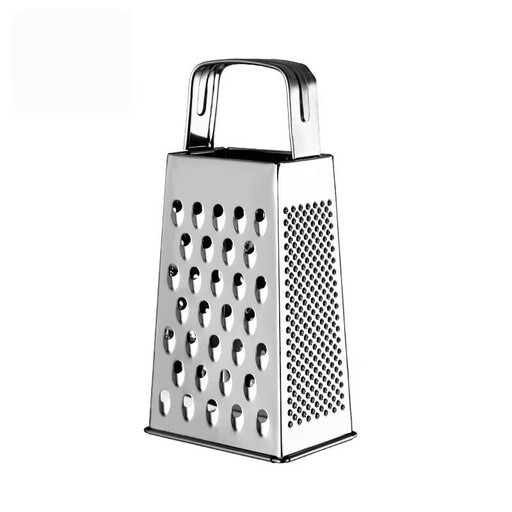
Why This Fits Their Persona: Ideal for cooks who want a single, reliable tool for various tasks. This classic box grater covers all the bases, from coarsely grating vegetables (vegetable grater) to finely shredding hard cheese (cheese grater).
The solid stainless steel construction prevents the bending common in cheaper, thin-metal models. It offers functionality without the impractical, fragile parts of overloaded sets.
Four different grating surfaces in one sturdy, space-saving tool. The handle allows for secure, one-handed operation.
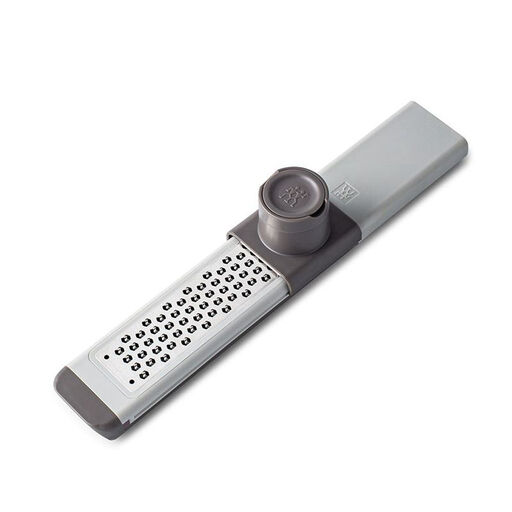
Why This Fits Their Persona: Perfect for chefs who value precision and high-quality materials. This zester grater is ideal for delicate tasks like zesting citrus, grating ginger, or shredding hard cheese, where a precise texture is crucial.
Instead of focusing on many functions, this model is built for specialization. The 18/10 stainless steel blades with patented Z-Cut technology offer superior sharpness and durability compared to standard stamped blades.
Efficient bi-directional grating technology for faster work. Integrated finger protection and non-slip rests for maximum safety.
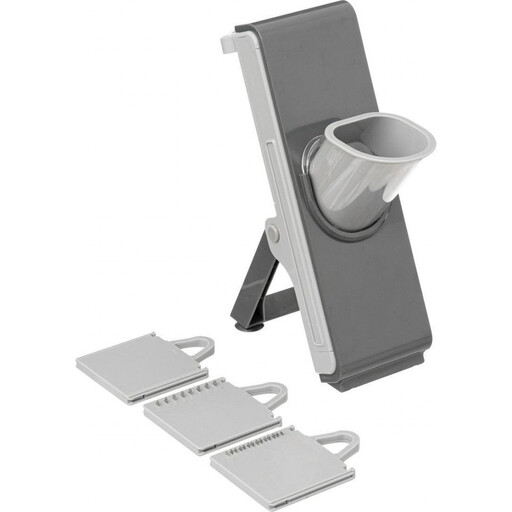
Why This Fits Their Persona: This vegetable slicer is the right choice for anyone who regularly needs to cut large quantities of fruits or vegetables into uniform slices. Ideal for preparing gratins, salads, or pickled vegetables.
Unlike unsafe slicers, this one prioritizes safety. The included food holder (pusher) reliably protects fingers from the extremely sharp blades of the mandoline.
Enables fast and consistent slicing, grating, and shredding. The stainless steel blades ensure clean cuts and a long service life.
We've compiled a complete, up-to-date list of products that fully meet these strict selection criteria and rigorous safety standards.
The longevity of the sharpness depends on the material and care. Graters with etched blades made of high-quality stainless steel stay sharp longer than those with stamped blades. For maintenance, it is recommended to clean the grater with a brush under running water immediately after use. Although many models are declared dishwasher-safe, hand washing can better preserve the sharpness of the blades in the long run, as harsh detergents and high temperatures can damage the material.
For direct contact with food, stainless steel is the top choice. In particular, rust-proof stainless steel (e.g., 18/10) is hygienic, flavor-neutral, and durable. It prevents bacteria from settling and is easy to clean. Plastic frames can be practical, but the grating surface itself should always be made of high-quality metal.
A kitchen grater (e.g., a box or zester grater) is designed to break down food into small particles, shreds, or strips. A vegetable slicer, often called a mandoline, is used to cut food into uniform, thin slices. While a grater is used for cheese, chocolate, or citrus zest, a slicer is ideal for potatoes, cucumbers, or onions.