
Lieferung heute & morgen

Qualitätsgarantie

Willkommens-Angebote freischalten: KOSTENLOSE Lieferung | Bis zu 80 % RABATT | Kostenlose 30-Tage-JoyPlus-Testphase
App herunterladen
A multifunctional kitchen grater is designed to replace several kitchen tools: it can be used as a vegetable grater, cheese grater, zester or Parmesan grater. In practice, however, its usefulness isn’t determined by the number of advertised functions alone. The key factors are the material, grating surfaces, stability and ease of cleaning.
Whether you’re a keen home cook, part of a family, passionate about baking or a frequent user, there are a few common buying pitfalls you can avoid with a careful check.
A multi-sided universal grater sounds versatile. However, not every surface is suitable for the same foods. A coarse side can be useful for carrots or cheese, while a fine grater is better suited to ginger, garlic, nutmeg or citrus zest.
Before buying, check that it’s clear:
A high number of functions is no substitute for a clear description of each grating surface.
“Stainless steel” is useful, but it’s a general description. If you’re looking for a durable stainless steel grater, check for the precise material designation, if one is provided. For example, the SS HANDLE GRATER SP is listed as being made from INOX 430 precision stainless steel. This makes it easier to assess than products described only as having a general metal or stainless steel finish.
It’s also worth remembering that rust resistance doesn’t mean every grater should be stored damp. After washing, dry it thoroughly, particularly where the handle meets the grating surface.
Sharp grating surfaces require controlled movements. A slippery handle or unstable box grater can make a grater harder to use. An ergonomic-handled grater should therefore feel secure in your hand and allow enough space between your fingers and the cutting surface.
For a standing grater, these points also matter:
For everyday food preparation, a combination of coarse and fine surfaces is often enough. If you bake regularly, a zester for lemon and orange peel can come in handy. A fine Parmesan grater is useful for pasta and risotto. A vegetable grater with an additional slicing function, meanwhile, is suitable for cucumber, carrots, potatoes or cabbage.
With multifunctional models, the surfaces should not only be versatile but also easy to access. Closely spaced openings can process fine ingredients, but they’re often more effort to clean.
Stainless steel alloys are commonly used for grating surfaces. The products featured here range from rust-resistant stainless steel to specifically listed INOX 430. Always consider the material details alongside the care instructions.
Also look for:
A coating can make cleaning easier, but that doesn’t automatically mean it’s suitable for all foods or for the dishwasher.
It’s only useful to describe a kitchen grater as dishwasher-safe if this is explicitly stated in the product information. The Tefal Ingenio K20707 is listed as dishwasher-safe. For other models, check the care instructions rather than assuming that the material details mean it’s suitable for the dishwasher.
To help your grater last longer:
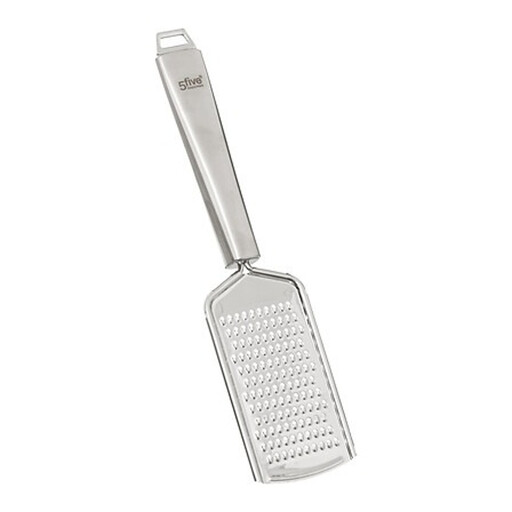
Why this product suits this profile: This compact stainless steel grater is ideal if you mainly grate cheese, nuts or chocolate and want a kitchen tool that takes up little space.
The product details specify INOX 430, an ergonomic handle and dimensions of 25,2 × 5,8 × 2 cm. This makes it easy to assess the material, handling and storage space required.
Specific stainless steel details; lightweight at 0,100 kg according to the product description.
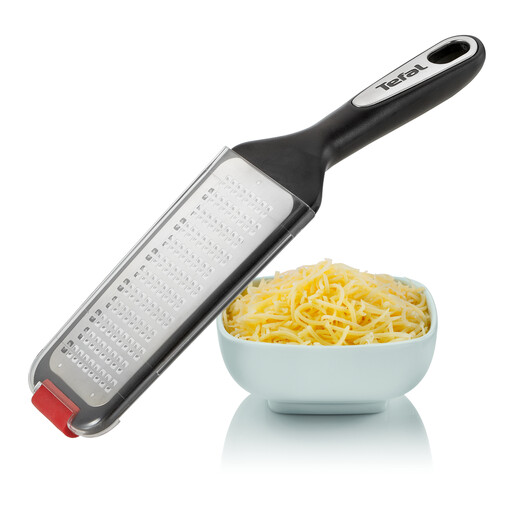
Why this product suits this profile: For households looking for a versatile universal grater with a non-slip base and confirmed dishwasher suitability.
The product description specifies a double-sided cutting function, a silicone handle and dishwasher suitability. This provides key details about speed, stability and care.
Double-sided use; listed as dishwasher-safe and fitted with a non-slip silicone handle according to the product description.
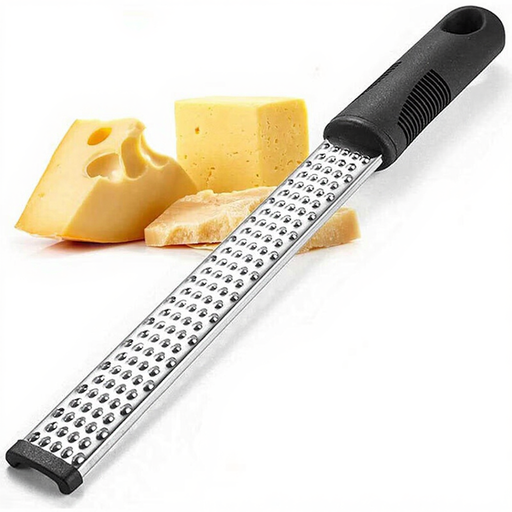
Why this product suits this profile: This model is aimed at keen bakers, cooks and anyone who wants one tool for grating citrus zest, hard cheese, garlic, ginger, nutmeg or chocolate.
The clearly described grating areas make it easier to choose the right surface for each food. The ergonomic, non-slip handle addresses a common drawback during extended use.
Rust-resistant stainless steel according to the product description; several grating surfaces for zest, hard cheese and spices.
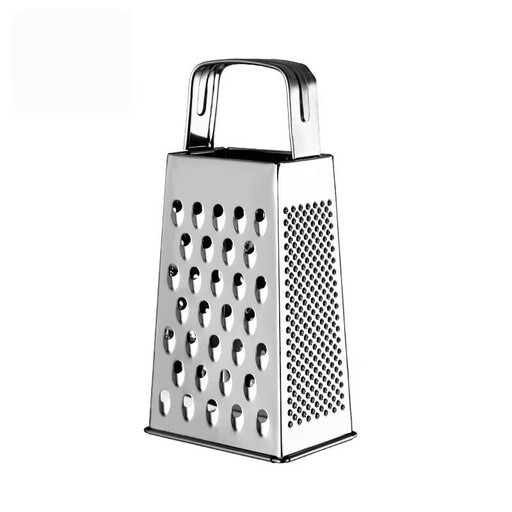
Why this product suits this profile: A box grater is handy when you need different cuts for vegetables, cheese or other ingredients in one go.
The four-sided box design gives you direct access to the different working surfaces. Before buying, check the base and dimensions on the product details page.
Four-sided design; grating, shredding and slicing functions according to the product name.
We’ve put together a complete, regularly updated list of products that meet these strict selection criteria and fully comply with the safety regulations in force in the EU.
A box grater or a universal grater with coarse and fine surfaces can be used for vegetables and cheese. A coarse side is suitable for foods such as carrots, potatoes or hard cheese. A finer grater is better for Parmesan, nutmeg or citrus zest. If you often want to slice food, look for a model with a dedicated slicing surface too.
It depends on the model and its care instructions. The Tefal Ingenio K20707 is explicitly listed as dishwasher-safe. For stainless steel graters without this information, washing by hand is the safer option. After cleaning, dry the grating surfaces and joins thoroughly.
There’s no reliable way to give a general lifespan. It depends on the material, build quality, frequency of use and care. Evenly shaped cutting openings, a sturdy handle and proper cleaning all point to a design made for long-term use. Blunt or bent surfaces, rust spots and loose handle connections are signs that it may be time for a replacement.