
Lieferung heute & morgen

Qualitätsgarantie

Willkommens-Angebote freischalten: KOSTENLOSE Lieferung | Bis zu 80 % RABATT | Kostenlose 30-Tage-JoyPlus-Testphase
App herunterladen
A kitchen shelf gives you extra storage, frees up a small worktop and helps keep spices, pans and groceries organised. However, models can vary significantly in dimensions, load capacity, materials and assembly. A shelf that looks spacious in product photos may be too deep for a narrow kitchen or struggle to support heavy cookware.
The external dimensions don’t tell you everything. What matters is whether the footprint, the height between shelves and the clearance beneath wall units will work in your space. If you’re buying a worktop shelf, also check that you can still reach doors, drawers and sockets.
Manufacturers’ load capacity figures often refer to static loads per shelf, with the weight evenly distributed. Heavy pans concentrated in a small area, pulling a shelf out abruptly or placing it on an uneven surface can affect its actual stability. If you’re choosing a storage shelf for a cellar or garage, you should also consider anti-tip protection.
Depending on its finish, ‘metal’ could mean painted steel, powder-coated iron or stainless steel. Wooden components such as bamboo or MDF usually need different care when it comes to moisture. So a metal and bamboo shelf shouldn’t be left permanently in an area exposed to splashes. Bamboo should never go in the dishwasher and should be dried straight after cleaning.
Measure the available space in three places:
A multi-tier kitchen shelf makes good use of vertical space. For smaller worktops, a compact two-tier worktop shelf is often a better choice. A corner shelf can make use of awkward spaces, while a rolling shelf offers flexibility if your needs change.
Check the maximum load per shelf as well as the total load capacity. These figures aren’t interchangeable. A pan and saucepan rack should also have supports wide enough to stop cookware from slipping.
Tall metal shelves for a cellar, garage or pantry should be designed to attach to a wall. This is particularly important if children have access or you’re storing heavy items on the upper shelves. Never use the shelf as a step or climbing aid.
Also check whether the model is designed for self-assembly, whether you’ll need tools and whether the instructions are clear. A kitchen organiser with a simple push-fit or screw-together system may be more practical for a rented home than a permanent fixture.
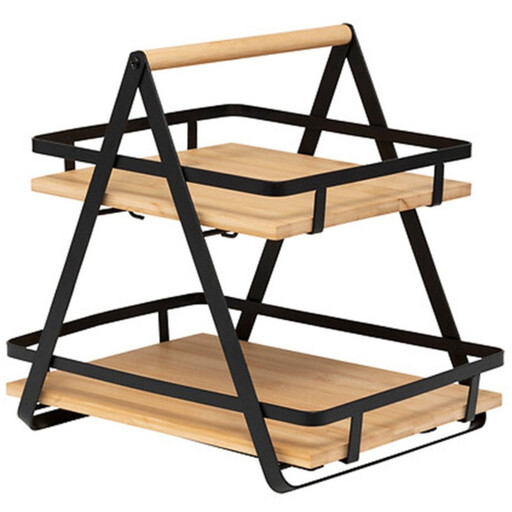
Why this product suits this type of buyer: Measuring 30 × 22 × 29 cm, this compact kitchen shelf is designed for spices, kitchen utensils or cleaning products on a flat worktop.
The clear external dimensions make it easier to check the fit before buying. The maximum load is listed as 2,0 kg, making it clear that this model is best suited to lighter kitchen utensils.
Steel frame, bamboo details, carry handle and space-saving two-tier design.
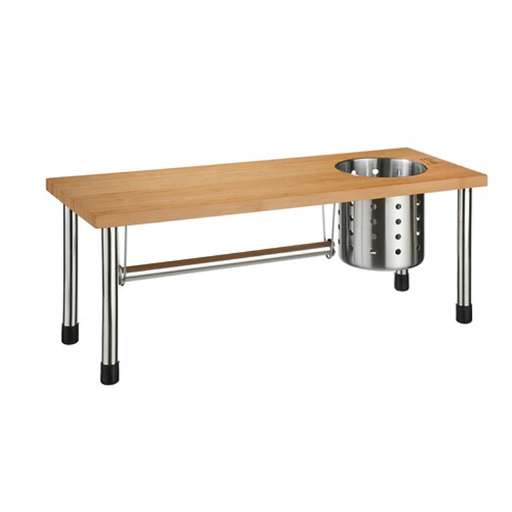
Why this product suits this type of buyer: Four storage surfaces and a utensil holder make room for kitchen tools, snacks or small household items, all within a 55,5 × 20 × 21 cm footprint.
The materials are clearly specified. The care instructions advise against soaking the bamboo and recommend keeping the shelf dry and away from heat sources.
Four shelves, a separate utensil holder and a weight of 1,443 kg.
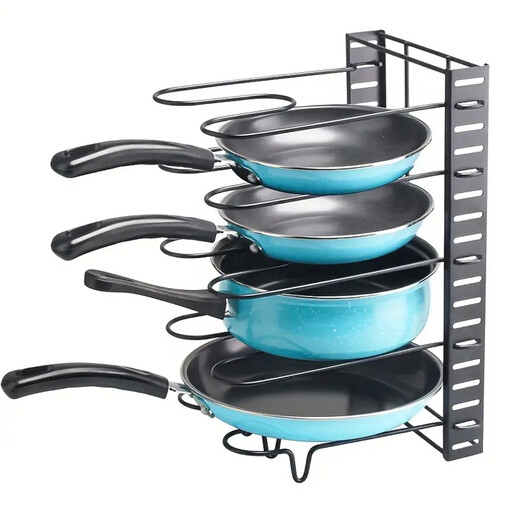
Why this product suits this type of buyer: This metal rack has eight adjustable tiers and three configurations for pans, frying pans and lids, including a low, horizontal arrangement.
The load limit is listed as up to 9 lb per tier. Silicone pads in the U-shaped slots are designed to reduce slipping and scratches; make sure the rack is set up securely.
Powder-coated iron, triangular reinforcement and tool-free configuration with two hooks.
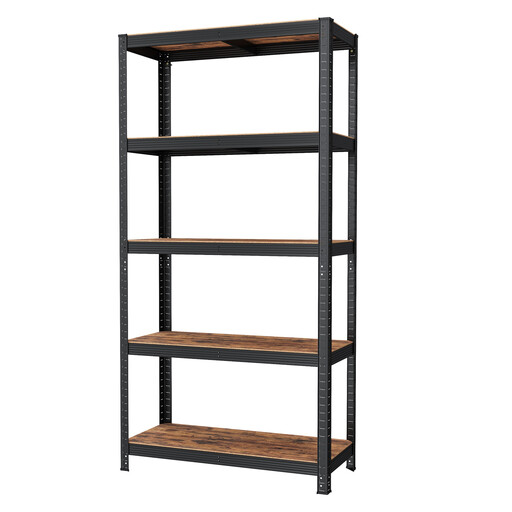
Why this product suits this type of buyer: Measuring 30 × 75 × 150 cm, this tall storage rack is designed for households looking to store tools, groceries or household essentials in a cellar, garage or utility room.
The maximum static load is listed as 130 kg per shelf and 650 kg in total. Use the supplied anti-tip kit as directed in the instructions.
Five height-adjustable shelves, screw-free push-fit assembly and the option to split it into two units.
We’ve put together a complete, regularly updated list of products that meet these strict selection criteria and comply fully with the safety regulations in force in the EU.
Place every kitchen shelf on a flat, stable surface. Wherever possible, store heavier items on the lower shelves. We recommend securing tall metal shelving to the wall using the designated fittings. After assembly, check that all the connections are secure and that no shelf wobbles.
For many models, a soft, damp cloth is all you need for cleaning. Bamboo and MDF surfaces should be dried straight away. Abrasive cleaners, prolonged damp and direct heat can damage the finish. If you use a rolling shelf, keep the wheels free of crumbs and hair. Before loading it, check that the brakes hold securely.
Compact models with two or three tiers are a good choice when space is limited. Measure the depth first and leave enough room to move in front of the shelf. A corner model can also make use of otherwise wasted space.
Its lifespan depends on the materials, load, moisture, assembly and care. Overloading, prolonged exposure to water or a loose connection can shorten its life. Check your shelf regularly for cracks, rust, bent parts or signs of instability.
Only if its stated load capacity per shelf is sufficient. Distribute the weight evenly. Tall shelves also need anti-tip protection. For particularly heavy cookware, choose a pan and saucepan rack designed for the job rather than a lightweight spice rack.