
Lieferung heute & morgen

Qualitätsgarantie

Willkommens-Angebote freischalten: KOSTENLOSE Lieferung | Bis zu 80 % RABATT | Kostenlose 30-Tage-JoyPlus-Testphase
App herunterladen
A cluttered basement, a disorganized garage, or a workshop where tools and materials are in the way—the right storage solution can remedy the situation. A heavy-duty shelving unit promises stability and order for heavy items. But the market is flooded with options of widely varying quality. Before you make a decision, it's crucial to know the most common pitfalls that can lead to a bad buy.
As your Joybuy Product Recommendation Officer, I'm here to help you separate the wheat from the chaff. We'll examine the critical features that define a reliable shelf and navigate the typical marketing traps together.
Many shelves look sturdy at first glance but reveal their weaknesses only after assembly or during the first loading. Pay attention to these three points to avoid disappointment.
To find a durable and safe storage shelf, you should focus on verifiable facts. The following three parameters are crucial for your selection.
As mentioned, the distinction is fundamental.
The longevity of a shelf is largely determined by its material and protective coating.
Most modern heavy-duty shelves are designed as boltless shelving, allowing for tool-free or low-tool assembly.
Based on these objective criteria, we have identified some products that represent a considered choice for specific user profiles.
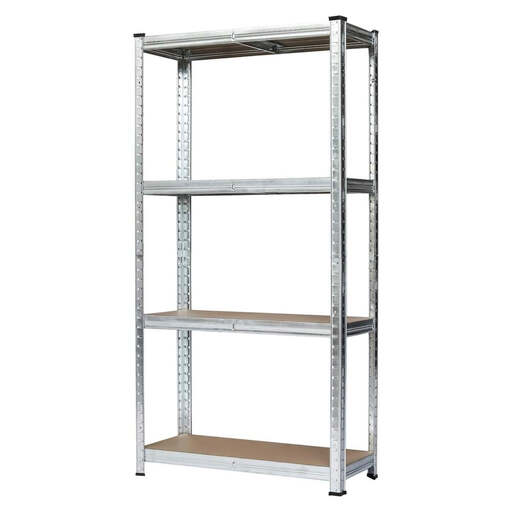
Why it fits: Ideal for basic organization in the basement or as a pantry shelf. It provides a solid foundation for storing boxes, household supplies, or lighter tools without breaking the bank.
The load capacity is clearly and realistically stated at 125 kg per shelf for this price range. The galvanized steel frame is designed for dry to slightly damp rooms and is more durable than cheap painted alternatives.
Simple boltless system for quick assembly. The standard dimensions of 180 x 90 x 40 cm fit in most basements and garages.
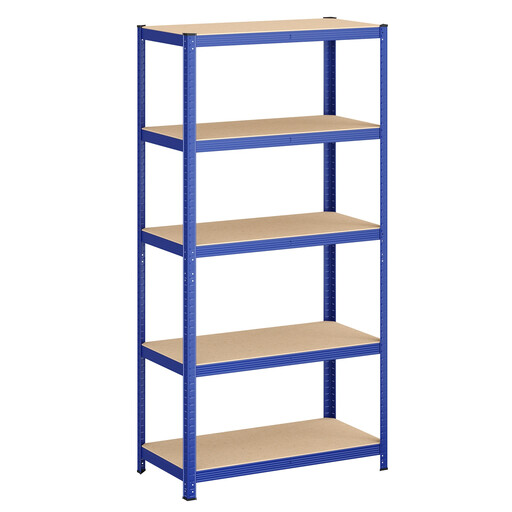
Why it fits: Perfect for the workshop or as a garage shelf. Its high flexibility, allowing it to be split into two workbenches, and its generous dimensions provide space for tools, machines, and materials.
Directly addresses the stability problem with an included anti-tip kit for wall mounting. The option to build it as two lower, more compact units further increases its stability.
Can be split into two separate units, ideal as a workbench with storage. The shelves are adjustable in 5 cm increments.
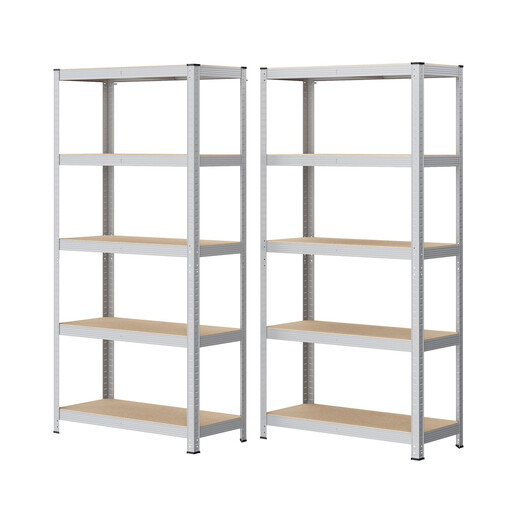
Why it fits: Anyone needing to outfit an entire basement wall or a small storage area will benefit from this set of 2. The very high load capacity of 175 kg per shelf makes it a true heavy-duty rack for serious equipment.
The specification of 175 kg per shelf and 875 kg total capacity per unit is designed for demanding storage tasks, avoiding the risk of overload when used correctly. The powder-coated steel frame is robustly constructed.
Very high load capacity for heavy items. Delivered as a set of 2, it offers excellent value for outfitting larger areas.
We have compiled a complete, up-to-date list of products that fully meet these strict selection criteria and relevant safety standards.
1. How do you correctly assemble a boltless heavy-duty shelf? Ensure the shelf stands on a level, solid surface. Use a rubber mallet to assemble the connections to avoid damaging the profiles. Start with the bottom shelf and work your way up. Wear work gloves during assembly to protect yourself from sharp edges. To increase safety, the shelf should be secured to a solid wall with the provided anti-tip kit after assembly.
2. Can MDF boards grow mould in a damp basement? Yes, MDF boards are susceptible to moisture and can swell or grow mould in conditions of persistently high humidity. If you plan to use the shelf in a damp basement, ensure good ventilation or seal the boards with a water-repellent varnish. Alternatively, there are models with steel decks that are better suited for such environments.
3. What exactly does "load capacity with even distribution" mean? This specification means that the weight must be distributed evenly across the entire surface of the shelf to achieve the maximum load capacity. A high point load, for example, from the small feet of a heavy machine in the middle of the deck, can exceed the shelf's load limit, even if the total weight is below the maximum value. Therefore, always distribute heavy loads over as wide an area as possible.