
Lieferung heute & morgen

Qualitätsgarantie

Willkommens-Angebote freischalten: KOSTENLOSE Lieferung | Bis zu 80 % RABATT | Kostenlose 30-Tage-JoyPlus-Testphase
App herunterladen
An LED floor lamp can serve several purposes in your living room, bedroom, gaming area or home office. It can provide indirect light, enhance your interior or offer flexible task lighting. But design isn’t the only thing to consider. If you choose a lamp based solely on its colour, shape or high wattage, you could overlook important technical details.
Wattage describes power consumption, not brightness. The lumen output is a more useful way to compare lamps. For example, a lamp rated at 8 W may provide 800 lm according to its product specifications, while another model rated at 14 W may deliver 1,300 lm. For a reading nook or workspace, it’s also important to consider how the light is distributed.
An RGB floor lamp with a wide range of colours and scenes can work well for gaming, parties or accent lighting. For focused work or relaxed reading, however, even, neutral white or warm white light is often preferable. Check whether the lamp offers a standard white light setting as well as RGB.
An LED arc floor lamp takes up more space than a slim corner lamp because of its extended arm. Before you buy, compare its height, depth and base diameter with the space you have available. If you’re planning to use it on a balcony, patio or in the garden, the IP rating is also important. For example, IP54 offers limited protection against dust and protection against splashing water. An IP20 lamp, on the other hand, is intended for dry indoor use only.
Lumen output is measured in lumens (lm):
Colour temperature is measured in kelvins (K). Warm white light at around 2,700 to 3,000 K creates a gentle atmosphere in living rooms and bedrooms. Neutral white light at around 4,000 to 5,000 K can be a practical choice for a home office. A dimmable LED floor lamp with CCT lets you adjust the colour temperature within the stated range.
The Ra value, or CRI, describes colour rendering. A value of Ra ≥ 80 is a common guide for many household lights. Treat this figure as a technical comparison point, rather than a guarantee of quality for every application.
Depending on the model, you may have a choice of controls:
If you’re considering a smart floor lamp, check whether it requires an existing network, a specific app or a compatible voice assistant. Bluetooth Mesh, Wi-Fi and a basic remote control are not interchangeable.
Running costs depend on the lamp’s wattage and how many hours you use it each day. An 8 W lamp used for four hours a day would consume around 11.7 kWh a year. The actual cost depends on your electricity tariff.
Also check the EU energy label, the kWh/1,000 h figure and the stated lifespan. With integrated LEDs, you often can’t replace the light source separately. If it fails, you may need to replace the entire lamp.
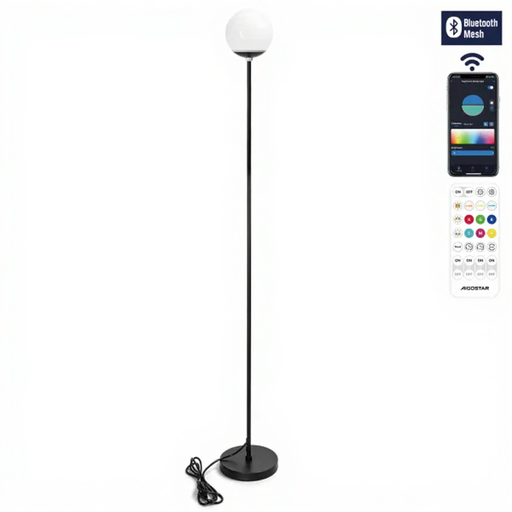
Why it suits this type of buyer: According to the product specifications, this 8 W lamp delivers 800 lm and offers RGB lighting as well as white light between 2,700 and 6,500 K. Bluetooth Mesh lets you control it from your smartphone and connect it to a compatible network.
The stated wattage, lumen output, colour temperature and IP20 rating make it clear that the lamp is intended for dry indoor use.
RGB and white light, 800 lm, 8 W, plus stated CE and RoHS markings.
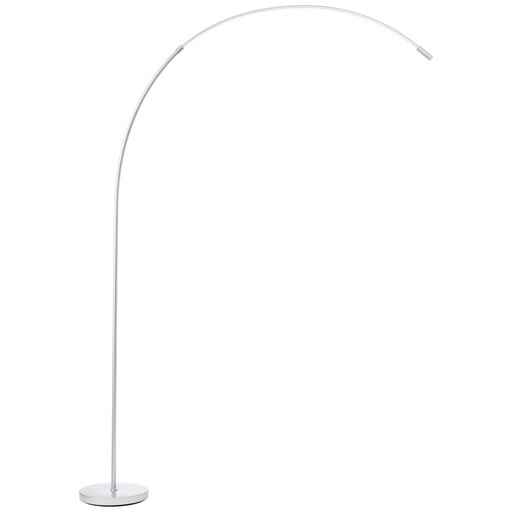
Why it suits this type of buyer: This LED arc floor lamp combines 1,300 lm with stepless dimming and a CCT setting from 3,000 to 6,500 K. At 179 cm tall, it’s designed to sit beside a sofa, armchair or desk.
The height, 123 cm depth, cable length and IP20 rating are all clearly stated, so you can check in advance whether the lamp will suit your room.
1,300 lm, 14 W, touch dimmer and adjustable colour temperature from warm white to cool white.
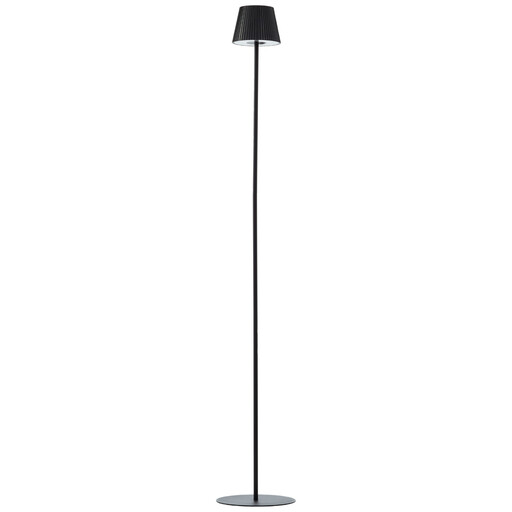
Why it suits this type of buyer: This cordless floor lamp is 125 cm tall and has a built-in battery. According to the product specifications, it delivers up to 340 lm at 3,000 K. It’s designed for use indoors, on a balcony or on a patio.
The IP54 rating and battery operation are clearly stated. Even so, don’t leave the lamp unprotected in extreme weather for extended periods.
USB-rechargeable battery, three dimming levels, 3.4 W power consumption and IP54 splash protection.
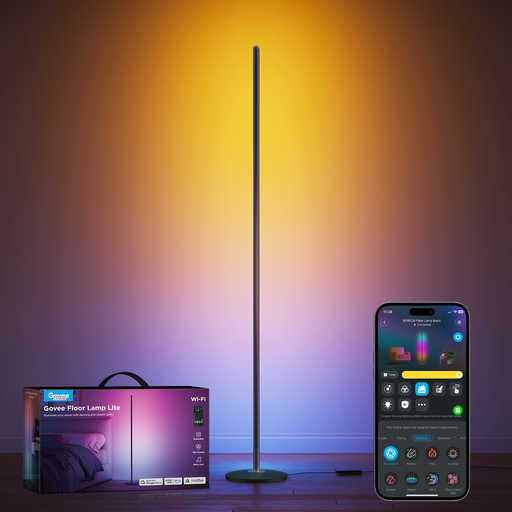
Why it suits this type of buyer: According to the product description, this model offers RGBIC lighting with 16 million colours, 58 scenes and a music mode. You can control it via the app, Wi-Fi, Bluetooth, Alexa or Google Assistant.
The available control options and indoor-use suitability are stated. Before buying, check that it’s compatible with your smart home system.
1,000 lm, dimmable, 24 W, app control and support for Alexa and Google Assistant.
We’ve put together a comprehensive, regularly updated list of products that meet these strict selection criteria and fully comply with the safety regulations in force in the EU.
Around 300 to 500 lm may be enough for decorative lighting. For extra light beside a sofa, armchair or desk, 800 to 1,300 lm is often a practical choice. The right output will depend on the size of the room, the beam angle and whether you want direct or indirect lighting.
Lifespan depends on the product, how long it’s used, heat dissipation and operating conditions. The manufacturer’s stated lifespan is the key figure to check. With an integrated LED, the light source usually isn’t designed to be replaced easily. Keep your proof of purchase and product documents in case you need them.
A 10 W lamp switched on for four hours a day would use around 14.6 kWh a year. To calculate the annual cost, multiply this figure by your electricity rate. When choosing an energy-efficient floor lamp, consider wattage, lumen output and how long you’ll use it together.